14 Comparison Points between Injection Molding vs CNC Machining
2024-08-29
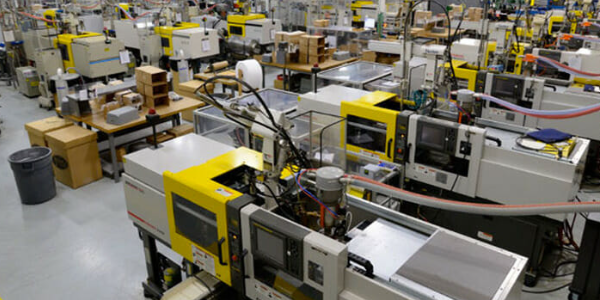
In the comparison below, we aim to analyze and understand these methods, examining their contrasting capabilities and limitations across various factors.
How Do Injection Molding and CNC Machining Compare in Detail?
Design Geometry and Limitations
Injection Molding excels in producing complex and detailed designs, particularly for parts with internal cavities or intricate surface textures. It is capable of creating consistent geometries at high volumes, though it does have design constraints such as the requirement for uniform wall thickness to avoid issues like warping or sink marks.
In contrast, CNC Machining offers exceptional flexibility in design, allowing for intricate external geometries and detailed features. However, it faces challenges with internal features due to the limitations of tool access. Additionally, CNC Machining is constrained by the size of the raw material block and the range of motion of the machining equipment.
Strength and Performance
Injection Molding: This process is adept at producing parts with uniform mechanical properties and strength, making it suitable for components that need to endure consistent stress across their surface. The variety of plastics available, including high-performance options, allows for tailoring strength requirements to specific applications.
CNC Machining: Known for its versatility, CNC Machining can work with a wide range of materials, including metals, plastics, and wood. Machined parts, especially those made from metals, often exhibit superior strength compared to molded parts. This is due to the material properties and the absence of manufacturing-induced stress in CNC Machining.
Tolerances
The precision of manufacturing processes is crucial, particularly in fields like aerospace and medical devices where high accuracy is essential. Injection Molding generally achieves tolerances of around ±0.500 mm (±0.020 inches). While this level of precision is adequate for many applications, it may not meet the needs of parts that demand ultra-high precision.
In contrast, CNC Machining is celebrated for its superior precision, typically achieving tolerances as tight as ±0.127 mm (±0.005 inches). This high accuracy is due to the controlled nature of the cutting process and advanced CNC technology. For applications where tight tolerances are critical, CNC Machining is often the preferred choice.
Cycles and Efficiency
Injection Molding is known for its rapid cycle times, particularly once the molds are established. This efficiency makes it well-suited for high-volume production, capable of producing thousands or even millions of parts quickly, with cycle times as brief as a few seconds, depending on the complexity and size of the part.
Conversely, CNC Machining generally involves longer cycle times due to the need for individual cutting and shaping of each part. This results in a more time-consuming and costly process. However, CNC Machining excels in precision and flexibility, making it ideal for producing complex designs where each part may require unique detailing or customization.
Upfront Investment
Injection Molding generally requires a higher upfront investment due to the expenses involved in designing and producing molds. These costs can be considerable, particularly for complex or custom parts. However, once the molds are created, the per-part cost drops substantially, making Injection Molding a cost-effective option for large production volumes.
In contrast, CNC Machining has a lower initial investment. The primary costs involve setting up the CNC machine and purchasing materials. This makes CNC Machining more economical for small to medium-sized production runs and for projects where designs may change frequently.
Volume and Scale of Production
Injection Molding is ideal for high-volume production. Its capacity to produce large quantities of parts quickly and consistently makes it highly cost-effective for mass production.
CNC Machining is more suited for low to medium volume production. Its precision and adaptability are perfect for producing customized or complex designs where each part may be unique.
Unlike Injection Molding, the cost per part for CNC Machining does not decrease as dramatically with increased volume, making it less economical for very high-volume production.
Design Flexibility and Complexity
Injection Molding provides limited design flexibility after the mold has been created. Altering the design typically requires the creation of a new mold, which can be both expensive and time-consuming. Despite this, Injection Molding excels at producing intricate shapes, including parts with internal cavities or detailed surface textures.
In contrast, CNC Machining offers greater design flexibility. Adjustments can be made relatively easily by updating the CAD file and machine programming. CNC Machining is well-suited for producing highly complex designs, including parts with varying depths and fine details, which can be more challenging to achieve with Injection Molding.
Lead Time and Speed
Injection Molding: The lead time for Injection Molding typically ranges from 2 to 6 weeks, encompassing the time required to design and create molds. Once molds are in place, the production speed is very high, with cycle times ranging from a few seconds to minutes per part, depending on the complexity and size of the item.
CNC Machining: Lead times for CNC Machining are generally shorter, often within 1 to 2 weeks, as it does not involve mold creation. However, the production speed is slower compared to Injection Molding, as each part is machined individually. The production rate can vary based on the complexity of the part, but CNC Machining typically produces parts at a rate of several hours per piece.
Cost effectiveness
Injection Molding: Injection Molding becomes highly cost-effective at large volumes. For high-volume production, the cost per part can drop to just a few cents to a dollar, primarily due to the low operational costs once the molds are established. The initial investment in mold creation is offset by the reduced cost per part in large production runs.
CNC Machining: In contrast, CNC Machining tends to have a higher cost per part, especially for low-volume production. On average, the cost can range from several dollars to tens of dollars per part, influenced by the material used and the part's complexity. CNC Machining does not benefit from the same economies of scale as Injection Molding.
Energy Consumption and Efficiency
Injection Molding: Typically consumes around 4 to 6 kWh per hour. Its efficiency is high, especially in mass production, due to fast cycle times and the ability to produce large quantities quickly. The overall energy efficiency is advantageous for high-volume runs.
CNC Machining: Generally consumes between 15 to 20 kWh per hour, particularly for heavy-duty operations. CNC Machining is less energy-efficient compared to Injection Molding, largely because of the longer production times required for each individual part.
Material Suitability and Availability
Injection Molding: Primarily used for softer materials like plastics, including a broad range of thermoplastics and thermosetting plastics. The variety of available plastic materials makes Injection Molding versatile for producing parts across diverse industries, from consumer products to automotive and medical devices.
CNC Machining: Accommodates a broader range of materials, including metals (such as aluminum, steel, and brass), plastics, and even wood. This versatility makes CNC Machining suitable for a wide range of applications requiring different material properties, from aerospace components to custom machinery parts.
Environmental Considerations and Sustainability
Injection Molding: Typically generates minimal waste because excess material can often be recycled. Nonetheless, the production of plastic molds and the potential for plastic waste during manufacturing are notable environmental concerns.
CNC Machining: Generally produces more waste due to its subtractive nature, with removed material often ending up as scrap. Although recycling efforts can help reduce this impact, the process inherently involves more material loss compared to Injection Molding.
Safety Considerations
Injection Molding: Is usually considered safer due to the enclosed nature of the process. However, it involves high temperatures for melting materials and substantial pressure during injection, which can pose risks if not properly managed.
CNC Machining: Requires careful safety considerations due to the use of cutting tools and high-speed machinery. The risk of injury from sharp tools and flying debris necessitates rigorous safety protocols and comprehensive operator training to ensure a safe working environment.
Tooling Longevity and Maintenance Requirements
Injection Molding: Molds can last between 100,000 and 1,000,000 cycles, depending on the material used and the mold's complexity. Regular maintenance is necessary to preserve mold quality, including cleaning and repair work.
CNC Machining: Tools used in CNC Machining, such as end mills and drill bits, generally have a shorter lifespan, often requiring replacement after a few thousand cycles. Maintenance is relatively simple, focusing on routine tool changes and machine calibration.
Younger Mould is a famous china plastic injection mold manufacturer. If you are interested in our injection molding automotive products, please leave your contact information, and we will provide you with favorable quotations and meticulous injection molding services.
Rearview Mirror Molding Manufacturing Process
Differences between Injection Molding vs CNC Machining
Related Article

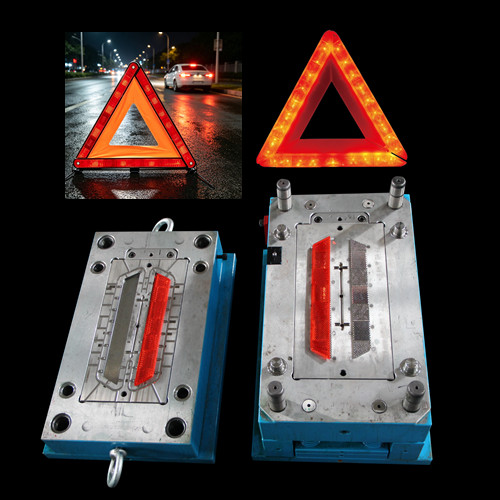
We are a professional mold manufacturer in Huangyan, China, specializing in high-precision injection molds for parking reflex reflectors and warning triangles. Our molds are made with durable steel for long service life, supporting custom designs and stable mass production to meet your automotive accessory manufacturing needs.
Parking reflex refletcor warning triangle mould