5 Things You Need to Know About Plastic Injection Molding
2024-06-28
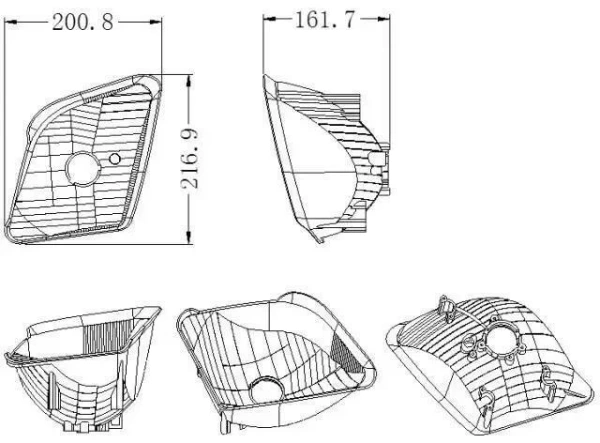
Plastic injection molding is a manufacturing process used to produce parts by injecting molten material into a mold. It’s a widely used manufacturing process, such as headlight mold, essential for producing a variety of products in numerous industries.
This method involves injecting molten plastic into a mold to create parts with precision and efficiency. It is renowned for its ability to mass-produce items with consistency and high quality.
Understanding plastic injection molding is crucial for professionals in manufacturing, design, and engineering. This process significantly impacts product development, cost management, and production efficiency.
The Basics of Plastic Injection Molding
What is Injection Molding
Plastic injection molding is a manufacturing process used to produce parts by injecting molten plastic into a mold.
The process starts with melting plastic pellets or granules until they become liquid. This molten plastic is then injected at high pressure into a metal mold.
After injection, the plastic cools and solidifies, forming the desired part. The mold is then opened, and the part is ejected, ready for any additional processing or finishing.
Commonly Used Materials
A wide range of thermoplastic and thermosetting polymers are used in plastic injection molding. Thermoplastics, such as polyethylene (PE), polypropylene (PP), and polystyrene (PS), are popular due to their versatility and recyclability, as they can be melted and remolded multiple times without changing their fundamental properties. Thermosetting plastics, like epoxy and phenolic resins, permanently harden after being heated, making them ideal for high-heat applications. The choice of material depends on the intended use of the final product, cost considerations, and specific property requirements such as strength, flexibility, or heat resistance.
Design Considerations and Prototyping
Importance of Design in the Molding Process
Design is crucial to the success of plastic injection molding. A well-designed product ensures not only functionality and aesthetics but also enhances manufacturing efficiency.
Effective design can minimize material usage, shorten cycle times, and prevent defects. Key considerations during the design stage, such as wall thickness, rib design, and gate location, are essential for optimizing both the molding process and the quality of the final product.
Designing Parts for Injection Molding
Uniform Wall Thickness: Aim for consistent wall thickness throughout the design to prevent issues like warping, sink marks, or incomplete filling.
Draft Angles: Incorporate draft angles to facilitate the easy release of the part from the mold.
Ribs and Gussets: Use ribs and gussets for added strength, but ensure they are not too thick to avoid shrinkage issues.
Gate Location: Carefully plan the gate location (where the molten plastic enters the mold) for efficient flow and minimal visual defects.
Avoid Sharp Corners: Round off corners to reduce stress concentrations and improve material flow.
Consider Shrinkage: Account for the material’s shrinkage properties in the design to ensure dimensional accuracy.
Role of Prototyping and 3D Printing in Refining Designs
Prototyping is essential for refining designs for injection molding. It allows testing and validating design concepts before investing in costly mold tooling. 3D printing, in particular, has revolutionized this process.
With 3D printing, designers can swiftly create prototypes that closely replicate the properties of injection-molded parts. This capability enables early identification and correction of design flaws. Prototyping also provides a tangible model for functional testing, ergonomic evaluation, and stakeholder feedback, ultimately leading to a more optimized and successful final product design.
Benefits and Limitations
Advantages of plastic injection molding
Efficiency and Speed: One of the key advantages of plastic injection molding is its rapid production capability. Once the mold is designed and fabricated, the process can produce a high volume of parts in a relatively short time, making it highly efficient for large-scale production runs.
Versatility in Materials and Shapes: Plastic injection molding supports a wide range of materials, including various thermoplastics and thermosetting polymers. This versatility allows manufacturers to select materials based on the specific needs of the product. Additionally, the process can create complex shapes and designs that might be challenging or impossible with other manufacturing methods.
High Volume Production Capability: Ideal for high-volume production, plastic injection molding can produce thousands or even millions of parts from the same mold, offering a cost-effective solution for large-scale manufacturing.
Limitations and challenges
Initial Costs and Tooling: The initial cost of creating a mold for injection molding can be quite high, encompassing design, mold material, and machining expenses. Therefore, it is more economical for large production runs where the initial investment can be distributed across a larger number of parts.
Design Restrictions: Although injection molding allows for complex designs, there are still limitations. Designs must facilitate the ejection of the part from the mold, and some intricate shapes may require complex and costly molds.
Material Limitations: Despite the wide range of available materials, each has its constraints, such as melting temperature, strength, and flexibility. Some specialized materials can also increase the cost or complexity of the manufacturing process.
Environmental Impact and Sustainability
The impact of plastic waste and environmental concerns
The production and disposal of plastic products have considerable environmental impacts. Plastic waste, especially from single-use items, contributes to pollution and poses a threat to marine life and ecosystems. The production process can be resource-intensive, consuming fossil fuels and emitting greenhouse gases. These environmental concerns have heightened the focus on sustainability within the plastic injection molding industry.
Efforts towards sustainability in injection molding
In response to environmental challenges, efforts are growing to enhance the sustainability of plastic injection molding. A key strategy is the recycling of plastic materials.
By repurposing post-consumer or post-industrial plastics, manufacturers can reduce waste and decrease the reliance on virgin materials. Additionally, there is an increasing adoption of biodegradable materials. Derived from renewable sources, these materials naturally decompose over time, thereby mitigating the impact of plastic waste.
Another focus area is the implementation of energy-efficient practices. Traditional injection molding processes consume substantial energy, primarily for heating the plastic and operating machinery. Technological advancements have spurred the development of more energy-efficient machines and processes, lowering energy consumption and reducing the carbon footprint of production.
Younger Mould is one of the most popular plastic moulding companies in China, who has earned a good reputation and position in the industry, gaining the trust and praise of numerous customers. As a plastic mold maker, we will provide you with favorable quotations and meticulous services if you are interested in our light mold products, please leave your contact information.
How Many Types Of Plastic Moulding?
A Detailed Guide To Aluminium Die Casting Mould
Related Article

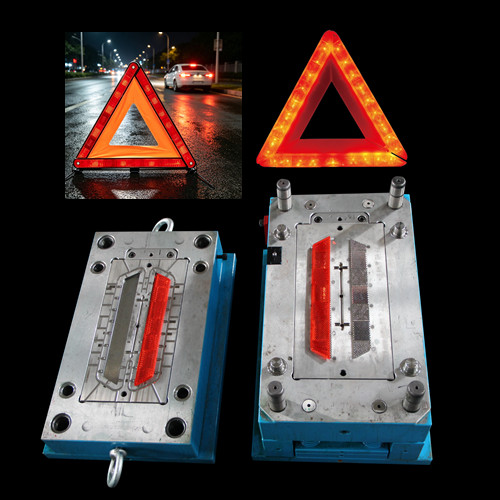
We are a professional mold manufacturer in Huangyan, China, specializing in high-precision injection molds for parking reflex reflectors and warning triangles. Our molds are made with durable steel for long service life, supporting custom designs and stable mass production to meet your automotive accessory manufacturing needs.
Parking reflex refletcor warning triangle mould