Are You Using the Right Motorcycle Plastic Mould?
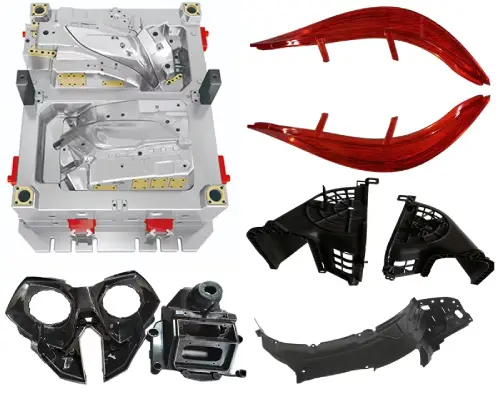
In the fast moving motorcycle manufacturing industry, aesthetics, performance, and cost efficiency are tightly interwoven. Whether you're producing scooters, off road bikes, or sports motorcycles, one of the most critical and often underestimated tools in the process is the motorcycle plastic mould. The choice of the right mould affects not only product quality but also production efficiency, cycle time, and final consumer satisfaction.
What Is a Motorcycle Plastic Mould?
A motorcycle plastic mould is a precision engineered tool used in injection molding machines to produce various plastic parts found on motorcycles. These moulds are critical in creating:
Front and rear fairings
Fuel tank covers
Side panels and seat cowls
Fender components
Motorcycle bumpers
Each component must meet strict dimensional tolerances and mechanical properties while often incorporating complex curves and styling lines. Moulds are typically made from hardened steel or pre hardened P20 steel, depending on volume and part geometry.
Types of Plastic Parts Manufactured with Motorcycle Mould
Motorcycle manufacturers rely heavily on plastic moulding for non-metal components. The types of moulded parts include:
Motorcycle body fairing moulds: Used for high-visibility parts with Class A surface finishes.
Motorcycle bumper moulds: These parts protect key frame areas and often have built-in aesthetics.
Handlebar and headlight casing moulds: Require tight fits and integration with lighting elements.
Under seat and side panel moulds: Engine covers and air intakes often use this tooling.
Younger Mould's experience in multi-cavity and precision-matching inserts ensures a seamless production process for these varied component types.
Key Materials Used in Motorcycle Plastic Moulding
The plastic resins used in motorcycle moulds vary based on functional and aesthetic requirements:
ABS (Acrylonitrile Butadiene Styrene): Commonly used for fairings due to its toughness and surface quality.
PC (Polycarbonate): Offers clarity and impact resistance for lens covers and wind deflectors.
PA6 (Nylon) with glass fibers: Used in engine-adjacent or structural covers where heat and strength matter.
PP (Polypropylene): Lightweight and flexible, suitable for inner trims and mudguards.
Selecting the right resin is part of the engineering process Younger Mould supports with resin flow simulation and cooling system optimization.
Core Considerations in Motorcycle Plastic Mould Design
The efficiency and repeatability of any motorcycle plastic mould rely on design fundamentals, including:
Gate location and type: For consistent flow and to avoid surface defects.
Ejection system: Ensures smooth release of complex curved parts like fuel tank covers or bumpers.
Cooling channels: Proper layout reduces cycle time and warpage.
Venting: Especially critical in long flow-length parts like fairings or fenders.
Advanced design software like UG, Moldflow, and SolidWorks is used by Younger Mould to simulate mold behavior before steel cutting begins.
Motorcycle Bumper Mould Design and Challenges
The motorcycle bumper mould is responsible for shaping one of the most protective plastic parts on a bike. Though small, its technical challenges include:
High strength requirements for impact absorption
Perfect symmetry and matching with fairing lines
Mounting points for brackets or shock absorbers
Matte or textured surface finishes for durability
Designing a motorcycle bumper mould involves reinforcing ribs, hidden parting lines, and integrating multiple mounting zones. Younger Mould applies EDM finishing and CNC engraving to ensure accurate contours and textures.
Multi Cavity and Modular Motorcycle Mould
For OEMs producing motorcycles across several models, multi cavity or modular moulds offer significant advantages:
Multi cavity moulds produce left / right side panels or multiple trim pieces in one shot.
Modular inserts allow the same base mould to be adapted for different bike models.
Interchangeable logo or branding cores allow flexibility for different regions or trim levels.
Younger Mould frequently designs such systems to support fast time-to-market without compromising tooling precision.
Common Defects in Motorcycle Plastic Molding and Their Solutions
Even with well-designed moulds, issues can arise during injection molding. Some common defects and their causes include:
Warpage: Caused by uneven cooling or poor material flow—solved by balanced cooling and gating design.
Short shots: Material doesn't fill cavity due to poor venting or gate design.
Sink marks: Caused by thick sections or uneven wall thickness.
Flash: Occurs when mold parting lines are not properly aligned or clamped.
Younger Mould's in-house mold trials and fine-tuning process include cavity pressure sensors and inspection protocols to eliminate such issues before full production.
Testing and Validation for Motorcycle Plastic Components
Plastic motorcycle parts must endure real-world conditions, including:
Vibration and road shock
UV exposure and weather cycles
Chemical exposure from fuel and lubricants
Thermal fluctuations near the engine area
For parts made with motorcycle plastic moulds, validation involves:
Dimensional accuracy using 3D scanners
Fatigue testing of mounting lugs and joints
Color and gloss measurement for fairings
Environmental cycling for bumper modules
Younger Mould works with OEMs to provide test-ready moulds that produce components meeting global motorcycle quality standards.
The Role of 3D Modeling and Simulation in Modern Motorcycle Mould
Digital simulation has revolutionized mould development. Using advanced 3D design and Moldflow analysis, engineers can predict:
Filling behavior to avoid weld lines or air traps
Cooling efficiency for reduced cycle times
Material shrinkage to ensure dimensional accuracy
Ejection force calculations to prevent damage during demolding
Younger Mould integrates these simulations early in the tooling process to validate complex part designs, such as wraparound fairings or interlocking bumper elements.
Future Trends in Motorcycle Moulding Technology
As motorcycles shift toward electric vehicles and advanced aerodynamic designs, moulds must evolve to meet new demands. Future trends include:
Lightweight composites and carbon fiber reinforced plastics
Smart textures that mimic carbon fiber or brushed metal finishes
Transparent panels for integrated displays or lighting
Precision inserts for sensors, cameras, and charging ports
Younger Mould stays ahead by investing in five-axis machining, hybrid material mold technology, and robotic demolding systems for complex motorcycle parts.
The difference between a premium-looking motorcycle and a substandard one often comes down to the quality of its plastic components—and, by extension, the quality of the motorcycle plastic mould used to make them.
From motorcycle mould for body panels to precision motorcycle bumper moulds, every element must be engineered with care, tested rigorously, and manufactured with precision. Suppliers like Younger Mould play a critical role in helping OEMs reduce development cycles, lower defect rates, and achieve consistent high quality output.
If your current tooling isn't delivering the results your production needs, it might be time to ask: Are you really using the right motorcycle plastic mould?
Younger Mould is a motorcycle plastic mould manufacturer in China, widely acknowledged for our exceptional quality, innovative solutions, and trusted reputation in the industry. Committed to excellence, we have built long standing relationships with clients across the globe. If you're seeking high quality motorcycle mould, please feel free to leave your contact details. Our dedicated team will provide you with competitive pricing and customized service to meet your specific needs.
Is Your Front Light BMC Mold Built for Mass Production?
How to Choose a Side View Mirror Mold?
Related Article