Automotive Injection Molding for Auto Parts Applications
Evolution of Automotive Injection Molding
During the early days of the automotive industry, cars were mainly made of metal, leading to large and overly heavy vehicles. However, as time progressed, there was a surge in the plastics market during the 1940s and 50s. This prompted automobile manufacturers to start considering the incorporation of plastic elements into their production processes.
By the 1970s, manufacturers began introducing cars with plastic decorative features, and by the 1980s, they expanded to include functional parts like plastic headlights, bumpers, and fenders.
In the 2000s, there were further developments as automotive manufacturers introduced the first plastic structural components for cars. These components offered the advantage of being lighter than their metal counterparts, leading to improved fuel efficiency and more economical production. Today, automotive injection molding stands as the primary method for manufacturing plastic car parts.
Advantages of Injection Molding for Automotive Applications
Automotive injection molding is a well-established production technique where automotive mold manufacturers inject molten plastic into a mold cavity. As the plastic cools, it solidifies into high-quality parts. The design of the mold is crucial to avoid defects, but the injection molding process itself offers several benefits for producing automotive plastic parts:
Consistency
Consistency is vital in the automotive industry, and injection molding excels at producing identical parts. Using robust metal molds ensures that the molded automotive parts are almost identical. Proper mold design and finishing guarantee a highly repeatable process, though certain factors can still influence it.
Scalability and Cost
Despite the high cost of mold production, injection molding is highly scalable, reducing overall costs as more parts are produced. This makes it ideal for mass production. However, for smaller production runs, the high tooling costs may limit the process's cost efficiency.
Material Versatility
Injection molding supports a broad range of materials, including rigid, flexible, and rubber plastics. The automotive industry uses various polymers such as ABS, polypropylene, acrylic, acetal, nylon, and polycarbonate, allowing manufacturers to meet diverse application needs.
Precision and Surface Finish
Injection molding is perfect for producing plastic parts with simple geometries, ensuring high precision and excellent surface finish quality. Manufacturers can directly incorporate various surface textures into the mold, such as glossy, rough, or matte finishes. However, the type of plastic material used can affect the final surface appearance.
Color Customization
Automotive plastic injection molding facilitates easy color customization to match the vehicle's color scheme. Unlike other methods, injection molding allows dyes to be mixed with raw material pellets before manufacturing. This results in consistent and solid coloration without the need for post-molding painting or tinting.
Rapid Prototyping with Rapid Tooling
Beyond mass production, injection molding is valuable for automotive prototyping. By using rapid tooling techniques such as additive manufacturing or CNC machining to create fast, low-cost aluminum molds, manufacturers can quickly produce prototype molded car components. This significantly reduces turnaround time compared to traditional steel tooling methods.
Production Applications of Automotive Injection Molding
Injection molding is extensively used in the automotive industry for producing plastic parts. While it's difficult to list all plastic components made using this method, here are some key examples:
Under-the-Hood Components In recent decades, many under-the-hood parts have transitioned from metal to plastic. Injection molding is commonly used to create components like cylinder head covers and oil pans. Robust polymers such as ABS, Nylon, and PET are often used, providing lighter weight and cost benefits compared to metal.
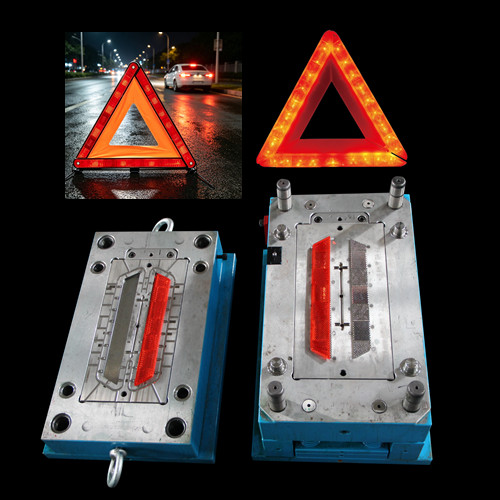
Exterior Components Injection molding is crucial for producing various exterior automotive parts, including fenders, grilles, bumpers, door panels, floor rails, and light housings. Splash guards, made from rubber or other flexible materials, are a prime example of the durability of injection-molded parts, protecting vehicles from road debris and reducing splashing.
Interior Components Injection molding is widely employed for manufacturing interior components. This includes instrumentation parts, interior surfaces, dashboard faceplates, door handles, glove compartments, air vents, and decorative plastic elements within the car.
This list highlights the versatility of automotive injection molding in producing high-quality parts with precision, making it a key production method for various automotive applications.
Alternatives to Injection Molding for Automotive Prototypes
While injection molding is widely used for producing plastic parts in the automotive industry, there are alternative methods suitable for creating low-cost prototypes. Here are a few options to consider:
3D Printing For some applications, 3D printing can replace molded plastic parts, particularly during the prototyping stage where extreme durability or a smooth surface finish is not critical. Moldable plastics can be used as filaments for Fused Deposition Modeling (FDM) printers or as powders for Selective Laser Sintering (SLS) printers, especially nylons. Some specialized 3D printers can also produce high-strength parts using reinforced composites. 3D printing is cost-effective for one-off prototypes since it eliminates the need for expensive tooling, reducing production costs.
Selective Laser Melting (SLM) Manufacturers may use SLM 3D printing for certain end-use automotive parts, such as fluid handling components like valves, which are not typically produced through injection molding. SLM uses a laser to selectively melt metal powders, enabling the production of complex, high-quality components.
Selective Laser Sintering (SLS) SLS 3D printing can create parts like bumpers, trim, and windbreakers, which are commonly injection molded. SLS uses a laser to sinter powdered materials, such as plastics, into solid objects. It offers design flexibility and can be a viable alternative for producing automotive prototypes.
Future Prospects Looking ahead, additive manufacturing techniques may expand to include a wider range of automotive parts. This could involve using SLM for doors and body panels, as well as Electron Beam Melting (EBM) for powertrain and drivetrain components.
While injection molding remains the primary method for mass-producing automotive plastic parts, these alternative processes provide flexibility, cost-efficiency, and rapid prototyping capabilities for certain applications in the automotive industry.
Some Frequently Asked Questions
What is the Best Material for Automotive Injection Molding Parts?
The best material for automotive injection molding depends on the specific part being produced. Commonly used plastics include PP (polypropylene) for seating, body, and under-the-hood components; PU (polyurethane) for seating and upholstery; and PVC (polyvinyl chloride) for seating, interior trim, electrical applications, and upholstery. We can help you select the most suitable material for your automotive parts.
Should I Use Injection Molding for Automotive Prototypes?
The decision depends on the quantity needed. For low-cost production runs, rapid tooling for injection molding can be effective. However, for just one or two prototypes, it might be more practical to use specialized prototyping technologies like additive manufacturing. These methods have lower upfront costs and are better suited for small-scale production.
How to choose Automotive Injection Mould Manufacturer?
Younger Mould focus on automotive industry and specializing in auto lamp project and transparent project like light guide & thick wall part one step solution provided from product & optics design, prototyping service, tooling development and injection moulding service.If you want to find proper automotive injection mould,please contact us and we will give you detailded response.
Injection Molding Services Provided from Plastic Mold Making Company for Auto Parts
Precision Technology for Auto Headlight Mould
Related Article