Automotive Injection Molding Guidelines
2024-08-30

Did you know that the global injection molding market for the automotive industry was valued at approximately $261.8 billion in 2021?
For automotive manufacturers, there's a pressing need for a dependable and economical method to produce plastic components in large volumes.
Traditional production techniques can be costly, slow, and sometimes inconsistent. What's required is a solution that meets the demands of the business efficiently and without excessive costs.
Enter automotive plastic injection moulding—a process that promises an efficient and cost-effective method for manufacturing a high volume of quality plastic components swiftly and dependably. Continue reading this article to gain comprehensive insights into automotive injection molding, ensuring you can make a well-informed decision for your operations.
What Is Automotive Injection Molding?
Automotive injection molding is a manufacturing technique that employs high-pressure injection of molten plastic to create a wide range of automotive components, including body panels, interior fittings, and engine components. It's a prevalent method for mass-producing plastic parts due to its ability to generate large volumes rapidly and economically.
This molding process is utilized in both the automotive OEM and the aftermarket industries.
The process of automotive injection molding involves melting plastic material and forcing it into a precisely crafted mold under high pressure. Within the plastic car mold, the plastic cools and hardens, resulting in robust parts with complex geometries and fine details. Common materials used for automotive injection molded parts encompass polypropylene, ABS, nylon, and other specialized plastics.
Benefits Of Injection Molding
Understanding the essence of automotive injection molding, let's explore its key benefits:
Cost effectiveness: This process is a leading choice in the automotive sector due to its economic efficiency. Injection molding accelerates production speed, which is faster than many other manufacturing methods, and significantly reduces material waste, leading to cost savings.
Speed: The automation and computerization inherent in injection molding contribute to its swiftness and efficiency, which is vital for maintaining a competitive edge by increasing productivity and keeping production costs down.
Quality: The precision of injection molding ensures uniform part thickness and high-quality output. It meets or exceeds industry standards with consistent performance and reliability, which is crucial for the automotive industry.
Durability: Materials like ABS and polypropylene used in injection molding are resilient and can withstand harsh conditions, ensuring the longevity of automotive components.
Design Flexibility: Injection molding provides greater freedom in design, allowing for experimentation with component sizes and shapes. This flexibility enables the creation of complex and innovative car designs that were previously unattainable.
Versatility: This method is not limited to cars; it can be used to manufacture parts for a variety of vehicles, including classic cars, boats, and airplanes. It can produce both exterior features like grilles and bumpers, and entire interior systems, enhancing the efficiency of vehicle production.
In summary, automotive injection molding is a critical process for the manufacturing of vehicle parts, offering a blend of efficiency, quality, and versatility that is essential for the industry.
How Injection Molding Automotive Works
The automotive injection molding process is renowned for its efficiency and the numerous advantages it brings to car manufacturers. Let's expand on the intricacies of this process to understand its full scope.
Initial Design and Mold Creation:
The journey of automotive injection molding begins with the conceptualization of the part. Using Computer-Aided Design (CAD) software, engineers create a virtual model of the component with precision. This digital blueprint is critical as it dictates the dimensions and shape of the mold required for the injection process. From this model, a mold is crafted, typically using metal alloys, to withstand the high pressures and temperatures involved in the molding process.
Material Preparation and Injection:
The material selection is the next critical step. Plastic resins, such as polypropylene or ABS, are chosen based on the desired properties of the final part, such as strength, flexibility, and heat resistance. The selected plastic material is then pelletized or granulated for uniformity and fed into the injection molding machine.
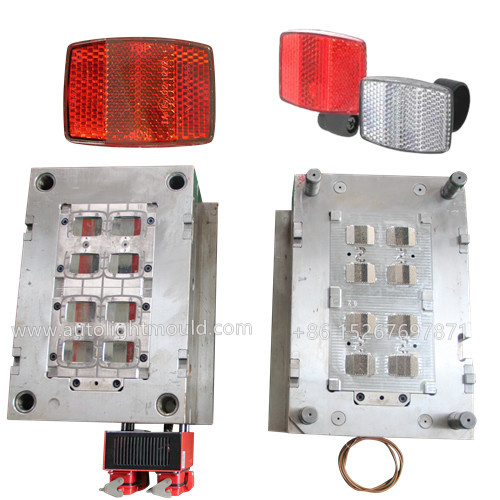
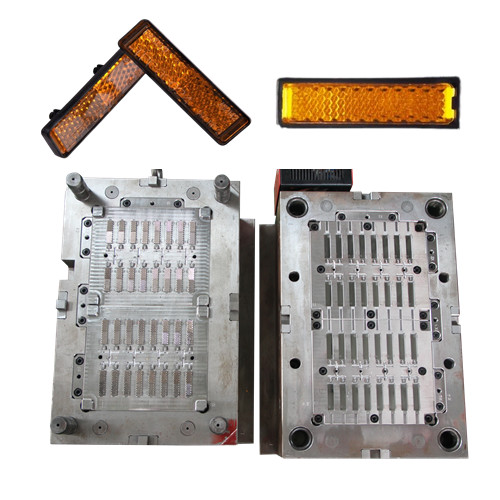
The machine heats the plastic to a molten state and injects it under high pressure into the prepared mold. The mold is designed with precision to have two halves: a static half defining the outer shape of the part and a movable half that allows for part removal.
Cooling and Solidification:
Once the molten material fills the mold, it is allowed to cool and solidify within the confines of the mold's shape. This phase is crucial as it determines the final form and detail of the part. The cooling system within the mold helps to regulate the temperature and speed of the solidification process, ensuring the part maintains its shape and detail as it cools.
Ejection and Post-Processing:
After the material has fully solidified, the mold is opened, and the part is ejected using specialized machinery. This ejection must be carefully controlled to avoid damaging the part's intricate details. The ejected part may then undergo further processes such as trimming, painting, or assembly with other components.
Quality Control and Final Inspection:
Before the parts are sent for assembly, they undergo a series of quality control checks to ensure they meet the required specifications. This may include visual inspections, dimensional checks, and durability tests to guarantee that each part is up to standard.
Advantages of the Process:
The automotive injection molding process offers a streamlined manufacturing solution with several benefits:
Efficiency: The process is highly automated, reducing the need for manual labor and increasing production speed.
Precision: Parts produced through injection molding are consistent in quality and dimensions, adhering to tight tolerances.
Complexity: The process can produce parts with complex geometries and integrated features that would be difficult or impossible to achieve with other manufacturing methods.
Material Utilization: Injection molding minimizes material waste, as the process uses only the amount of material needed for each part.
In conclusion, the automotive injection molding process is a sophisticated yet efficient method that has become indispensable for the automotive industry, enabling the production of high quality, complex parts at scale.
Ready To Try Injection Molding?
Younger Mould is one of a popular china plastic injection molding car parts manufacturers, who has earned a good reputation and position in the industry, gaining the trust and praise of numerous customers. If you are interested in our injection molding automotive parts products, please leave your contact information, and we will provide you with favorable quotations and meticulous car bumper injection moulding services.
2K Double Color Tail Light Injection Mould Production Process
Motorcylce Tail light mould Process
Related Article

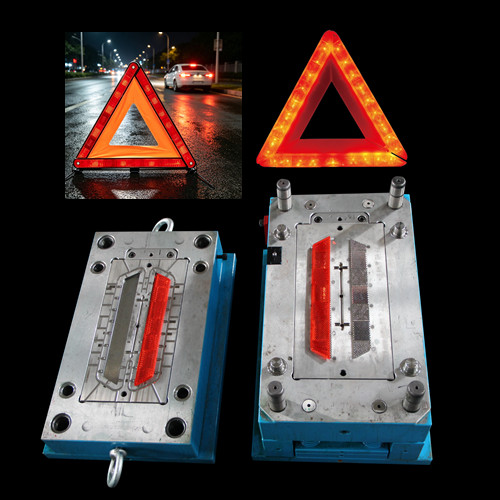
We are a professional mold manufacturer in Huangyan, China, specializing in high-precision injection molds for parking reflex reflectors and warning triangles. Our molds are made with durable steel for long service life, supporting custom designs and stable mass production to meet your automotive accessory manufacturing needs.
Parking reflex refletcor warning triangle mould