BMC Compression Molding for Automotive
2026-01-30
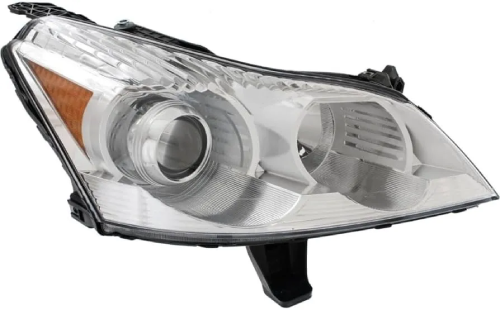
Younger Mould Bulk Molding Compound (BMC) represents a sophisticated composite material that has fundamentally transformed automotive lighting component manufacturing through its unique combination of thermoset resin, glass fibers, mineral fillers, and specialized additives. Unlike conventional thermoplastics that soften under high temperatures, BMC maintains dimensional stability and mechanical integrity even when exposed to the intense thermal loads generated by modern high intensity discharge (HID) and LED headlamp systems. This thermal resistance, typically exceeding 200°C continuous service temperatures, makes BMC compression molding the preferred manufacturing process for critical automotive components where reliability cannot be compromised.
Chapter 1: The Material Science Behind BMC and Its Strategic Role in Automotive Lighting Systems
The formulation science behind automotive-grade BMC involves precise control of glass fiber content, usually ranging from 20% to 30% by weight, which provides exceptional mechanical strength while maintaining flow characteristics necessary for complex mold geometries. Mineral fillers such as calcium carbonate and alumina trihydrate contribute to dimensional stability and reduce thermal expansion coefficients to match adjacent metal components, preventing stress-induced failures during thermal cycling. Perhaps most critically for lighting applications, BMC formulations can be tailored with specialized reflectivity additives that enhance light distribution efficiency while maintaining the structural integrity required for automotive safety standards.
The automotive industry's adoption of BMC compression molding has accelerated with the transition to LED and laser lighting technologies, which generate concentrated heat loads that challenge traditional plastic materials. Headlamp reflectors manufactured through BMC compression molding must maintain precise optical geometries over the vehicle's entire service life, with tolerances often measured in microns to ensure optimal beam patterns and regulatory compliance. This demanding application environment has driven continuous innovation in BMC material science, with manufacturers developing formulations that combine high reflectivity, thermal management capabilities, and resistance to automotive fluids and environmental exposure.
Chapter 2: The BMC Molding Process
The BMC molding process represents a carefully orchestrated sequence of material handling, compression forming, and thermal curing operations that distinguish it from conventional injection molding techniques. The process begins with material preparation, where BMC is typically supplied in pre-weighed logs or pellets that maintain consistent fiber orientation and resin distribution. Unlike injection molding where high shear forces can damage reinforcing fibers, BMC compression molding preserves fiber length and alignment, resulting in superior mechanical properties and dimensional stability in the final component.
Material charging represents the first critical control point in the BMC molding process. Automated weighing systems ensure precise material quantities are placed into the heated mold cavity, with typical charge weights ranging from 50 to 500 grams depending on component size and complexity. The mold temperature, typically maintained between 140°C and 180°C, initiates the cross-linking reaction in the thermoset resin while allowing the material to flow and fill intricate cavity geometries under controlled pressure. This combination of heat and pressure, usually ranging from 500 to 2000 psi depending on component requirements, enables the production of parts with exceptional surface finish and minimal internal stresses.
The curing phase of the BMC molding process requires precise thermal management to achieve complete polymerization without thermal degradation. Modern BMC compression molding equipment incorporates sophisticated temperature control systems that monitor and adjust heat distribution across the mold surface, ensuring uniform curing throughout complex three-dimensional geometries. Cure times typically range from 60 to 180 seconds, with longer cycles required for thicker sections or components requiring exceptional dimensional stability. Post-curing operations may be employed for critical applications to relieve residual stresses and optimize mechanical properties before components undergo final machining or assembly operations.
Chapter 3: BMC Mold Design and Manufacturing: Engineering Complexities for Automotive Lighting Applications
The design and construction of BMC molds for automotive lighting components represents one of the most technically demanding segments of precision mold manufacturing, requiring specialized expertise in optical surface finishing, thermal management, and material flow dynamics. Headlamp reflector molds must achieve optical-grade surface finishes with roughness values below 0.1 microns to ensure proper light reflection and beam pattern control, necessitating diamond turning or precision polishing techniques that approach the tolerances required for optical lens manufacturing.
Thermal management systems within BMC molds play a critical role in process efficiency and component quality. Unlike thermoplastic molds where cooling dominates the cycle time, BMC compression molds require carefully balanced heating systems to maintain consistent cavity temperatures throughout the curing process. Advanced mold designs incorporate conformal heating channels that follow complex cavity geometries, ensuring uniform heat distribution even in deep-draw reflector configurations where traditional straight-drilled channels would create thermal gradients and curing inconsistencies.
Ejection system design presents another critical challenge in BMC mold engineering, particularly for components with complex undercuts or delicate optical features. The cross-linked nature of cured BMC creates significant adhesion forces between the component and mold surfaces, requiring sophisticated ejection mechanisms that distribute forces evenly to prevent surface damage or dimensional distortion. Some advanced BMC molds incorporate vacuum-assisted ejection systems or controlled decompression sequences that gently separate components from critical optical surfaces without introducing mechanical stresses that could compromise performance.
Manufacturing facilities specializing in automotive BMC molds have developed proprietary expertise in handling the abrasive nature of glass-filled compounds. Mold steel selection typically involves high-chromium tool steels or specialized coatings that resist wear from repeated exposure to glass fiber reinforcement. Leading mold manufacturers maintain comprehensive quality control protocols throughout the manufacturing process, including coordinate measuring machine validation of critical dimensions, surface profilometry for optical areas, and flow analysis simulations to optimize material distribution and minimize weld lines in complex geometries.
Chapter 4: Quality Assurance and Industry Standards in BMC Compression Molding for Automotive Components
Quality assurance in BMC compression molding for automotive applications extends far beyond dimensional inspection, encompassing material certification, process validation, and performance testing protocols that ensure components meet stringent automotive safety and reliability standards. Material traceability represents the foundation of quality control, with reputable BMC suppliers providing certificates of analysis documenting resin chemistry, fiber content, filler composition, and mechanical property data for each production batch. This documentation enables molders to correlate material variations with process parameters and component performance, creating closed-loop quality systems that continuously improve manufacturing consistency.
In-process monitoring systems have become increasingly sophisticated in modern BMC compression molding operations, incorporating sensors that track critical parameters such as mold temperature distribution, compression force profiles, and cure progression in real-time. These monitoring capabilities enable early detection of process deviations before they affect component quality, allowing for immediate corrective actions that minimize scrap rates and maintain production efficiency. Advanced facilities may employ non-destructive testing methods such as ultrasonic inspection or thermal imaging to verify internal cure consistency and identify potential defects that might not be visible through conventional visual inspection.
Automotive industry standards governing BMC compression molded components include ISO/TS 16949 quality management requirements, specific OEM material specifications, and performance testing protocols that simulate real-world operating conditions. Headlamp reflectors undergo rigorous environmental testing including thermal cycling between -40°C and 150°C, vibration exposure simulating years of road conditions, and chemical resistance testing against automotive fluids and cleaning agents. These validation procedures ensure that BMC compression molded components maintain their optical and structural performance throughout the vehicle's service life, meeting the reliability expectations of automotive manufacturers and end consumers.
Frequently Asked Questions
What distinguishes BMC compression molding from traditional injection molding for automotive lighting components?
BMC compression molding preserves fiber length and orientation through low-shear material flow, resulting in superior mechanical properties and dimensional stability compared to injection molding where high shear forces can damage reinforcing fibers. Additionally, the thermoset nature of BMC provides exceptional thermal resistance and creep resistance essential for headlamp applications exposed to high operating temperatures.
How does the BMC molding process achieve the optical surface quality required for headlamp reflectors?
The BMC molding process combines precision mold surface finishing with controlled material flow and curing parameters to replicate optical-grade mold surfaces onto component surfaces. Advanced BMC formulations with optimized filler particle sizes and specialized mold release systems prevent surface defects while maintaining the dimensional stability required for precise light reflection and beam pattern control.
What are the critical design considerations for BMC molds used in automotive lighting applications?
Critical BMC mold design considerations include optical surface finishing below 0.1 micron roughness, conformal heating systems for uniform temperature distribution, sophisticated ejection mechanisms to prevent surface damage, and wear-resistant mold steels or coatings to withstand the abrasive nature of glass-filled BMC compounds over thousands of production cycles.
How does material selection impact the performance of BMC compression molded automotive components?
Material selection critically impacts thermal resistance, mechanical strength, dimensional stability, and optical properties of BMC compression molded components. Automotive-grade BMC formulations balance glass fiber content for strength, mineral fillers for dimensional control, and specialized additives for reflectivity and environmental resistance to meet specific application requirements and regulatory standards.
What quality control measures ensure consistency in high volume BMC compression molding operations?
Comprehensive quality control measures include material batch traceability and certification, real-time process monitoring of temperature and pressure parameters, dimensional inspection using coordinate measuring machines, non-destructive testing for internal defects, and performance validation through environmental and mechanical testing protocols that simulate actual operating conditions.
Why BMC Injection Molding Process Is Critical?
Car Light BMC Mold Manufacturing
Related Article

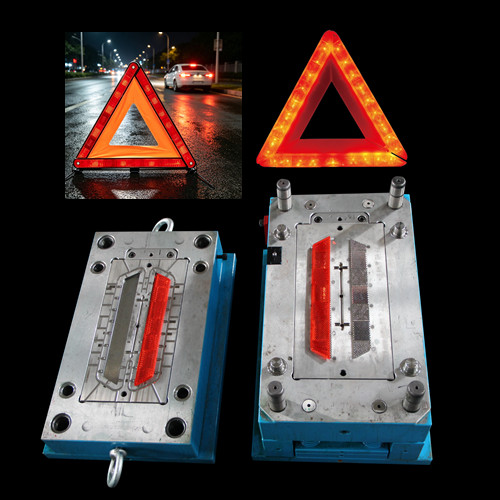
We are a professional mold manufacturer in Huangyan, China, specializing in high-precision injection molds for parking reflex reflectors and warning triangles. Our molds are made with durable steel for long service life, supporting custom designs and stable mass production to meet your automotive accessory manufacturing needs.
Parking reflex refletcor warning triangle mould