Can a Light Guide Mold Enhance the Performance of Auto Lamps?
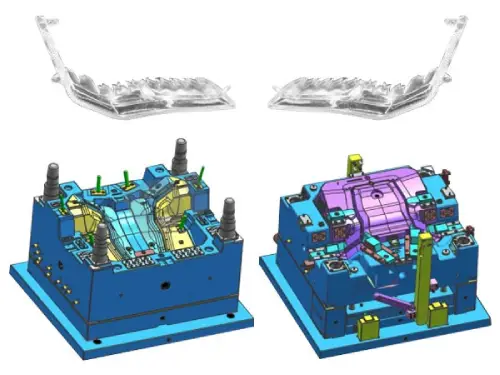
In the modern automotive lighting industry, precision and efficiency are more critical than ever. One of the key components enabling high performance illumination systems is the light guide mold , which plays a central role in shaping light distribution for applications such as tail lamps, daytime running lights (DRLs), and interior ambient lighting.
What Is a Light Guide Mold?
A light guide mold is a specialized injection mold used to produce transparent or semi transparent optical components known as light guides. These components are designed to channel, diffuse, or redirect light from an LED source to achieve uniform illumination across a defined surface or path.
The mold itself must be engineered with extreme precision to ensure that the resulting molded light guide maintains optical clarity, dimensional accuracy, and structural integrity. Typically made from materials like polycarbonate (PC) or polymethyl methacrylate (PMMA), these molded parts must meet strict tolerances to avoid issues like light leakage, distortion, or uneven brightness.
From a manufacturing perspective, the complexity of a light guide mold lies not only in its shape but also in the microstructures embedded within the mold cavity—such as prisms, grooves, or diffusion patterns—that influence how light behaves once injected into the guide.
The Role of Molded Light Guide Components in LED Lighting Systems
LED technology has revolutionized automotive lighting due to its energy efficiency, long lifespan, and design flexibility. However, LEDs emit directional and often non-uniform light, which necessitates the use of molded light guide components to optimize light output.
These guides act as conduits, capturing light at one end and distributing it evenly along their length using internal reflective surfaces and strategically placed scattering features. This process is especially important in thin, elongated designs like DRLs or signal lamps, where space is limited but visibility is crucial.
To achieve this, manufacturers rely on advanced light pipe molding techniques that allow for precise replication of micro-optical structures within the mold. The success of this process hinges on the quality of the light guide mold , which must support consistent material flow, minimal shrinkage, and excellent surface finish.
Designing a Light Guide Light Integrator Mold for Uniform Illumination
One of the most sophisticated applications of light guide technology is in the creation of light guide light integrator molds , which are used to fabricate components that homogenize light before it reaches the viewer.
A light integrator ensures that variations in the LED source—such as hotspots or color inconsistencies—are minimized. In automotive lighting, this results in a cleaner, more professional appearance that enhances brand perception and meets regulatory standards.
Designing a light guide light integrator mold requires a deep understanding of optical physics and polymer behavior. Engineers must consider factors such as refractive index, total internal reflection (TIR), and light extraction efficiency when shaping the mold cavity. Additionally, simulation tools like Zemax or TracePro are often employed to model light paths and optimize the placement of microstructures within the mold.
The mold's surface finish also plays a critical role. A mirror-polished core ensures minimal scattering losses, while textured zones can be strategically introduced to control light emission points. Such fine-tuned design ensures that each molded light guide performs consistently across thousands of units.
Transparent Light Pipe Mold: Balancing Clarity and Structural Integrity
Another essential component in automotive lighting systems is the transparent light pipe , which serves as a medium for transferring light between modules or through complex geometries. The mold used to produce these pipes—known as a transparent light pipe mold —must balance optical clarity with mechanical strength.
Polymers like PMMA and PC are commonly used due to their transparency and ability to withstand environmental stressors such as UV exposure and thermal cycling. However, achieving perfect clarity during light pipe molding requires meticulous control over processing parameters like melt temperature, injection speed, and cooling time.
Air traps and weld lines are common defects in transparent light pipe mold production, so mold designers often incorporate vacuum-assisted filling systems and sequential valve gating to prevent these issues. Additionally, post-processing steps like annealing may be required to relieve residual stresses and improve optical performance.
For companies producing led light guide mold components, mastering the art of transparent molding is essential. It allows them to create lightweight, durable, and optically superior products that meet the evolving demands of modern vehicle lighting.
How Led Light Guide Mold Enhances Custom Lighting Solutions
As vehicles become more personalized, the demand for custom lighting effects continues to rise. This trend has led to increased interest in led light guide mold solutions tailored to unique design specifications.
An led light guide mold must accommodate specific light entry angles, output patterns, and aesthetic elements such as branding logos or signature light signatures. Unlike generic molds, custom versions require close collaboration between lighting engineers and mold designers to ensure that both form and function are optimized.
One example is the use of light pipe molding to create curved or contoured guides that fit seamlessly into aerodynamic vehicle designs. These complex shapes pose challenges in terms of mold release, undercuts, and material flow uniformity, which experienced mold makers address through multi-slide cores, hot runner systems, and real-time process monitoring.
Moreover, the integration of smart lighting features—such as adaptive driving beams or dynamic turn signals—requires additional considerations in mold design. Channels for sensors, mounting points for PCBs, and heat dissipation structures may all need to be incorporated without compromising optical performance.
Best Practices in Light Pipe Molding for High Volume Production
Mass producing molded light guide components efficiently requires adherence to best practices in light pipe molding . These include:
Material Selection: Choosing resins with high transparency, low yellowing, and good thermal resistance.
Mold Temperature Control: Maintaining stable mold temperatures to reduce warpage and internal stress.
Process Optimization: Fine tuning injection pressure, cooling time, and gate positioning to minimize defects.
Quality Assurance: Implementing in-line inspection systems, such as vision detection or luminance testing, to ensure consistency.
Automotive lighting manufacturers who invest in advanced light guide mold technologies and adopt lean manufacturing principles can significantly reduce waste, increase throughput, and deliver higher quality products to market faster.
As LED lighting becomes standard across all vehicle segments, the importance of light guide mold technology will only continue to grow. From light guide light integrator mold systems that enhance uniformity to transparent light pipe mold designs that enable creative styling, the engineering behind these tools is reshaping the way we think about automotive illumination.
By understanding the science of light pipe molding , the nuances of led light guide mold customization, and the value of precision in molded light guide production, industry professionals can better navigate the complexities of modern lighting design.
Whether you're involved in product development, tooling, or manufacturing, staying informed about the latest advancements in light guide mold technology is essential for remaining competitive in today’s fast paced automotive lighting market.
Younger Mould is a trusted name in automotive light guide light integrator mold, recognized worldwide for our commitment to quality, innovation, and dependability. We focus on delivering precision transparent light pipe mold and provide customized solutions at competitive rates. Share your contact details, and our team will be in touch to support your specific needs.
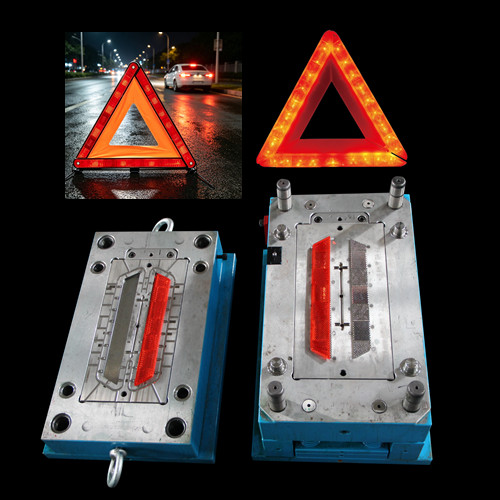
Elector forming insert for triangle warning reflector
Optic Lens Mold Manufacturing for Automotive Industry
Related Article