Car Light BMC Mold Manufacturing
2026-01-30
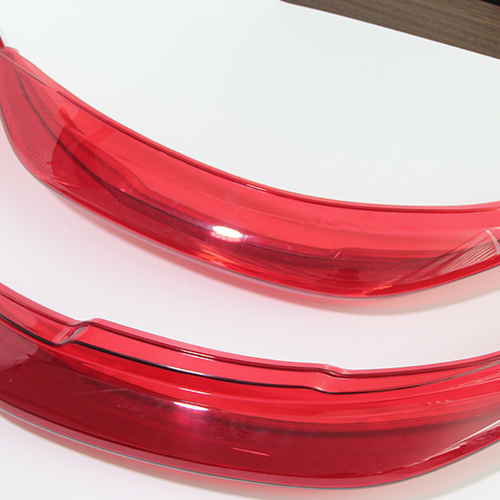
The automotive industry's unrelenting push toward safety, performance, efficiency, and cost optimization has made lighting systems a central focal point of vehicle development. Whether it's LED matrices, adaptive headlights, or aerodynamically optimized reflector assemblies, the demand for high-precision tooling is growing rapidly. Among the most crucial components in this realm is the car light BMC mold — tooling designed to produce reflectors and lighting housings using BMC bulk molding compound in high-volume manufacturing environments.
Section I — Why BMC and BMC Molding Matter in Automotive Lighting
1. What Is BMC (Bulk Molding Compound) and Its Unique Application in Automotive Lighting
At its core, BMC (Bulk Molding Compound) refers to a thermoset composite composed of short glass fibers, unsaturated polyester resin, fillers, catalysts, and stabilizers blended into a homogeneous mass. This unique composition offers a combination of mechanical strength, dimensional stability, heat resistance, and excellent electrical insulation — attributes essential for lighting reflectors and internal housings.
In automotive headlamp assemblies and reflector components, BMC's advantages manifest clearly:
BMC materials can withstand the thermal cycling and mechanical vibrations inherent in vehicle operation.
Thermoset behavior eliminates deformation under heat, improving optical alignment and reflector precision.
Molded reflectors often require minimal secondary machining thanks to BMC's stable flow characteristics and ability to produce complex shapes in one shot.
These qualities make BMC molding a preferred method behind many modern reflector manufacturing processes.
2. The Distinctive Role of BMC Molding in Automotive Lighting vs. Thermoplastics
While thermoplastics like PC (polycarbonate) and PMMA (polymethyl methacrylate) are widely used in lenses and outer covers, BMC bulk molding compounds occupy a specialized niche for structural reflector and internal lighting components. BMC offers superior heat distortion resistance which is critical when reflectors sit close to high-powered LED sources.
In contrast, thermoplastics — though effective for exterior components — often require secondary reinforcement and may exhibit greater shrinkage and warpage. The BMC approach thus trades a more complex molding process for long-term dimensional fidelity and part performance.
3. How BMC Bulk Molding Compound Enables Weight and Cost Efficiencies
As the automotive industry accelerates its shift toward fuel economy and electrification, lightweighting remains a core strategic objective. Every kilogram saved contributes to either extended EV range or improved fuel efficiency in combustion vehicles.
BMC materials — typically lighter than metallic alternatives and highly suited to structural integration — help manufacturers reduce part count and simplify assemblies. A precisely engineered car light BMC mold can produce reflectors that do not need heavy metal housings, reducing both weight and upstream manufacturing expenses.
Section II — What Makes a Top-Tier Car Light BMC Mold Supplier? Key Criteria and Capabilities
1. Precision Engineering and Mold Design Expertise
The essence of a high-performing car light BMC mold lies in its design and engineering foundation. Automotive lighting components often require tight optical tolerances and smooth surface finishes that directly influence beam patterns and lighting performance. This means a supplier must possess:
Advanced mold flow simulation capabilities to anticipate material behavior.
Venting and gating strategies tailored to thermoset materials like BMC.
Surface polishing and tooling accuracy at micron-level tolerances.
Without such expertise, defects like voids, incomplete fill, or warp can compromise lighting performance — and subsequently, vehicle safety.
2. Manufacturing Experience Across Multiple Automotive Lighting Parts
A top BMC molding manufacturer will typically support a wide spectrum of lighting components beyond headlamp reflectors, such as tail lamps, daytime running light (DRL) housings, and fog lamp structures. Suppliers capable of producing these diverse parts often have broader process knowledge and can approach complex projects with systems-level insights.
For example, companies like Long-established automotive tooling firms in Taizhou, China offer experience in multi-cavity reflectors, vacuum-assisted molds, and precision tolerancing tailored for the high throughput demands of global OEMs.
3. Material Expertise and Compound Optimization
The quality of the BMC bulk molding compound itself — including its fiber content, resin formulation, and additive package — directly influences final part performance. Top suppliers work closely with compound producers and material engineers to tailor mixes that balance:
Flow characteristics for complex cavities.
Heat resistance for LED applications.
Dimensional stability over large planar surfaces.
This symbiotic relationship between mold design and material science differentiates commodity mold shops from strategic partners capable of driving next-gen automotive lighting solutions.
Section III — Leading Global Trends in Car Light Mold Supply and BMC Manufacturing
1. Regional Strengths and Global Collaboration in Lighting Mold Supply
The supply ecosystem for automotive lighting can be broadly segmented by region:
Asia (China & Taiwan) has emerged as a powerhouse for mold manufacturing, with high volume capabilities and deep experience in BMC tooling. Taiwanese mold makers, for instance, produce automotive lighting molds covering lenses, housings, reflectors, and exterior decorative elements.
Europe contributes specialized engineering prowess and advanced process control, driven by stringent automotive safety standards and deep R&D investments.
These regional strengths often converge through global partnerships where engineering prowess from Europe or Japan combines with high-volume production expertise in Asia.
2. The Rise of Integrated Mold Development and Smart Manufacturing
Manufacturers are increasingly investing in smart manufacturing tools like computerized process monitoring, real-time mold temperature and pressure control, and integrated simulation packages. These technologies help:
Accelerate product development cycles.
Reduce trial-and-error in molding setups.
Ensure stable quality across long production runs.
For car lighting, where reflector performance must remain consistent over millions of vehicles, process control is critical.
3. Sustainability and Lifecycle Focus in BMC Molding Practices
Sustainability has become more than a buzzword — it now influences material selection and tooling practices throughout the automotive supply chain. Automotive lighting suppliers are exploring:
BMC compounds with lower environmental impact.
Recycling strategies for off-spec and sprue materials.
Mold design that minimizes waste while maintaining part integrity.
While BMC's thermoset nature makes recycling challenging compared to thermoplastics, innovations in compound engineering aim to reduce embodied carbon and improve lifecycle profiles.
Section IV — Comparative Insights: Evaluating BMC Mold Manufacturers for Automotive Lighting
1. What Engineers and Buyers Prioritize in a BMC Molding Supplier
Across global supply searches and engineering forums, buyers commonly evaluate suppliers on the following criteria:
Technical competence: Does the supplier demonstrate understanding of BMC material behavior and optical component tolerances?
Capacity and throughput: Can the supplier support mass production with multi-cavity, long-life molds?
Quality system maturity: Does the supplier adhere to automotive quality frameworks and inspection processes?
Communication and engineering support: Does the supplier provide design for manufacturability (DFM) feedback early in the project?
These factors often outweigh purely cost-driven decisions, as headlamp and reflector failures can lead to warranty expense and brand risk.
2. Case Snapshot: Younger Mould and Its Position in the BMC Automotive Lighting Landscape
In the broader context of tooling specialists, companies like Younger Mould (shown through industry references) highlight the role of skilled design teams and project planning in delivering reliable tooling outcomes. Their focus on comprehensive mold planning, design clarity, and technical optimization reflects what many engineering teams now expect from strategic BMC mold partners.
The emphasis is not simply on producing a tool but ensuring that the tool aligns with part performance, cycle efficiency, and long-term reliability in a global automotive context.
3. Supplier Diversification: A Strategic Requirement
Leading OEMs and Tier 1 lighting manufacturers often work with multiple tooling partners to mitigate risk, ensure supply continuity, and stimulate competitive innovation. A diversified supplier base — with regional strengths — also helps companies respond nimbly to shifts in demand, material changes, or new lighting technologies like adaptive LED or laser headlights.
4. Future-Focused Innovations in BMC Mold Technology
Looking ahead, several innovations are shaping the next wave of tooling advancements:
Hybrid molding techniques combining BMC with SMC or thermoplastic modules to tailor material properties.
Embedded optical elements manufactured directly in reflector surfaces to improve beam control.
Advanced alloy mold steels and surface coatings that extend tool life and reduce maintenance cycles.
These directions reflect a broader evolution where mold technology not only supports manufacturing efficiency but also contributes to product performance differentiation.
Frequently Asked Questions (FAQ)
Q1. What is a car light BMC mold?
A: It is a precision tool designed to shape lighting components such as reflectors, housings, and structural parts using BMC bulk molding compound in high-volume automotive lighting manufacturing.
Q2. Why is BMC molding preferred for automotive reflectors?
A: BMC offers dimensional stability, heat resistance, and mechanical strength — critical for reflectors that operate near heat-producing light sources and must maintain precise shapes for optical performance.
Q3. How does a BMC molding manufacturer differ from a typical injection mold maker?
A: BMC molding requires specialized understanding of thermoset flow, curing behavior, and mold venting strategies, which differ significantly from conventional thermoplastic molding.
Q4. What are common challenges in BMC mold production?
A: Ensuring uniform fill without voids, managing shrinkage during cure, and achieving polished surfaces for optical components are all technical hurdles that experienced suppliers must address.
Q5. How should buyers evaluate potential BMC mold suppliers?
A: Prioritize technical expertise, quality systems, capacity for long-life tooling, and early engineering collaboration capabilities.
BMC Compression Molding for Automotive
What Is a BMC Injection?
Related Article

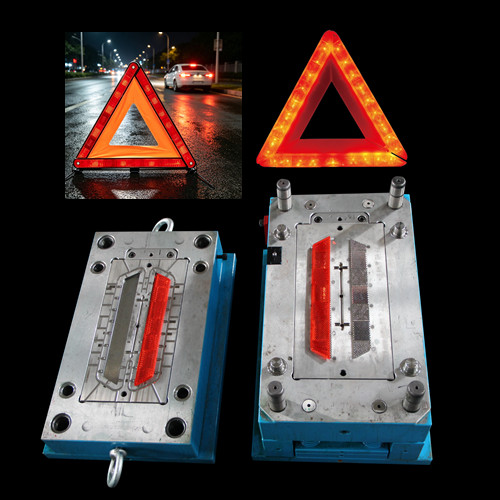
We are a professional mold manufacturer in Huangyan, China, specializing in high-precision injection molds for parking reflex reflectors and warning triangles. Our molds are made with durable steel for long service life, supporting custom designs and stable mass production to meet your automotive accessory manufacturing needs.
Parking reflex refletcor warning triangle mould