How to Choose Automotive Tail Light Mold for OEM Engineers?
2026-02-27
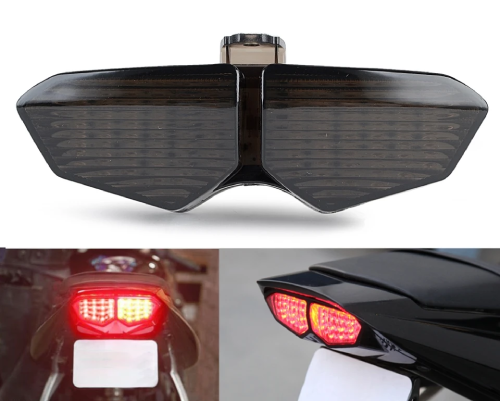
Automotive tail light mold — which shapes lenses, housings, and structural components that must satisfy stringent performance, optical, and aesthetic standards, is an important component in vehicle manufacturing. But, how to choose it?
Technical Foundations of Automotive Tail Light Mold Engineering
What Is an Automotive Tail Light Mold?
An automotive tail light mold is a precision tool used to shape molten polymer into high quality tail lamp lenses and housings. These molds must deliver components with:
High optical clarity
Precise dimensional tolerances
Uniform wall thickness to avoid optical distortion
Structural integrity to withstand mechanical and thermal stresses
Automotive tail lamp mold tooling is typically manufactured from hardened steels using precision CNC machining, EDM (electrical discharge machining), and advanced surface finishing to achieve optical grade surfaces.
Dual Material Integration and Lens / Reflector Complexity
Modern tail light assemblies often combine:
Clear or tinted polymer lenses
Reflective surfaces
Integrated LEDs or light guides
Complex multi cavity designs for dual-function lighting (brake, turn, reverse)
Achieving these combinations often involves complex mold designs, such as:
Multi shot molding: Enables two or more materials or colors in one cycle.
Insert molding: Allows inclusion of metallic inserts or preformed components.
Over molding: Combines soft-touch seals with rigid structural parts.
Understanding how these techniques influence tooling design, cycle time, and quality is central to production planning.
Material Science: Selecting Polymers for Tail Light Applications
Material selection drives performance and manufacturability. Common choices include:
Polycarbonate (PC): High impact resistance and optical clarity.
Acrylic (PMMA): Excellent surface finish but lower impact resistance.
PC / ABS blends: Balanced toughness and processability.
Each material behaves differently during molding:
PC has high melt strength, requiring controlled thermal profiles.
PMMA needs careful cooling management to avoid internal stress that leads to crazing or cracking.
Blends require tailored gate and runner designs to manage flow.
These factors influence mold design — from gate placement to cooling channel configuration — to ensure consistent quality.
Precision in Optical Surface Quality
Optical quality in tail light lenses is paramount: surface texture, finish, and absence of flow lines determine light dispersion and regulatory compliance. Achieving this requires:
Fine-polished mold cavities
Advanced surface texturing techniques
Consistent processing conditions that avoid weld lines or air entrapment
High precision tooling — as demonstrated by leaders like Younger Mould — combines surface engineering expertise with process control to produce optical components that meet industry standards.
Manufacturing Dynamics: Tail Light Mold Processes and Quality Control
Injection Molding Fundamentals for Tail Lamp Components
Injection molding remains the primary process for producing automotive tail lamp parts due to its capabilities for precision and repeatability. A typical cycle includes:
Material Melting: Polymer is heated to a controlled molten state.
Injection: Material is injected into the cavity at high pressure.
Packing and Holding: Pressure is maintained to compensate shrinkage.
Cooling: The part solidifies within the cooled mold.
Ejection: The part is released for inspection.
In taillight applications, controlled cooling is critical because thermal gradients can cause internal stresses, leading to optical distortion or dimensional variation.
Cycle Optimization and Process Stability
Tail light molding demands process stability across production volumes. Smart control systems monitor:
Injection pressure and speed
Melt temperature
Cavity pressure (via in-mold sensors)
Cooling water temperatures
Maintaining these parameters within narrow windows ensures that every part meets optical and structural standards, especially when producing thousands of parts per shift.
Multi Cavity Molds and Production Efficiency
To meet high volume demands, B2B facilities often deploy multi-cavity molds. These are tooling sets that produce multiple identical parts in a single cycle. Multi-cavity designs require:
Harmonized flow paths to ensure uniform fill
Balanced cooling circuits
Precision gate design to avoid variance between cavities
The complexity of multi-cavity tail light molds increases engineering demands, but also improves throughput and amortizes tooling costs over larger production runs.
In-Process Quality Assurance
Quality practices in tail light molding extend beyond tooling design into production monitoring:
Viual inspection for optical defects
Dimensional verification using laser scanning
Functional testing for fit and assembly performance
Automotive OEMs and tier-one suppliers often implement statistical process control (SPC) to monitor production trends and catch deviations early.
Comparing Automotive Tail Lamp Mold to Motorcycle Taillamp Mold Requirements
Automotive vs Motorcycle Taillamp Mold: Design and Performance Differences
Though both automotive and motorcycle lighting systems perform similar functions, their molding requirements diverge:
Automotive Tail Lamp Mold Considerations
Larger, more complex multi-material assemblies
Higher production volumes
Stricter regulatory requirements for dispersion and visibility
Integrated lighting systems with multiple optical zones
Motorcycle Taillamp Mold Considerations
Smaller geometries, often more intricate curves
Higher emphasis on styling and compact packaging
Lower production volumes relative to passenger vehicles
Unique mounting and vibration resistance demands
Motorcycle taillamp molds may focus on reducing weight and improving design aesthetics, whereas automotive molds emphasize multi-function performance and high-volume efficiency.
Optical Performance and Regulatory Compliance
Both automotive and motorcycle lighting must meet regulatory standards related to:
Light intensity and distribution
Color stability under various temperatures
Visibility angles
Mold design has a direct impact on optical characteristics — surface texture and geometry shape how light refracts and reflects within the lens. Designers must account for these variables early in tooling engineering.
Vibration and Durability Considerations in Motorcycle Lighting
Motorcycle taillights are exposed to higher vibration levels than typical automotive fixtures due to:
Engine dynamics
Road surface irregularities
Lighter chassis stiffness
This places additional demands on the molding process and material selection to prevent:
Crack initiation
Optical misalignment
Fastener interface failures
Understanding these dynamics informs both tooling decisions and material choices, ensuring long term durability in real-world operating conditions.
Global Supply Chain Strategy for Tail Light Mold Production
Criteria for Evaluating Automotive Tail Light Mold Partners
When selecting tooling partners or mold producers for automotive tail light mold projects, B2B stakeholders look for:
Proven precision machining capability
Surface finishing expertise for optics
Mold flow simulation and validation capabilities
Reliable project management and communication
After-market support including maintenance and spare parts
Tooling partners must demonstrate both engineering depth and consistent delivery performance at scale.
Role of Manufacturers and Tier-One Suppliers
In automotive ecosystems, tail light molds are often sourced by:
OEM engineering teams with internal tooling capabilities
Tier-one suppliers contracted to deliver complete lighting modules
Dedicated mold manufacturers offering turnkey services
Each relationship model requires clear technical specifications, milestone tracking, and quality gates to manage risk.
Logistics, Lead Times, and Production Ramp Considerations
Lead times for high precision tail light molds vary, typically spanning several weeks to months depending on:
Part complexity
Multi-cavity configurations
Material considerations
Validation and testing cycles
Managing these lead times in product launch planning is critical to avoid production bottlenecks.
Intellectual Property and Collaborative Engineering
Intellectual property protection plays a key role in B2B tooling relationships. Agreements must protect:
Design specifications
Mold drawings
Simulation models
Process parameters
Collaborative engineering models — where partners share digital prototypes and simulation data — accelerate development while preserving competitive advantages.
Frequently Asked Questions — Tail Light Mold Technology Explained
Q1: What is the primary difference between automotive tail light mold and other plastic molds?
Automotive tail light molds must deliver optical clarity, multi material integration, precise tolerances, and regulatory compliance — making them more complex than many standard plastic mold types.
Q2: How does optical surface finish influence tail light performance?
Surface finish affects how light refracts and diffuses through the lens. High quality finishes are necessary to meet visibility standards and ensure even light dispersion without distortion.
Q3: Why is mold flow simulation important for tail lamp mold design?
Simulation predicts material behavior during injection, highlights potential issues like weld lines or air traps, and helps engineers optimize gate placement and cooling, reducing costly physical iterations.
Q4: Are motorcycle taillamp mold requirements significantly different from automotive?
Yes. Motorcycle automotive tail lamp molds must accommodate smaller geometries, higher vibration resistance needs, and often prioritize styling, while automotive molds focus on high volume and multi-function assemblies.
Q5: What competencies should a B2B buyer look for in a tail light mold manufacturer?
Key competencies include precision machining, surface finishing expertise, engineering simulation capabilities, quality control processes, and strong project communication and delivery reliability.
Advanced Engineering Principles in Bi-Color Taillight Mold Manufacturing
What's Motorcycle Grill Mould Development?
Related Article

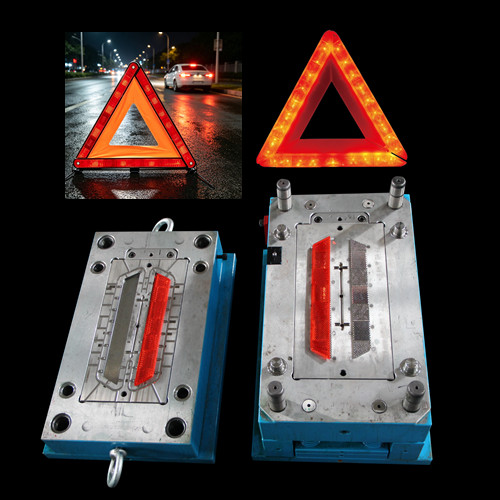
We are a professional mold manufacturer in Huangyan, China, specializing in high-precision injection molds for parking reflex reflectors and warning triangles. Our molds are made with durable steel for long service life, supporting custom designs and stable mass production to meet your automotive accessory manufacturing needs.
Parking reflex refletcor warning triangle mould