Die Cast Moulding Process
2025-12-30
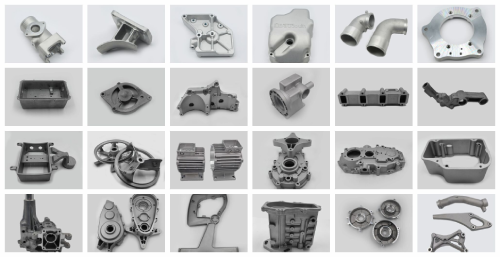
When it comes to manufacturing complex, high strength metal parts at scale—especially for demanding applications like automotive and motorcycle lighting—the die cast moulding process stands out as a cornerstone of modern industrial production. Yet despite its widespread use, many professionals and procurement teams remain unclear about how this process actually works, what makes a high quality die casting mold, and why factors like mold material, thermal management, and design repeatability matter so deeply.
What Is the Die Cast Moulding Process? A Step-by-Step Technical Breakdown
At its core, the die cast moulding process involves forcing molten metal—typically aluminum, zinc, or magnesium—under high pressure into a reusable steel mold cavity. The result is a near-net-shape component with excellent dimensional accuracy, smooth surface finish, and mechanical consistency. Unlike sand casting or investment casting, die casting excels in high-volume production due to rapid cycle times and minimal post-processing.
The process begins with mold design: engineers use CAD/CAM software to model cavities that account for metal shrinkage, draft angles, and gate locations. The mold itself—often called a “die”—is machined from hardened tool steel (such as H13 or SKD61) to withstand thousands of cycles under extreme thermal stress. Once assembled, the two halves of the die are clamped shut in a die casting machine. Molten metal is injected at pressures ranging from 1,000 to 20,000 psi, filling the cavity in milliseconds. After solidification, the die opens, and ejector pins release the part.
Critical to success is thermal management. Uneven cooling causes warping, porosity, or incomplete fills—especially in intricate parts like heat sinks for motorcycle headlights. This is where mold design transcends mere geometry: strategically placed cooling channels, venting systems, and overflow reservoirs are essential for controlling solidification and gas escape. A poorly designed mold may produce acceptable parts for the first hundred cycles but degrade rapidly thereafter—a hidden cost many buyers overlook when sourcing from low-tier suppliers.
Why Motorcycle Die Casting Molds Demand Exceptional Precision
Motorcycle components operate in harsh environments: vibration, thermal cycling, moisture, and space constraints all impose stringent requirements on part performance. Consider a die-cast aluminum heat sink for a high-intensity LED headlight. It must dissipate heat efficiently, maintain structural integrity at elevated temperatures, and fit precisely within a compact housing—often with zero tolerance for flash or burrs.
This level of performance hinges entirely on the quality of the motorcycle die casting mold. Such molds require micro-tolerance machining (often within ±0.02 mm), optimized gate design to prevent turbulence in thin fins, and surface treatments like nitriding to extend service life. Moreover, because motorcycle OEMs frequently update lighting designs, molds must support rapid iteration—making responsiveness and engineering collaboration key traits of reliable mold suppliers.
Interestingly, many global motorcycle brands now source these molds from specialized manufacturers in Asia. The reason isn't just cost—it's capability. Over the past decade, leading Chinese mold makers have invested heavily in 5-axis CNC machining, mold flow simulation software, and in-house trial presses, enabling them to produce molds that meet or exceed European and North American specifications. The shift reflects a broader trend: China is no longer just a low-cost producer but a source of high-precision, customized die casting mould solutions.
Evaluatable Criteria When Sourcing from China Die Cast Mould Suppliers
Not all China die cast mould suppliers are equal. While the country hosts thousands of mold shops, only a fraction possess the vertical integration, metrology equipment, and process validation protocols required for critical applications. When evaluating potential partners, consider these technical indicators:
First, ask about their mold steel sourcing. Reputable suppliers use certified tool steel from recognized mills (e.g., ASSAB, DACO) and document hardness after heat treatment—typically 48–52 HRC for aluminum die casting.
Second, inquire about mold trial procedures. A serious supplier doesn't just ship the mold—they run multiple trials under production-like conditions, providing samples and process data (injection speed, pressure curves, cooling time). This ensures the mold is “production-ready” on arrival.
Third, examine their design-for-manufacturing (DFM) capabilities. Top-tier firms don't merely follow customer drawings; they proactively suggest gate modifications, wall thickness adjustments, or ejector placements that improve yield and longevity.
Finally, look for experience with similar parts. A supplier that has successfully built molds for LED housings, motor housings, or transmission cases is far more likely to understand the thermal and structural nuances of your project than one focused on decorative hardware.
Companies like Younger Mould exemplify this evolution—specializing in complex, thermally demanding molds such as those for motorcycle headlight heat sinks. Their focus on functional integration, rather than just geometric replication, reflects a mature understanding of what die casting truly entails: not just shaping metal, but mastering physics at the interface of heat, pressure, and time.
FAQ: Key Questions About Customized Die Casting Mould Development
Q: What's the typical lead time for a customized die casting mould?
A: For a medium-complexity mold like a motorcycle heat sink, expect 45–75 days from design approval to T1 sample, depending on supplier capacity and validation depth.
Q: Can I use the same mold for both aluminum and zinc?
A: Generally no. Aluminum casting requires higher temperatures and pressures, demanding harder, more thermally robust tool steel. Zinc molds use softer steel and different gating strategies.
Q: How many shots can a high-quality motorcycle die casting mold produce?
A: A well-maintained H13 steel mold for aluminum parts typically lasts 80,000 to 150,000 cycles. With proper cooling and surface treatment, some exceed 200,000.
Q: What role does mold flow analysis play in the die cast moulding process?
A: It simulates metal fill, cooling, and stress distribution before metal is ever poured—helping prevent defects like cold shuts, porosity, or hot spots. Leading suppliers run this as standard practice.
Q: Are China die cast mould suppliers capable of meeting ISO/TS 16949 standards?
A: Yes—many Tier 1 and Tier 2 automotive mold makers in China are certified to IATF 16949 (the successor), with rigorous quality management systems and PPAP documentation capabilities.
The die cast moulding process is far more than a manufacturing step—it's a convergence of materials science, thermal dynamics, and precision engineering. Whether you're developing a new motorcycle lighting system or sourcing a customized die casting mould for industrial use, success depends on understanding not just what the mold looks like, but how it performs under real-world production stress. As global supply chains mature, discerning buyers are moving beyond price comparisons to evaluate technical competence, process transparency, and long-term reliability—criteria that increasingly distinguish elite mold makers from the rest.
Does Die Casting Use a Permanent Mold?
What Metal Is Best For Die Casting?
Related Article

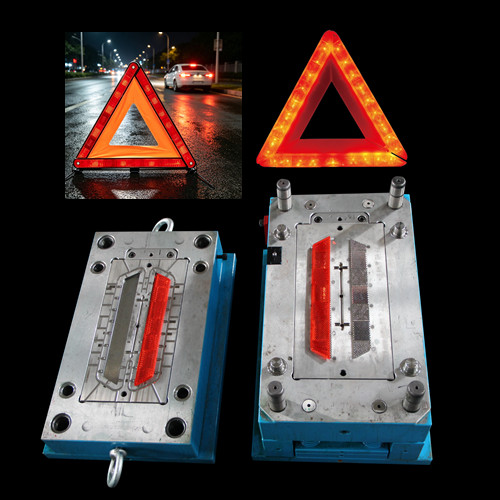
We are a professional mold manufacturer in Huangyan, China, specializing in high-precision injection molds for parking reflex reflectors and warning triangles. Our molds are made with durable steel for long service life, supporting custom designs and stable mass production to meet your automotive accessory manufacturing needs.
Parking reflex refletcor warning triangle mould