Difference Between BMC Bulk Molding Compound And SMC Sheet Molding Compound
2024-09-23
Designers are increasingly using chopped fiber thermoset BMC bulk molding compounds and SMC sheet molding compounds to produce complex composite assemblies more efficiently, at lower cost, and with enhanced performance. Furthermore, substituting metal assemblies with lightweight chopped fiber compression molded components can result in weight reductions of over 40% compared to aluminum parts.
What is BMC Bulk Molding Compound?
Bulk Molding Compounds (BMC) are a type of thermoset composite material made from a mixture of short or chopped reinforcing fibers (usually glass), resin (often polyester or epoxy), fillers, and various additives. The materials are blended into a dough-like consistency, making BMC ideal for compression or injection molding processes. BMC compression molding is known for its excellent strength, dimensional stability, and heat resistance, making it suitable for producing complex, high performance components.
Key Properties of BMC Bulk Molding Compound:
High Strength and Durability: BMC bulk molding compound materials offer excellent mechanical strength, making them ideal for load bearing applications.
Electrical Insulation: BMC bulk molding compound is often used for electrical applications due to its insulating properties.
Heat Resistance: The thermoset resin in BMC compression molding provides good thermal stability and resistance to high temperatures.
Corrosion Resistance: BMC compression molding parts are resistant to moisture, chemicals, and corrosion, making them suitable for harsh environments.
Cost Effectiveness: BMC injection molding allows for the production of complex parts with minimal finishing work, reducing manufacturing costs.
Applications of BMC Bulk Molding Compound:
Automotive Components: Engine parts, housings, and electrical enclosures.
Electrical Industry: Switchgear, circuit breakers, and insulators.
Consumer Products: Appliance components, kitchenware, and tool housings.
BMC compression molding is favored for producing high volume, precision molded components with consistent quality and performance across various industries.
What is SMC Sheet Molding Compound?
Sheet Molding Compound (SMC) is a thermoset composite material used primarily in compression molding processes. It consists of long or continuous strands of reinforcing fibers (typically glass fibers) impregnated with a thermoset resin (such as polyester or vinyl ester), along with fillers, additives, and pigments. The material is produced in sheet form, making it easy to handle and mold into complex shapes for high-performance applications.
Key Properties of SMC Sheet Molding Compound:
High Strength and Durability: SMC provides excellent mechanical properties, including high tensile and flexural strength, making it suitable for structural and load-bearing applications.
Lightweight: SMC is much lighter than metals like aluminum and steel, offering weight savings without compromising strength.
Corrosion and Chemical Resistance: SMC components are resistant to corrosion, moisture, and chemical exposure, making them ideal for outdoor and harsh environments.
Dimensional Stability: SMC parts maintain their shape and structural integrity even in high temperature environments.
Electrical Insulation: SMC has good insulating properties, making it suitable for electrical components.
Smooth Surface Finish: The material can be molded into complex shapes with a smooth surface, reducing the need for finishing processes.
Applications of SMC Sheet Molding Compound:
Automotive Industry: Body panels, bumpers, hoods, and battery enclosures.
Electrical Industry: Enclosures, switchgear components, and insulation parts.
Aerospace: Lightweight structural components.
Construction: Roof panels, doors, and cladding.
SMC is widely used for large scale manufacturing of high-strength, lightweight parts, particularly where traditional materials like metals would be too heavy or prone to corrosion. Its ability to be molded into complex shapes with precision makes it ideal for mass production in industries requiring performance and durability.
What is the Difference Between BMC Bulk Molding Compound And SMC Sheet Molding Compound?
Bulk Molding Compound (BMC) and Sheet Molding Compound (SMC) are both thermoset composite materials used in molding processes, but they differ in their composition, form, and typical applications. BMC mould is best suited for smaller, detailed parts where high strength is less critical but complex shapes and cost effectiveness are important. SMC is ideal for larger structural components where strength, lightweight properties, and smooth surface finishes are necessary.
1. Form and Structure:
BMC (Bulk Molding Compound):
BMC mould is a dough like material.
It is made from short or chopped reinforcing fibers (typically glass), resin, fillers, and additives.
It comes in bulk form, often as a paste or lump that can be easily placed into molds.
SMC (Sheet Molding Compound):
SMC comes in sheet form.
It contains longer, continuous strands of fibers, often glass, embedded in a resin matrix with fillers and additives.
It is rolled into flat sheets that are easier to handle for larger parts.
2. Fiber Length:
BMC: Contains shorter, chopped fibers (generally 1/8 inch to 1/2 inch in length).
SMC: Contains longer fibers, which can significantly improve the mechanical properties like strength and stiffness.
3. Processing Method:
BMC: Typically used in compression molding or injection molding processes due to its bulk form, allowing it to flow and fill the mold easily.
SMC: Primarily used in compression molding. Sheets are cut to size and placed in the mold, which is then pressed to form the part.
4. Applications:
BMC: Used for smaller, more intricate parts that require fine details.
Common in electrical components, appliance housings, automotive components, and other small parts like pump components.
SMC: Used for larger, more structural components that benefit from the added strength of longer fibers.
Common in automotive body panels, hoods, truck cab roofs, aerospace parts, and large electrical enclosures.
5. Mechanical Properties:
BMC: Due to its shorter fibers, BMC injection molding parts are generally less strong than SMC but still provide excellent durability and resistance to heat and chemicals.
SMC: Longer fibers give SMC higher mechanical strength, making it more suitable for load-bearing applications where strength is critical.
6. Surface Finish:
BMC: Generally, parts made from BMC injection molding may require additional surface finishing because of the nature of the material.
SMC: SMC offers smoother surface finishes, often eliminating the need for secondary finishing operations.
7. Cost and Complexity:
BMC: Typically BMC injection molding is cheaper because it is easier to mold and does not require the use of continuous fiber reinforcements.
SMC: Higher cost, but it offers superior strength and structural performance, making it worth the investment for more demanding applications.
Younger Mould is one of the most popular China bmc bulk molding compound manufacturers, who has earned a good reputation and position in the industry, gaining the trust and praise of numerous customers. If you are interested in our bmc injection molding products, please leave your contact information, and we will provide you with favorable quotations and meticulous bulk molding compound services.
10 Injection Moulded Plastic Parts in Motorcycles
Car Center Panel Mold Made From Younger Mold Factory Ready for Delivery
Related Article

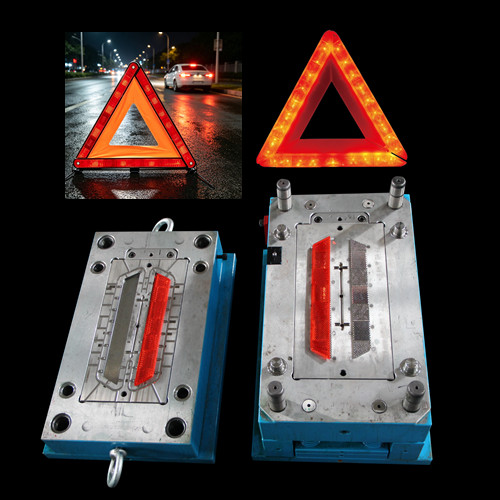
We are a professional mold manufacturer in Huangyan, China, specializing in high-precision injection molds for parking reflex reflectors and warning triangles. Our molds are made with durable steel for long service life, supporting custom designs and stable mass production to meet your automotive accessory manufacturing needs.
Parking reflex refletcor warning triangle mould