Differences Between Die Casting Mould And Permanent Mould Casting
2024-12-23
The processes of die casting mould and permanent mold casting are both widely utilized for creating aluminum and other metal parts. Despite their similarities, these methods have significant differences that impact their application, cost, and final product quality. In this article, we will delve into the characteristics, advantages, and specific considerations of these two casting techniques, with a focus on their molds, operational processes, and suitability for various manufacturing needs. Key terms like die cast mold manufacturers, die casting mould, injection die casting mold, and China die casting mold will be highlighted to provide a comprehensive understanding of these processes.
Understanding the Basics of Die Casting and Permanent Mold Casting
Both die casting mould and permanent mold casting employ steel molds, or "dies," to create cavities into which molten metal is poured or injected. These molds are reusable, distinguishing them from sand casting methods where a new mold must be made for each cycle. However, the differences in how metal enters the mold and how the process is controlled lead to distinct advantages and challenges for each method.
Die Casting Process
Die casting mould involves forcing molten metal into the mold cavity under high pressure. This method is often compared to plastic injection molding due to its precision and high-speed operation. Die casting molds are typically intricate and made to withstand extreme pressures and temperatures.
Die casting mould involves forcing molten metal into the mold cavity under high pressure. This method is often compared to plastic injection molding due to its precision and high-speed operation. Die casting molds are typically intricate and made to withstand extreme pressures and temperatures.
Permanent Mold Casting Process
In contrast, permanent mold casting relies on gravity to fill the cavity with molten metal. The metal flows from a reservoir into the mold through a controlled gate, reducing turbulence. Inserts can be placed in the mold to form internal features, and the casting is removed once the metal solidifies.
In contrast, permanent mold casting relies on gravity to fill the cavity with molten metal. The metal flows from a reservoir into the mold through a controlled gate, reducing turbulence. Inserts can be placed in the mold to form internal features, and the casting is removed once the metal solidifies.
Key Differences Between Die Casting Mould and Permanent Mold Casting
1. Mold Design and Complexity
Die Casting Mould:
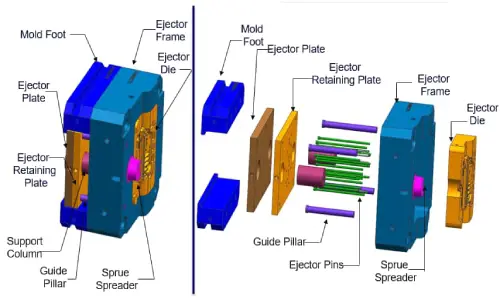
Die casting molds are highly complex, designed to handle high pressures and repeated cycles. They are often equipped with cooling channels and ejection systems to speed up the process and ensure precise casting results. Injection die casting mould designs also incorporate features that allow for the production of intricate shapes with thin walls.
Permanent Mold Casting Mould:
Permanent molds are simpler in design compared to die casting molds. They are typically designed to allow for gravity fed metal flow, which reduces the need for intricate pressure resistant features. This simplicity often results in lower mold manufacturing costs.
Permanent molds are simpler in design compared to die casting molds. They are typically designed to allow for gravity fed metal flow, which reduces the need for intricate pressure resistant features. This simplicity often results in lower mold manufacturing costs.
2. Production Efficiency
Die Casting:
The high pressure injection in die casting enables rapid mold filling, significantly reducing cycle times. This makes die casting highly efficient for large production runs, particularly for parts requiring tight tolerances and smooth surfaces. Leading China die casting mold manufacturers often prioritize this process for automotive and electronic components due to its speed.
Die Casting:
The high pressure injection in die casting enables rapid mold filling, significantly reducing cycle times. This makes die casting highly efficient for large production runs, particularly for parts requiring tight tolerances and smooth surfaces. Leading China die casting mold manufacturers often prioritize this process for automotive and electronic components due to its speed.
Permanent Mold Casting:
The gravity fed nature of permanent mold casting slows down the process compared to die casting. However, it remains suitable for medium production volumes where the cost of creating a die casting mold may not be justified.
The gravity fed nature of permanent mold casting slows down the process compared to die casting. However, it remains suitable for medium production volumes where the cost of creating a die casting mold may not be justified.
3. Material Strength and Porosity
Die Casting:
The high pressure in die casting mould often traps air within the metal, leading to porosity. While this can be mitigated through secondary processes, it may affect the strength of the finished product.
Die Casting:
The high pressure in die casting mould often traps air within the metal, leading to porosity. While this can be mitigated through secondary processes, it may affect the strength of the finished product.
Permanent Mold Casting:
Due to the slower, gravity-fed process, permanent mold casting produces parts with less porosity and higher mechanical strength. This is particularly advantageous for structural components.
Due to the slower, gravity-fed process, permanent mold casting produces parts with less porosity and higher mechanical strength. This is particularly advantageous for structural components.
4. Surface Finish and Tolerances
Die Casting:
Die casting provides an exceptional surface finish, often requiring little-to-no secondary machining. The as cast surface can achieve roughness levels better than 125 microinches, making it ideal for parts with tight aesthetic and functional requirements.
Die Casting:
Die casting provides an exceptional surface finish, often requiring little-to-no secondary machining. The as cast surface can achieve roughness levels better than 125 microinches, making it ideal for parts with tight aesthetic and functional requirements.
Permanent Mold Casting:
While the surface finish is not as fine as die casting, it still ranges between 125 to 300 microinches. For many applications, this is sufficient, and secondary machining may not be necessary.
While the surface finish is not as fine as die casting, it still ranges between 125 to 300 microinches. For many applications, this is sufficient, and secondary machining may not be necessary.
5. Cost Considerations
Die Casting:
The cost of die casting moulds is higher due to their complexity and durability requirements. However, the high speed production rate offsets this cost in large volume runs.
Die Casting:
The cost of die casting moulds is higher due to their complexity and durability requirements. However, the high speed production rate offsets this cost in large volume runs.
Permanent Mold Casting:
Permanent mold tools are less expensive and simpler to produce, making them an economical choice for lower volume projects or parts requiring high strength.
Permanent mold tools are less expensive and simpler to produce, making them an economical choice for lower volume projects or parts requiring high strength.
Advantages of Each Process
Advantages of Die Casting
Precision and Surface Quality: Die casting molds are capable of producing intricate details and smooth surfaces.
Efficiency: Faster cycle times allow for high production rates.
Thin Walled Parts: Ideal for lightweight components in industries like electronics and automotive.
Advantages of Permanent Mold Casting
Strength: Parts exhibit higher mechanical properties due to reduced porosity.
Lower Tooling Costs: Simpler mold designs result in reduced upfront investment.
Versatility: Suitable for producing parts with complex internal features using inserts.
Considerations for Choosing the Right Casting Method
When deciding between die casting mould and permanent mold casting, several factors must be evaluated:
Volume Requirements: Die casting mould is more cost effective for large production runs due to its speed, while permanent mold casting suits smaller quantities.
Part Characteristics: Components requiring high strength and low porosity are better suited to permanent mold casting.
Budget Constraints: For projects with limited budgets, permanent mold casting offers lower tooling costs.
Precision Needs: If tight tolerances and superior surface finishes are required, die casting is the preferred choice.
Budget Constraints: For projects with limited budgets, permanent mold casting offers lower tooling costs.
Precision Needs: If tight tolerances and superior surface finishes are required, die casting is the preferred choice.
Why Choose China Die Casting Mold Manufacturers?
China has emerged as a global leader in die casting mold manufacturing, offering advanced technology, skilled labor, and competitive pricing. Leading die cast mold manufacturers in China specialize in:
High Quality Tooling: Precision crafted molds tailored to specific project requirements.
Custom Solutions: Expertise in both die casting mould and injection die casting mold production.
Custom Solutions: Expertise in both die casting mould and injection die casting mold production.
Fast Turnaround: Efficient production timelines to meet demanding schedules.
By partnering with reputable China die casting mold suppliers, businesses can leverage cost advantages without compromising quality.
By partnering with reputable China die casting mold suppliers, businesses can leverage cost advantages without compromising quality.
Both die casting and permanent mold casting have their unique strengths and are suited to different manufacturing needs. By understanding the nuances of these processes and working with experienced die cast mold manufacturers, businesses can ensure the production of high quality, cost effective components. Whether you prioritize speed, strength, or budget, selecting the right casting method will significantly impact the success of your project.
Younger Mould is one of the most popular Chinese die cast mold manufacturers, who has earned a good reputation and position in the industry, gaining the trust and praise of numerous customers. If you are interested in our injection die casting mold for automotive, please leave your contact information, and we will provide you with favorable quotations and china die casting mold services.
What Is Bi Color Lamp Mold For Automotive?
Is Plastic Injection Molding Difficult?
Related Article

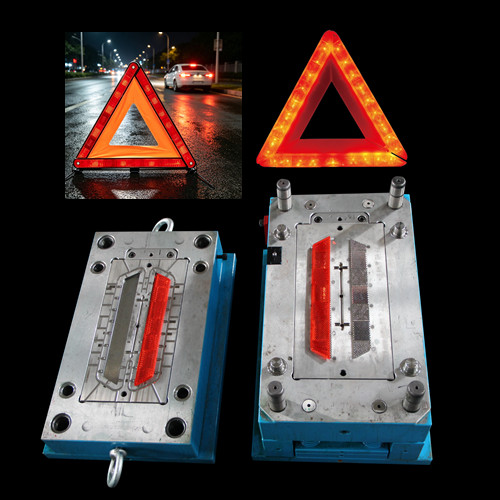
We are a professional mold manufacturer in Huangyan, China, specializing in high-precision injection molds for parking reflex reflectors and warning triangles. Our molds are made with durable steel for long service life, supporting custom designs and stable mass production to meet your automotive accessory manufacturing needs.
Parking reflex refletcor warning triangle mould