Does Die Casting Use a Permanent Mold?
2026-01-06
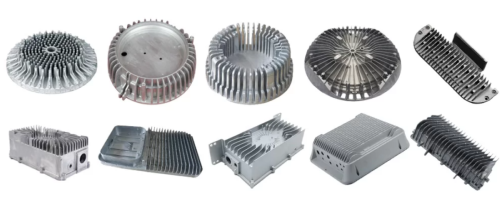
Die casting and permanent mold casting are two cornerstone manufacturing processes in modern metalworking, widely used across automotive, electronics, industrial equipment, and consumer products industries. While both involve reusable molds and the casting of molten metal into form cavities, they differ fundamentally in mechanics, application suitability, and design implications for components. Whether you are specifying a car die casting mold, evaluating custom die casting mould options, or investigating customized metal die casting parts and moulds, understanding the role of permanent molds versus high pressure die casting mechanisms is essential.
Chapter 1: Fundamentals — Die Casting, Permanent Mold Casting, and How They Compare
What Is Die Casting?
At its core, die casting is a metal casting process in which molten metal is injected under high pressure into a reusable mold known as a die. These dies are typically precision-machined steel tools designed to withstand repeated high-temperature and high-pressure sequences. Because molten metal is forced into intricate cavities at pressure levels often ranging from moderately high to very high (far above gravity-fed processes), die casting delivers parts with excellent dimensional accuracy, smooth surface finish, and the ability to form thin walls with complex geometry.
Die casting excels for high-volume production runs where consistency, repeatability, and detail are priorities, such as in automotive housings, electronics enclosures, and consumer hardware. In many applications, these dies are expensive to produce, but the component quality and speed justify the tooling investment. This method is widely used to produce car die casting mold parts and assemblies with tight tolerance and high throughput.
What Is Permanent Mold Casting?
Permanent mold casting refers to any process where a metal mold — typically made of steel, cast iron, or other durable alloys — is reused many times for casting components. In a conventional permanent mold process, molten metal is fed into the mold cavity by gravity or controlled low pressure. As the metal solidifies, the part is removed and the mold is reused. Unlike die casting, which forces metal under high pressure, permanent mold casting relies on simpler fill mechanisms.
Permanent mold casting typically produces parts with good surface finish and mechanical properties that sit between sand casting and high-pressure die casting. It is particularly attractive for moderate-volume production where heavy tooling costs of die casting are not justified but better precision than sand casting is desirable. Permanent molds can last for tens of thousands of cycles, making them a cost-effective solution for custom mould die casting and less intricate shapes in automotive components.
Are Die Casting and Permanent Mold Casting the Same?
Although both processes use reusable molds, die casting is technically a form of permanent mold casting because the dies are meant to be reused many times. However, the defining characteristic that distinguishes die casting from traditional permanent mold casting is use of high-pressure injection of molten metal into the mold cavity, which is not present in gravity-fed permanent mold casting. In practical terms, die casting is best understood as a specialized permanent mold category optimized for mass-production with high precision and speed.
Chapter 2: Mechanisms, Tooling, and Metal Behavior in Die Casting and Permanent Mold Processes
How Die Casting Works?
Die casting begins with heating the die to operating temperature. Molten metal — commonly aluminum, magnesium, or zinc alloys — is introduced into the die cavity via pressurized injection. In high-pressure die casting, this pressure can exceed many megapascals, forcing the liquid metal into all features of the mold. The rapid injection and pressurization result in low porosity, superior surface finish, and excellent reproduction of fine details.
Because the tooling must tolerate repeated high-pressure cycles and thermal shock from molten metal, die casting dies are fabricated from hardened tool steels with precise machining tolerances. These steels must balance heat resistance, mechanical strength, and machinability. Manufacturers who build custom die casting mould solutions invest considerable design effort to ensure the die’s life and performance meet production targets.
Permanent Mold Casting Mechanics
In contrast, traditional permanent mold casting uses a metal mold into which molten metal flows by gravity or by controlled low pressure. The lack of forced injection means the metal must be guided through well-designed gates and risers to ensure complete cavity fill. While the resulting parts typically have fewer internal stresses than die casting, the gravity feed limits wall thinness and increases susceptibility to porosity under certain conditions.
Permanent molds are often used where lower tooling costs and moderate production volumes justify the trade-offs. They are ideal for thicker cast profiles and components where mass production precision is less critical than robustness and economic tooling, such as bracketry, housings, and structural parts.
Mold Material and Design Considerations
Whether in die casting or permanent mold casting, mold material is critical. Steel alloys, such as H13 or SKD61, are common due to their high thermal endurance and resistance to cracking under cyclical heating and cooling. In both processes, the mold’s design determines overall efficiency, surface finish, and dimensional accuracy of cast parts.
For die casting, tooling design must accommodate rapid thermal cycling and repeated injection forces, while permanent molds benefit from simpler cavity structures that maximize reuse and minimize maintenance.
Tooling engineers focused on customized metal die casting parts and moulds emphasize careful thermal analysis, gating design, and cooling channel optimization. Mold durability directly influences production stability, part integrity, and overall manufacturing cost.
Microstructure and Mechanical Properties
The high pressure used in die casting results in parts with low porosity and fine microstructure, translating to better mechanical properties and surface finish. This characteristic makes die casting ideal for precision components that require minimal post processing.
By contrast, permanent mold castings, while still having better mechanical properties than sand castings, generally exhibit slightly higher porosity and thicker wall sections due to gravity filling dynamics. Nonetheless, for large parts or items with significant thickness, permanent mold casting remains an efficient choice.
Chapter 3: When to Choose Die Casting or Permanent Mold Casting?
High Volume Manufacturing with Car Die Casting Mold Expectations
In industries such as automotive, home appliances, and consumer electronics, production volumes are high and tolerance requirements stringent. Here, die casting shines. A car die casting mold, for example, produces consistent, high-quality parts with excellent surface finish and dimensional accuracy. The high tooling cost is spread over large production runs, making per-unit costs competitive.
Die casting can handle intricate designs with thin sections and complex geometries that would be difficult or impossible with gravity-fed molds alone. For components such as transmission housings, structural brackets, and aesthetic exterior parts, die casting is often the preferred solution.
Moderate Volume Production and Custom Mould Die Casting Requirements
When production volumes do not justify the high initial tooling investment associated with die casting, permanent mold casting can be a viable alternative. It reduces mold costs while providing more consistent results than expendable molding methods.
For medium batches or parts with lower complexity, permanent mold casting offers a balance between cost and quality. Industries producing utility equipment, pump housings, and moderate precision components often find this method appropriate.
Customization and Prototype Development with Custom Die Casting Mould
Prototyping and low-volume customization require tooling that allows iterative changes without prohibitive expense. While die casting tooling is costly to modify, permanent mold or hybrid techniques can support early-stage development, allowing design teams to test iterations before committing to full die casting molds.
Advanced tooling providers, including those capable of custom die casting mould design, often work with clients to integrate these prototyping strategies with eventual production tooling.
Specialized Parts and Customized Metal Die Casting Parts and Moulds
In sectors requiring parts with specific mechanical properties, tight tolerances, or unique geometries, customized solutions are paramount. Automotive, aerospace, and medical industries frequently demand bespoke tooling tailored to application needs.
A provider capable of producing customized metal die casting parts and moulds supports not only final production tooling but also assists in optimizing design for manufacturability, balancing material selection, mold life, and production efficiency.
Chapter 4: FAQs — Clarifying Common Doubts About Die Casting and Permanent Mold Use
Does die casting use a permanent mold?
Yes — die casting uses permanent molds (dies) designed for repeated use. Unlike sand casting where molds are destroyed to remove parts, die casting dies are engineered to withstand many cycles and deliver consistent part quality. The key difference lies in how molten metal enters the mold: die casting forces molten metal under high pressure, while traditional permanent mold casting uses gravity or low pressure to fill the cavity.
What metals are suitable for die casting versus permanent mold processes?
Die casting is most commonly used with non-ferrous alloys such as aluminum, magnesium, and zinc, due to their fluidity and casting performance under pressure. Permanent mold casting also accommodates these alloys and can be extended to other non-ferrous metals. The choice of alloy influences mold design, cooling strategy, and final part properties.
How do tooling costs compare between die casting and permanent mold casting?
Tooling for die casting is generally more expensive than tooling for permanent mold casting because dies must withstand high injection pressures and precise cavity features. However, die casting mold costs can be amortized over large production volumes, making per-part costs competitive for mass manufacturing. Permanent mold tooling remains cost-effective for moderate volumes.
When should I choose custom die casting mould design?
A custom die casting mould is essential when component geometry, tolerance requirements, surface finish expectations, or production volume exceed what can be reliably achieved with generic tooling. Custom design also allows integration of features such as internal passages, aesthetic surface patterns, and optimized cooling channels.
What are the maintenance requirements for die casting molds?
Die casting molds require regular maintenance to ensure longevity and consistent part quality. This includes inspection of wear surfaces, management of thermal cycling stresses, and careful cleaning to prevent buildup of casting residues. Skilled tooling maintenance maximizes mold life and minimizes downtime.
What Is Bulk Molding Compound (BMC)?
Die Cast Moulding Process
Related Article

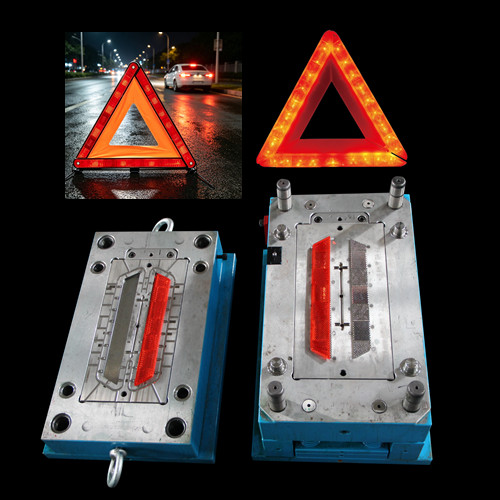
We are a professional mold manufacturer in Huangyan, China, specializing in high-precision injection molds for parking reflex reflectors and warning triangles. Our molds are made with durable steel for long service life, supporting custom designs and stable mass production to meet your automotive accessory manufacturing needs.
Parking reflex refletcor warning triangle mould