Fender Moulds in Auto Mold Manufacturing
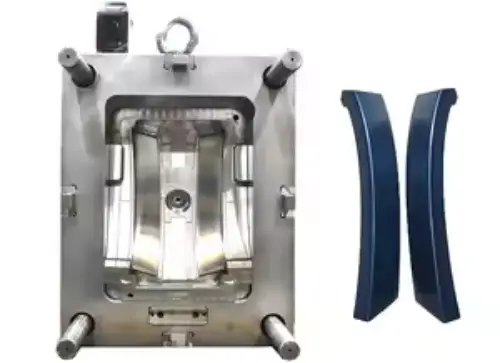
In the evolving world of automotive plastic parts, the fender mould holds a critical place in terms of performance, design, and manufacturability. From impact resistance to aesthetic compatibility, fenders—particularly those manufactured using advanced auto mold techniques—are fundamental to vehicle quality.
1. What Is a Fender Mould?
A fender mould is an injection mold designed specifically for producing automotive fenders—external body components that frame the wheel arches. These parts protect the vehicle from road debris, reduce aerodynamic drag, and serve as design features for brand identity.
In mold making, the fender mould must accommodate the large, contoured shape of the fender while ensuring dimensional accuracy, part symmetry, and efficient material flow during injection. Precision tooling is critical to avoid warpage, uneven wall thickness, or flow marks, especially in parts that are visible on the exterior of a car.
2. Key Features of an Automotive Fender Mould
Materials, Cooling, and Ejection Systems in Auto Mold Engineering
An automotive fender mould includes several technical features:
Material Selection: The molds themselves are often made of high-strength P20 or H13 steel to withstand high volume production.
Cooling System: Uniform cooling across the mold cavity is crucial for minimizing shrinkage and maintaining dimensional tolerance.
Venting and Ejection: Proper venting avoids air traps, while a balanced ejection system ensures the large part is safely and evenly removed from the cavity.
Manufacturers like Younger Mould focus on DFM (Design for Manufacturability) to improve tool life and part quality across all types of auto molds, including front fenders, rear fenders, and full body kits.
3. Trends in Auto Mold Development for Fender Components
The Rise of Lightweight Design and High-Flow Engineering
Modern auto mold development emphasizes lighter, stronger plastic materials like PP+EPDM, TPO, or ABS. These are ideal for injection-molded fenders due to their impact resistance and paint adhesion capabilities.
Younger Mould integrates mold flow simulation early in the tool design phase to anticipate:
Weld lines
Flow imbalances
Pressure losses
This helps prevent defects that are common in large part molding. For complex fender shapes with integrated light guides or venting structures, CAE analysis is a necessity.
4. How Double Color Mold Enhances Fender Aesthetics and Function
Integrating Dual Materials in One Fender Mold
Double color mold (also called two-shot molding or 2K molding) allows two different plastic materials to be molded into a single part during one molding cycle. This technique is increasingly used in fenders for:
Decorative effects (e.g., gloss + matte finishes)
Integrated soft touch zones (rubberized edges for pedestrian safety)
Color coded branding or trim areas
For example, a fender might combine a black matte base with a colored stripe or protective edge, eliminating the need for secondary operations like painting or overmolding.
Younger Mould has invested in specialized double color mold machining to produce complex, multi-texture fender parts that are ready for direct vehicle assembly.
5. Mold Flow Analysis for Fender Mould Optimization
Reducing Warpage and Sink Marks in Large Auto Molded Parts
Due to their large size and curved design, fenders are prone to warpage and internal stress if mold conditions aren't optimized. Using mold flow analysis software (like Moldex3D or Autodesk Moldflow), engineers can simulate:
Material flow paths
Temperature gradients
Cooling rates
Clamping forces
These simulations are crucial for fender moulds, as they ensure that the molded part conforms to design tolerances without the need for post-mold trimming or reshaping.
Younger Mould, double color mold manufacture in china, applies this strategy in its auto mold development process to validate gating positions, cooling layout, and wall thickness optimization before machining the tool steel.
6. Advantages of Custom Fender Moulds from Experienced Auto Mold Suppliers
Long Term Tool Life and Modular Tooling Design
Experienced mold makers like Younger Mould deliver value beyond basic mold manufacturing. Key advantages include:
Modular tooling: Interchangeable inserts to adapt to multiple fender variants (e.g., same body platform, different markets)
Hot runner systems: Reduce material waste and cycle time
Surface finish precision: High quality EDM or mirror polishing for visible surfaces
These features help automotive OEMs reduce costs while ensuring long-term mold durability and consistent part quality.
7. Common Challenges in Fender Mould Production and How to Solve Them
Troubleshooting Double Color Molding and Large Part Injection
Some of the most common challenges when working with fender moulds include:
Weld lines near mounting tabs
Short shots in long flow paths
Deformation during ejection
Color mismatch in two shot components
Solutions involve improving gate design, optimizing injection speed, applying vacuum venting, or switching to gas-assisted molding techniques. For double color mold applications, synchronization between the primary and secondary material injection is critical.
At Younger Mould, these issues are addressed through prototyping and pilot runs using CNC machined test molds, ensuring reliable production readiness.
8. Applications of Fender Moulds Across Different Vehicle Types
SUVs, Sedans, and Commercial Vehicle Fender Mold Variations
The fender design—and consequently the fender mould—varies significantly between vehicle categories:
SUVs: Often have thicker, rugged fenders that may include integrated light clusters or texture elements.
Sedans: Feature sleek, aerodynamic fenders requiring Class A surface quality.
Commercial Vehicles: Use simpler fender designs focused on functionality and durability.
Younger Mould adapts its auto mold manufacturing strategies depending on the target market, aligning mold construction with part performance requirements.
9. Future of Fender Mold Manufacturing: Automation and Sustainability
Robotic Polishing, Real Time QC, and Green Tooling Approaches
As automotive tooling moves toward Industry 4.0, the future of fender mould production includes:
Automated polishing and finishing systems
Sensor enabled molds for in mold temperature and pressure tracking
Sustainable practices, such as water efficient cooling systems and recyclable mold materials
Younger Mould is adopting smart mold technologies and lean manufacturing to stay competitive and environmentally responsible in the high-demand sector of automotive tooling.
The fender mould is far more than a simple injection mold—it's a sophisticated tool that must meet the structural, aesthetic, and functional demands of the global auto industry. With the integration of double color mold technology, advanced simulation, and high-tolerance machining, companies like Younger Mould are redefining what's possible in exterior auto part manufacturing.
Whether it's a rugged SUV fender or a sleek two tone sports car panel, precision-molded fender components play a major role in vehicle design and safety—backed by expert auto mold craftsmanship.
Younger Mould is a double color mold manufacture in china, widely acknowledged for our exceptional quality, innovative solutions, and trusted reputation in the industry. Committed to excellence, we have built long standing relationships with clients across the globe. If you're seeking high quality auto fender mould, please feel free to leave your contact details. Our dedicated team will provide you with competitive pricing and customized service to meet your specific needs.
Why Choose Die Casting Mold Parts?
Mold manufacturer for motorcycle head lamp
Related Article