Head Lamp BMC Reflector Mould Manufacturing
2026-02-24
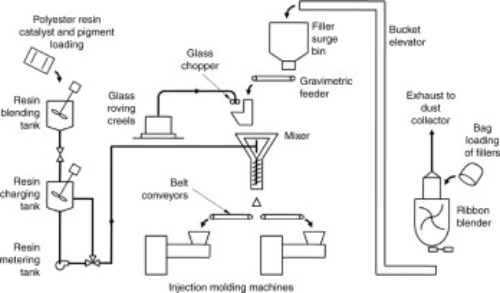
The automotive lighting industry has undergone significant transformation as vehicle manufacturers demand increasingly sophisticated headlamp systems combining aesthetic design with optical performance. At the core of this evolution lies the head lamp BMC reflector mould—a highly specialized tooling component requiring precision engineering, advanced material science, and rigorous quality control protocols. B2B procurement professionals, automotive engineers, and lighting system manufacturers evaluating BMC molding services face complex technical decisions extending far beyond basic tooling specifications.
Material Science Fundamentals
BMC (Bulk Molding Compound) represents a sophisticated thermoset composite material engineered specifically for demanding automotive applications requiring dimensional stability, thermal resistance, and optical performance characteristics.
BMC composition typically includes unsaturated polyester resin matrix reinforced with 25-30% chopped glass fibers ranging from 3-13mm in length—this fiber reinforcement provides exceptional mechanical strength while maintaining flow characteristics essential for complex reflector geometries.
Thermal resistance properties distinguish BMC from thermoplastic alternatives—continuous service temperatures exceeding 150°C with short-term peaks to 180°C enable reliable performance in high intensity discharge (HID) and LED headlamp applications generating significant thermal loads.
Dimensional stability under thermal cycling proves critical for optical performance—BMC materials exhibit coefficient of thermal expansion (CTE) values between 12-18 ppm/°C, minimizing reflector deformation during temperature fluctuations that could compromise beam pattern accuracy.
Surface finish capabilities directly impact optical efficiency—properly formulated BMC compounds achieve surface roughness values below 0.8 microns Ra after molding, providing excellent substrate for subsequent metallization processes including vacuum deposition or electroplating.
Chemical resistance characteristics protect against environmental degradation—BMC formulations withstand exposure to automotive fluids including brake fluid, coolant, and cleaning agents without compromising structural integrity or surface finish quality.
Flame retardancy ratings meet stringent automotive safety standards—UL94 V-0 classification ensures compliance with vehicle fire safety requirements while maintaining mechanical properties under elevated temperatures.
Moisture absorption rates remain exceptionally low—typically below 0.2% by weight even after prolonged humidity exposure, preventing dimensional changes that could affect optical alignment in precision headlamp assemblies.
Recycling considerations influence material selection—while BMC represents thermoset technology with limited recyclability, manufacturers increasingly develop formulations incorporating recycled content and optimized processing parameters to reduce environmental impact.
Specialized bmc moldings manufacturers like Younger Mould implement comprehensive material validation protocols for BMC molding services including flow analysis, thermal simulation, and mechanical testing before production tooling commitment.
Precision Mold Engineering
Head lamp BMC reflector mould manufacturing demands exceptional precision engineering capabilities extending far beyond standard injection molding tooling requirements.
Optical surface finish specifications require mirror-polished cavities achieving surface roughness below 0.025 microns Ra—this precision ensures optimal light reflection characteristics after metallization processes while minimizing optical scattering losses.
Multi-cavity mold configurations balance production efficiency with quality control—typically ranging from 2 to 8 cavities depending on reflector size and complexity, with each cavity requiring individual flow balancing to ensure consistent fill characteristics.
Cooling channel design influences cycle time and part quality—conformal cooling systems following reflector geometry provide uniform temperature distribution preventing warpage and ensuring dimensional stability across production batches.
Ejection system design requires careful consideration—multi-point ejector pin arrangements with polished surfaces prevent marking on critical optical surfaces while ensuring reliable part release without deformation.
Venting systems must accommodate BMC material characteristics—strategically placed vacuum vents remove air trapped during mold filling while preventing resin leakage that could create flash on precision surfaces.
Gate design influences flow patterns and weld line formation—submarine gates or edge gates positioned to minimize visible witness marks on critical optical surfaces while ensuring complete cavity filling without air entrapment.
Mold steel selection balances wear resistance with thermal conductivity—typically utilizing P20 pre-hardened steel for standard applications or H13 tool steel for high-volume production requiring extended service life under thermal cycling conditions.
Surface treatment processes enhance mold longevity—nitriding or chrome plating treatments increase surface hardness to 60-65 HRC while providing corrosion resistance against BMC material additives and release agents.
Dimensional accuracy requirements maintain tight tolerances—critical features typically held within ±0.05mm to ensure proper assembly with other headlamp components including lenses, bezels, and mounting brackets.
Quality control protocols include comprehensive mold validation—first article inspection (FAI) procedures verify dimensional accuracy, surface finish quality, and functional performance before production approval.
BMC Molding Process Optimization
Successful BMC molding services implementation requires systematic process optimization balancing material characteristics with production efficiency and quality requirements.
Material preparation protocols ensure consistent compound quality—BMC material requires controlled storage conditions below 10°C with limited shelf life to prevent premature curing while maintaining optimal flow characteristics during processing.
Pre-forming operations optimize material placement—automated pre-forming equipment creates consistent material charges ensuring uniform cavity filling while minimizing material waste and processing variability.
Post-curing operations enhance final properties—controlled post-cure cycles at elevated temperatures complete cross-linking reactions improving thermal resistance and mechanical properties for demanding automotive applications.
In-process monitoring systems detect deviations—real-time pressure and temperature monitoring during each cycle enables immediate detection of processing anomalies preventing production of non-conforming parts.
Dimensional inspection protocols verify critical features—coordinate measuring machine (CMM) inspection of key dimensions ensures compliance with automotive industry tolerances while optical measurement systems verify surface geometry accuracy.
Surface quality assessment prevents optical defects—automated vision inspection systems detect surface imperfections including sink marks, flow lines, or contamination that could compromise subsequent metallization processes.
Traceability systems link production batches to specific molds—comprehensive documentation including material lot numbers, processing parameters, and inspection results enables root cause analysis during field performance investigations.
Continuous improvement methodologies optimize long-term performance—statistical process control (SPC) monitoring identifies trends enabling proactive adjustments before quality thresholds are exceeded.
Strategic Supplier Evaluation Frameworks for China BMC Mold Procurement
Optimal BMC molding services selection requires systematic evaluation extending beyond initial quotation comparisons to encompass technical capabilities, quality systems, and long-term partnership potential.
Technical capability assessment should include bmc moldings design expertise—suppliers maintaining dedicated optical engineering teams with ray tracing software capabilities demonstrate deeper understanding of reflector performance requirements versus general mold manufacturers.
Manufacturing infrastructure verification proves essential—suppliers possessing CNC machining centers with 5-axis capabilities, precision grinding equipment, and coordinate measuring machines ensure dimensional accuracy required for optical applications.
Quality management system certification requires verification beyond documentation—auditing actual implementation of ISO 9001 procedures on production floor reveals genuine quality culture versus certificate-only compliance.
Material expertise influences final part quality—suppliers with established relationships with major BMC compound manufacturers including DSM, BASF, and Polynt demonstrate material processing knowledge essential for consistent results.
Prototype development capabilities accelerate time-to-market—suppliers capable of delivering functional prototypes within 4-6 weeks demonstrate robust design validation processes versus those requiring multiple iterations extending beyond 12 weeks.
Production capacity scalability matters for volume programs—suppliers capable of 50+ mold deliveries annually with flexible scheduling accommodate automotive industry ramp-up requirements without compromising quality standards.
Technical documentation quality reflects engineering rigor—comprehensive mold design documentation including flow analysis reports, thermal simulation results, and tolerance stack-up analysis demonstrates supplier expertise.
Intellectual property protection considerations matter for proprietary designs—suppliers signing mutually enforceable non-disclosure agreements and design ownership contracts protect buyer investment in specialized reflector geometries.
Industry specialization delivers application expertise—manufacturers focused exclusively on automotive lighting BMC moldings understand nuanced requirements versus general industrial mold producers adapting capabilities for automotive applications.
Frequently Asked Questions
What distinguishes premium BMC molding services from standard injection molding capabilities?
Premium BMC molding services feature specialized equipment designed for thermoset processing including heated barrels, precise temperature control systems, and dedicated material handling protocols—plus expertise in BMC material characteristics including flow behavior, cure kinetics, and post-processing requirements essential for optical applications.
How does BMC material selection impact head lamp reflector performance characteristics?
BMC formulations with higher glass fiber content provide superior dimensional stability under thermal loads but require more sophisticated mold design to ensure complete cavity filling—material selection must balance optical surface requirements, thermal resistance needs, and processing capabilities for optimal performance.
What surface finish requirements ensure optimal optical performance in BMC reflector components?
Critical optical surfaces require mold cavity finishes below 0.025 microns Ra achieved through diamond polishing processes—this precision ensures minimal light scattering after metallization while providing excellent adhesion for reflective coatings including aluminum vacuum deposition.
Why do China BMC mold manufacturers offer competitive advantages for automotive lighting applications?
Established Chinese mold manufacturers combine advanced manufacturing capabilities with cost-effective production models while maintaining quality standards required for automotive applications—suppliers with dedicated automotive lighting divisions demonstrate specialized expertise in optical component requirements.
How frequently should BMC reflector molds undergo maintenance and refurbishment?
Preventive maintenance every 50,000 cycles including surface inspection, cooling system cleaning, and ejector system lubrication extends mold life significantly—major refurbishment including re-polishing and component replacement typically required after 300,000-500,000 cycles depending on production conditions and material abrasiveness.
Motorcycle Plastic Mold in Two Wheeler Manufacturing
Why BMC Injection Molding Process Is Critical?
Related Article

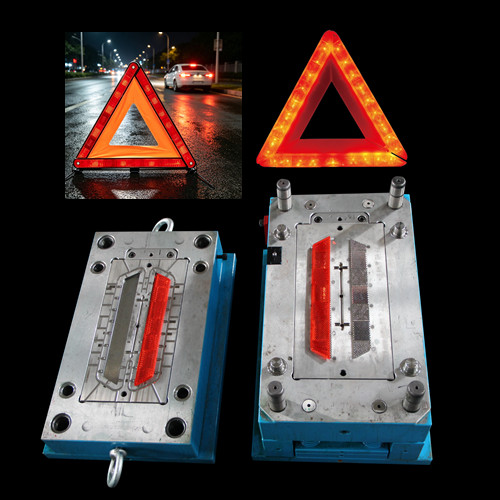
We are a professional mold manufacturer in Huangyan, China, specializing in high-precision injection molds for parking reflex reflectors and warning triangles. Our molds are made with durable steel for long service life, supporting custom designs and stable mass production to meet your automotive accessory manufacturing needs.
Parking reflex refletcor warning triangle mould