How Are Car Parts Molded?
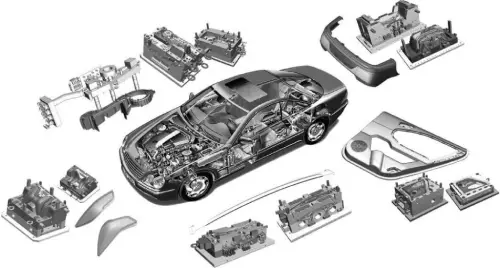
Modern automobiles are complex machines composed of thousands of individual components, many of which are precisely shaped using specialized car parts moulds. From exterior panels to interior trims, these molded parts play a crucial role in performance, aesthetics, and safety. But how are car parts molded?
Understanding the Basics: What Is a Car Parts Mould?
Before diving into the molding processes, let's first define a car parts mould.
A car parts mould (or ‘automotive injection mold’) is a precision engineered tool made from steel or aluminum, designed to shape molten plastic, metal, or rubber into specific automotive components. These molds are created using CAD/CAM software and high-precision CNC machinery to ensure they meet exacting industry standards.
Whether producing an auto bumper mould, dashboard panel, or lighting housing, the mold determines the final shape, dimensional accuracy, and surface texture of the part.
The Main Types of Automotive Molding Processes
1. Injection Molding for Plastic Auto Parts
Injection molding is one of the most commonly used techniques for plastic car parts.
How it works: Thermoplastic pellets are heated until molten, then injected under high pressure into a metal mold cavity.
Common materials: ABS, polypropylene, polycarbonate, nylon, and TPO.
Applications: Dashboards, center consoles, door panels, light housings.
Manufacturers like Younger Mould specialize in high precision injection molds for these components, ensuring excellent repeatability and durability.
2. Compression Molding for Structural Car Components
Compression molding is ideal for high strength composite parts.
How it works: A preheated polymer is placed into a heated mold cavity and then pressed into shape.
Common materials: SMC (Sheet Molding Compound), BMC (Bulk Molding Compound).
Applications: Hoods, trunk lids, battery trays.
3. Die Casting for Metal Car Parts
For metallic parts like engine brackets and transmission housings, die casting is the preferred method.
How it works: Molten aluminum or magnesium is forced into steel dies under pressure.
Common materials: Aluminum, magnesium, zinc alloys.
Applications: Engine parts, gearbox housings, structural components.
While Younger Mould mainly focuses on plastic and composite molds, they often collaborate with automotive partners in early stage part design to ensure compatibility across processes.
Specialized Molds: Focus on Auto Bumper Moulds
Among the largest plastic parts on a vehicle, bumpers demand robust, high-capacity molds.
Key Features of an Auto Bumper Mould:
Multi cavity design: For faster cycle times in mass production.
Advanced cooling systems: To reduce warping and improve surface finish.
High polish finishes: For paint ready surfaces.
Producing a high-quality auto bumper mould requires expertise in flow simulation, steel selection (typically P20 or H13), and mold temperature control—all of which are core competencies at Younger Mould.
Automotive Lighting: A Precision-Driven Molding Segment
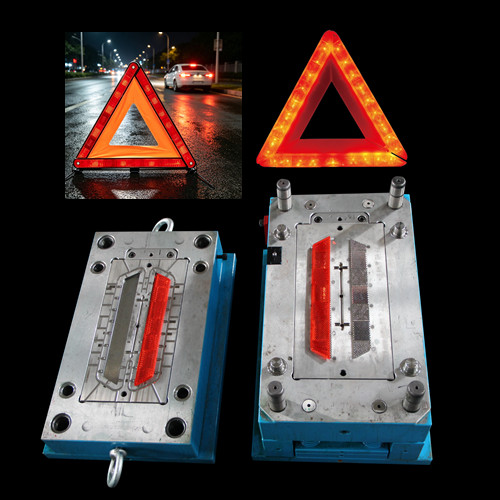
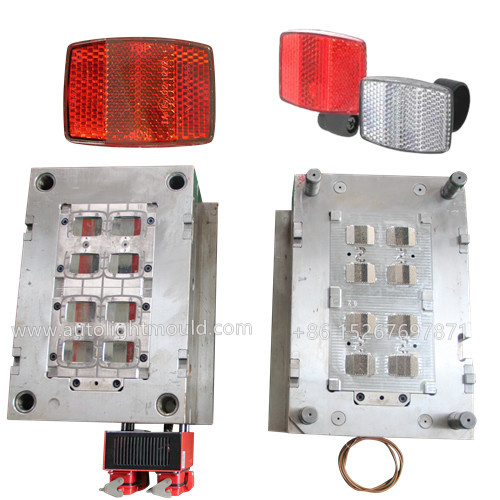
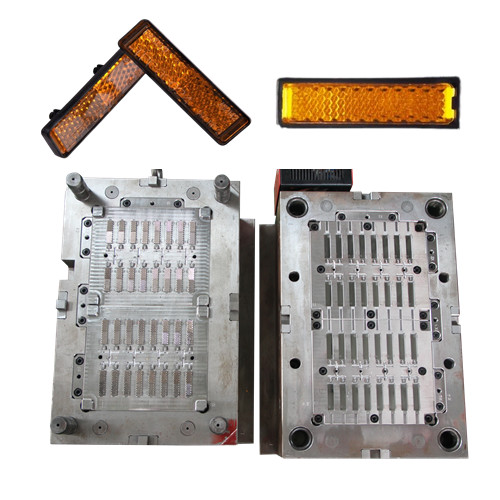
Automotive lighting systems require optical precision, clarity, and heat resistance, making them one of the most technically demanding areas in mold design.
Why Lighting Molds Are So Complex:
Tight tolerances: Lens clarity is highly dependent on mold polish and uniform cavity temperatures.
Material challenges: Polycarbonate and PMMA require very high mold temperatures.
Multi part assemblies: Involving reflectors, lenses, seals, and housings.
It's no surprise that many industry buyers research the top 10 automotive lighting mould manufacturers in China when sourcing this class of molds. Younger Mould has been recognized among these industry leaders due to its advanced tooling capabilities and ISO-certified manufacturing environment.
Step by Step: How Are Car Parts Molded?
Step 1: Design and Engineering
CAD models are created based on OEM specifications.
Moldflow simulations predict plastic flow, shrinkage, and warpage.
Step 2: Mold Manufacturing
CNC machining and EDM are used to produce mold cavities and cores.
Critical surfaces are hand polished or texturized.
Step 3: Trial and Validation
Initial parts are produced using trial runs.
Tolerances, fitment, and finish are inspected using CMM and optical tools.
Step 4: Mass Production
Molds are run in high speed injection molding machines (often 500T to 3000T).
Each cycle produces one or more parts depending on the mold layout.
This precise workflow is implemented by experienced mold makers like Younger Mould, ensuring minimal defects and high repeatability across production batches.
Materials Commonly Used in Car Parts Molding
ABS (Acrylonitrile Butadiene Styrene): High impact resistance, often used for interior trims.
Polypropylene (PP): Lightweight and chemical-resistant, used in bumpers and battery casings.
PC/ABS Blends: Offers strength and heat resistance, ideal for lighting components.
Glass fiber reinforced plastics (GFPP, GFPA): Used in structural brackets and under-the-hood parts.
Challenges in Automotive Mold Manufacturing
Creating molds for car parts isn't without its challenges:
Complex geometry: Requires advanced 3D machining.
Tight tolerances: Especially for mating or snap-fit components.
Cycle time optimization: Critical in high-volume production environments.
Material flow issues: Need for venting, gating, and cooling system precision.
Companies like Younger Mould address these challenges with years of industry experience and advanced simulation tools like Moldex3D and AutoDesk Moldflow.
Trends in Automotive Molding Technology
Lightweighting: OEMs demand thinner walls and reinforced composites to reduce vehicle weight.
Electric Vehicle Parts: New mold designs for battery trays, inverter covers, and charging ports.
Smart lighting: Complex molds for LED and adaptive lighting systems.
Sustainability: Use of recycled and bio-based materials in molded components.
Manufacturers need to stay updated with these trends to remain competitive. Younger Mould, for example, continuously upgrades its mold design software, materials database, and workshop automation to meet evolving automotive standards.
How Are Car Parts Molded in Today's Automotive Industry?
To summarize, car parts molding is a high-precision, multi step process that involves engineering design, tooling craftsmanship, and process control. Whether it's an auto bumper mould, interior dashboard, or lighting component, every mold is a customized tool built to deliver performance, consistency, and safety.
With China emerging as a global hub for automotive mold manufacturing, companies like Younger Mould continue to drive innovation through engineering excellence, collaborative development, and high-quality outputs.
As vehicles evolve, so too will the demands placed on molding technology—requiring a perfect blend of craftsmanship, science, and automation to mold the future of mobility.
Younger Mould is a reputable top 10 automotive lighting mould manufacturers in china, known globally for our dedication to quality, innovation, and reliability. We specialize in precision engineered car parts mould and offer tailored solutions to meet diverse project requirements—always at competitive prices. Share your contact information, and our team will promptly connect with you to discuss your specific needs.
What Is A Car Mould?
Tail Lamp Mold Housing Mold Manufacturing Process
Related Article