How to Make Die Cast Molds?
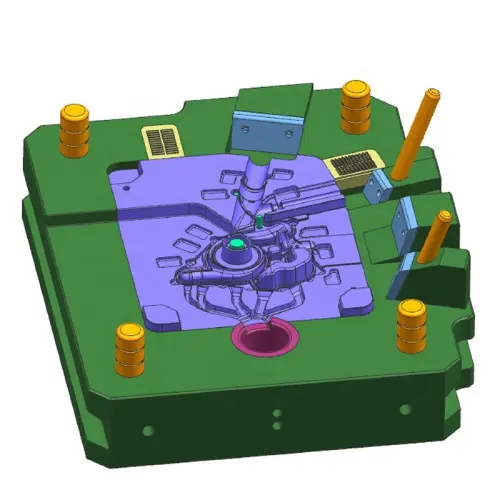
In modern manufacturing, die cast molding is essential for creating high precision metal parts used in automotive, electronics, motorcycle components, aerospace, and consumer products. Central to this process is the die casting mold, a sophisticated tool engineered for repeated use and extreme accuracy.
Understanding Die Casting Molds
A die cast mold, or die casting die, is a reusable steel tool used in the die casting process. Molten metal is injected under high pressure into the mold cavity, where it solidifies to form a part with intricate geometry and tight tolerances. These molds must withstand extreme thermal and mechanical stresses, making their design and material selection crucial to longevity and performance.
Designing the Mold: From CAD to Simulation
The mold making process begins with detailed design work. Designers use CAD software to model the mold and simulate metal flow, cooling behavior, and potential defects. Factors such as part geometry, wall thickness, draft angles, and ejection strategy are carefully planned. For parts like motorcycle engine housings, where porosity and warping must be minimized, simulation ensures optimal gate and vent placement.
In motorcycle die casting mold, the importance of uniform wall thickness, efficient cooling, and proper alloy flow cannot be overstated. These features are designed with safety, mechanical strength, and production speed in mind.
Choosing the Right Materials for Die Cast Molds
Die casting molds are typically made from hardened tool steels capable of resisting heat and wear. Common materials include H13 and SKD61, known for their thermal fatigue resistance. These steels can endure hundreds of thousands of cycles without distortion. Inserts made from materials like beryllium copper may also be used in areas requiring rapid heat dissipation.
The choice of material depends on the alloy used in casting, expected production volume, and mold complexity. High volume production of aluminum parts, for instance, demands mold steels with exceptional durability.
Machining and Assembly: Precision is Key
After design and material selection, the mold components are machined using CNC and EDM equipment. CNC machines shape the core, cavity, and base, while EDM processes refine intricate features like sharp corners and thin walls. These steps require expert die casting mold maker with deep experience in translating digital models into physical tools.
Once machined, the motorcycle die casting mold is assembled with all its components, including ejection pins, sliders, alignment systems, and cooling lines. Surface finishing techniques, such as polishing or coating, are applied to enhance part release and reduce mold wear. In molds for high quality finishes—like those required in consumer electronics or motorcycles—these treatments are essential.
Trial Runs and Mold Validation
Before full scale production begins, a series of trial runs (commonly called T0, T1, and T2) are performed to evaluate mold performance. These tests check for metal flow issues, dimensional stability, surface finish, and the effectiveness of the ejection and cooling systems. Adjustments are made as necessary to fine-tune the mold for consistent, defect-free casting.
For motorcycle die casting mold, trials ensure that parts meet stringent mechanical and aesthetic standards. This step is especially critical for safety-related components, where even minor flaws are unacceptable.
China Die Cast Mold Expertise
China is globally recognized for its capabilities in mold manufacturing. Many international companies source from China die cast mold suppliers due to their competitive pricing, advanced facilities, and skilled engineers. With experience in both high-precision and high-volume tooling, Chinese mold makers serve a broad range of industries.
For example, Chinese manufacturers have developed extensive experience in producing molds for motorcycle engines, electric vehicle parts, and consumer goods, all with strict quality control systems and quick turnaround times.
Die Cast Molding vs. Other Processes
Die cast molding stands out for its ability to produce complex shapes with excellent surface finish and dimensional consistency. Compared to sand casting or forging, die casting allows for thinner walls, finer details, and shorter cycle times. However, the initial mold cost is higher, which makes it more suitable for medium to high-volume production.
When compared to injection molding (used for plastics), die casting deals with higher pressures and temperatures, requiring tougher mold materials and more robust designs. This difference is why die casting molds are often more expensive and intricate to produce.
Key Characteristics of High Quality Die Casting Molds
A high quality mold will deliver consistent parts over many production cycles. Essential characteristics include long mold life, effective cooling systems, precise alignment, and robust ejection mechanisms. Surface finish, dimensional accuracy, and thermal control are also critical to mold performance.
For applications like motorcycle die casting, a mold must maintain precision despite rapid cycling and fluctuating temperatures. Failure to do so can result in parts that warp or fail under stress.
Maintaining Die Cast Molds
Even the most durable molds require regular maintenance to function effectively. Preventive maintenance includes cleaning vents and cooling lines, checking for erosion or thermal cracks, and verifying the alignment and operation of ejection systems.
Scheduled maintenance not only extends mold life but also ensures product consistency, reduces downtime, and improves overall production efficiency.
Understanding how to make die cast molds involves more than technical knowledge—it requires attention to design detail, material science, machining precision, and ongoing care. Whether for mass-producing electronics enclosures or developing a motorcycle die casting mold, the process demands expertise and careful planning.
By working with skilled die casting mold maker—especially those with strong reputations in countries like China—manufacturers can achieve reliable, cost-effective results. Investing in high-quality die casting molds pays off through longer mold life, superior part quality, and faster production cycles.
For engineers, developers, and procurement teams, knowing the intricacies of die cast mold creation is key to making informed decisions and building better products.
Younger Mould is recognized as one of the leading global die cast mold manufacturers, renowned for our superior quality, innovative engineering, and trusted industry reputation. With a steadfast commitment to excellence, we have established enduring partnerships with clients worldwide. If you’re in need of high quality motorcycle die casting mold, we invite you to leave your contact information. Our dedicated team will offer you competitive pricing and tailored solutions to meet your unique requirements.
How Do Injection Molds Work?
What Is the Purpose of Molding?
Related Article