How To Manufacture A Motorcycle Rearlamp Mold?
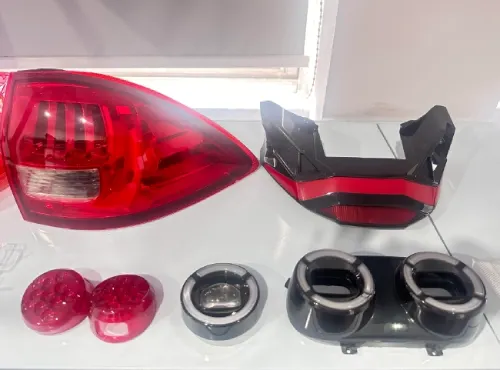
Lighting is one of the most defining aspects of vehicle design. For motorcycles in particular, rear lamps are not only functional but also contribute significantly to safety, regulatory compliance, and aesthetics. Behind every motorcycle tail light lies a precision tool: the motorcycle rearlamp mold.
Mold design and manufacturing for rear lighting systems have evolved dramatically in recent decades, thanks to advanced materials, high-precision machining, and innovative engineering. Whether it is a mold for automotive rear light or a mold for motorcycle tail light, the principles of accuracy, durability, and design integration remain the same.
Introduction to Motorcycle Rearlamp Mold Technology
What Is a Motorcycle Rearlamp Mold?
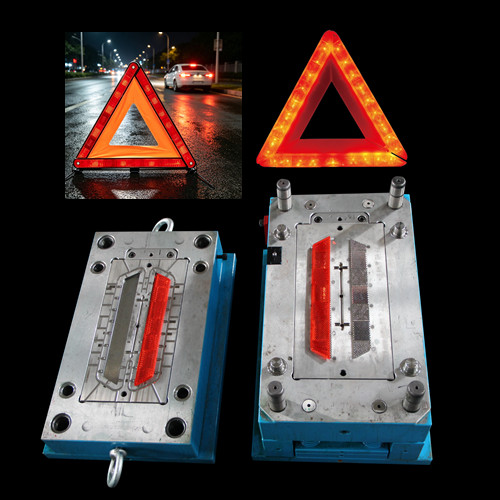
A motorcycle rearlamp mold is a precision-engineered tool used to shape thermoplastic or thermoset materials into rear lamp components. These molds are designed to create housings, lenses, reflectors, and decorative trims with exact dimensions to meet both safety and aesthetic requirements.
Importance of Mold Precision in Rear Lighting
Motorcycle rear lamps are not just decorative. They serve critical safety functions, including brake indication, turning signals, and nighttime visibility. Even the smallest deviation in mold quality can impact light diffusion, lens clarity, or water resistance. This makes mold design a key factor in ensuring both safety and performance.
Relationship Between Automotive and Motorcycle Rear Light Molds
Though motorcycles and cars differ in scale, the underlying engineering principles are similar. A mold for automotive rear light may share design methodologies with a mold for motorcycle tail light, but motorcycle molds often demand more compact structures and lightweight materials.
The Process of Designing a Mold for Motorcycle Tail Light
Step 1: Conceptual Design and 3D Modeling
The process begins with 3D modeling of the tail light design. Optical engineers determine how light will travel through the lens, while mold engineers translate these requirements into feasible tooling geometry.
Step 2: Material Selection for Rear Lamps
Choosing the right plastic material is critical. Polycarbonate (PC) and polymethyl methacrylate (PMMA) are commonly used due to their clarity and impact resistance. A well-designed motorcycle rearlamp mold ensures these materials can be formed with precision and durability.
Step 3: Cooling Systems and Mold Life
Rear lamp molds require efficient cooling channels to maintain cycle time without compromising part quality. Since motorcycles are often exposed to vibration, weather, and heat, the mold for motorcycle tail light must be designed to produce highly durable components.
Step 4: Tolerances and Finishing
Optical surfaces inside lenses must be flawless. The mold cavities are polished to achieve high transparency, and tolerances are kept within microns to ensure consistency in light diffusion.
Types of Molds Used for Rear Lamps in Motorcycles and Automobiles
Single-Cavity vs. Multi-Cavity Motorcycle Rearlamp Molds
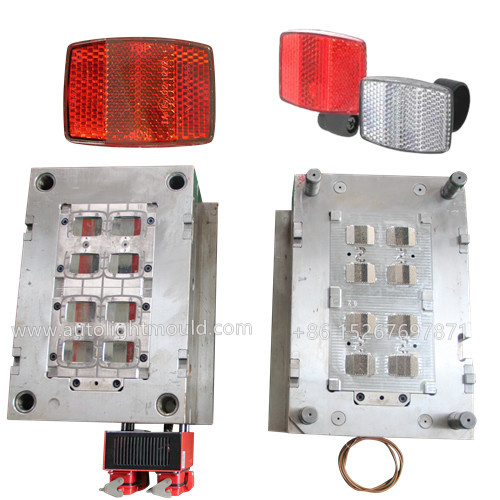
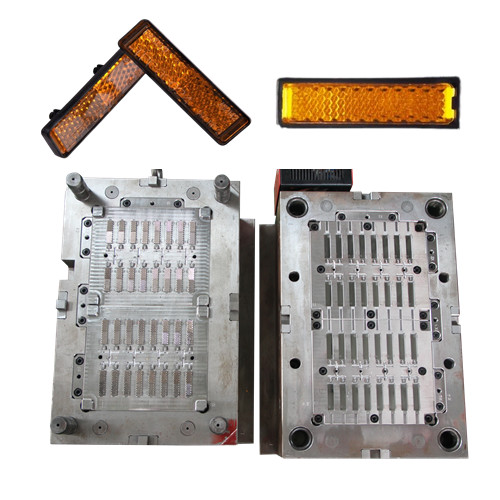
A single-cavity mold produces one component per cycle, ideal for prototypes or limited production. Multi-cavity molds, by contrast, support mass production, significantly reducing unit cost.
Mold for Automotive Rear Light Assemblies
In automotive design, rear lights often combine brake lamps, indicators, and reverse lights. The mold for automotive rear light must accommodate multiple optical zones, often requiring complex parting lines and insert structures.
Specialized Mold for Motorcycle Tail Light Components
Unlike cars, motorcycles have limited space for rear lamps, which demands highly compact mold designs. A mold for motorcycle tail light may be designed to integrate LED modules directly, requiring precision in alignment and housing design.
Bi-Color and Multi-Material Mold Designs
In both motorcycles and cars, lighting systems often involve more than one color or material. Multi-shot injection techniques allow the integration of transparent red, amber, and clear lenses in a single component, requiring advanced mold technologies.
Applications and Industry Trends in Rearlamp Mold Manufacturing
Motorcycle Industry Applications
Modern motorcycles are adopting LED technology, aerodynamic lamp designs, and integrated lighting systems. High-quality motorcycle rearlamp molds make it possible to mass-produce sleek, lightweight, and durable components that meet international safety standards.
Automotive Rear Lighting Evolution
The mold for automotive rear light industry has advanced with adaptive lighting systems, bi-color lamps, and lightweight housings. These innovations influence motorcycle mold design as well, as both sectors demand efficiency and design flexibility.
Integration of LEDs in Tail Lights
LED adoption requires molds that allow precise placement of diodes, reflectors, and optical patterns. This is a major factor driving changes in mold for motorcycle tail light engineering.
Role of Younger Mould in Global Manufacturing
Companies like Younger Mould specialize in designing molds that meet the demands of both motorcycle and automotive lighting industries. Their expertise in precision engineering ensures that each mold delivers durability, optical accuracy, and efficiency for mass production.
Future Directions: Innovations in Motorcycle Rearlamp Mold Design
Sustainability in Mold Manufacturing
Eco-friendly design is gaining importance. Manufacturers are researching ways to optimize mold lifecycles and use recyclable plastics in motorcycle rearlamp mold production.
Digital Twin and Simulation Technology
Simulation tools now allow engineers to predict material flow, cooling efficiency, and stress points before manufacturing the mold. This reduces trial-and-error and improves accuracy for both mold for automotive rear light and mold for motorcycle tail light.
Lightweighting and Compact Designs
As motorcycles become more performance-oriented, every gram counts. Molds are being designed to create thinner yet stronger lamp housings, balancing safety with performance.
Integration with Smart Mobility Systems
Future motorcycles may incorporate connected lighting systems for communication between vehicles. This requires advanced motorcycle rearlamp mold designs that can integrate electronics seamlessly within compact housings.
The motorcycle rearlamp mold is far more than a tool—it is the foundation of modern rear lighting design. Precision engineering ensures that tail lamps provide safety, durability, and style, while innovations such as multi-color molding and LED integration push the boundaries of what lighting can achieve.
Whether it is a mold for automotive rear light or a mold for motorcycle tail light, the principles of accuracy, durability, and design integration remain essential. With companies like Younger Mould driving technological advances, the future of rear lighting molds looks brighter than ever.
In today's mobility industry, rear lamps are more than safety components—they are design statements. And at the core of these statements lies the art and science of precision mold engineering.
Younger Mould is a trusted name in China's motorcycle rearlamp mold sector, recognized worldwide for our commitment to quality, innovation, and consistent reliability. As an industry leader, we specialize in delivering precision engineered mold for automotive rear light services, supporting clients with customized solutions designed to meet a wide range of project specifications—without compromising on speed or accuracy.
We pride ourselves on combining advanced manufacturing technologies with cost effective processes to offer high performance results at competitive rates. If you're looking for efficient mold for motorcycle tail light solutions, simply share your contact details with us. Our expert team will reach out promptly to discuss your project requirements and help bring your ideas to life.
Head lamp mold manufacturer and optic lens mold manufactory
Auto Light Mould In Modern Vehicle Lighting Systems
Related Article