How to Mold a Motorcycle Front Light?
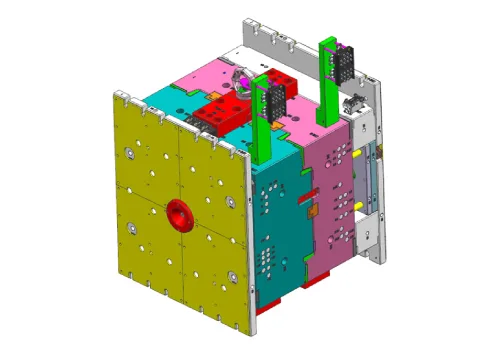
Creating a high performance, visually striking motorcycle front light requires more than just design flair—it demands deep expertise in precision injection molding, optical engineering, and material science. As motorcycles evolve into more sophisticated machines, the demand for advanced lighting solutions—especially LED based systems with complex light guides and thick wall lenses—has surged. At the heart of this transformation lies a critical component: the mold for motorcycle front light.
Understanding the Complexity of a Mold for Motorcycle Head Lamp
A mold for motorcycle head lamp is far more than a simple cavity that shapes plastic. Modern motorcycle headlights integrate multiple optical functions—low beam, high beam, daytime running lights (DRLs), and turn signals—often within a compact housing. This integration necessitates molds that can produce parts with tight tolerances, smooth surface finishes, and consistent optical clarity.
The primary challenge lies in molding transparent or semi-transparent components, such as thick wall lenses or light guide strips, which must transmit light without distortion. Any imperfection—such as flow lines, sink marks, or internal stress—can scatter light and compromise performance. Therefore, the mold must be engineered with precision cooling channels, high grade steel (often P20, H13, or stainless variants), and advanced ejection systems to prevent warping or scratching during demolding.
Moreover, many contemporary designs require two-color or three-color injection molding, where different materials—such as clear polycarbonate for the lens and black ABS for the housing—are molded in a single cycle. This process demands a highly synchronized mold design with rotating cores or sliding mechanisms, adding another layer of complexity to the tooling.
Key Design Considerations for a High Quality Head Lamp Mold
Designing a head lamp mold involves balancing optical performance, manufacturability, and cost efficiency. Several technical factors must be addressed early in the development phase:
Material Selection: Polycarbonate (PC) is the go-to resin for motorcycle headlight lenses due to its impact resistance, thermal stability, and optical clarity. However, PC is also prone to stress cracking and requires molds with excellent venting and temperature control.
Wall Thickness Management: Thick wall lenses—common in projector-type headlights—require specialized mold designs to manage cooling rates and prevent internal voids or sink marks. Uniform wall thickness and strategic gate placement are essential.
Surface Finish and Texture: The mold cavity must be polished to a mirror finish (often SPI-A1 grade) to ensure the lens surface is free of blemishes. For non-optical surfaces, subtle textures may be applied to reduce glare or enhance aesthetics.
Thermal and Flow Simulation: Before steel is cut, mold for motorcycle head lamp flow analysis (MFA) is used to simulate how molten plastic fills the cavity. This helps optimize gate locations, predict weld lines, and minimize residual stress—critical for optical parts.
These considerations underscore why only experienced mold makers can consistently deliver high-quality mold for motorcycle front light systems that meet both regulatory standards and brand expectations.
The Role of Specialized Manufacturing in Producing Reliable Headlight Molds
Not all injection molders are equipped to handle the stringent requirements of automotive lighting. Producing a reliable head mold.lamp demands a vertically integrated approach—combining in-house design, precision machining, optical validation, and mass production capabilities.
For instance, molds used for LED light guide strips require micron-level accuracy to ensure uniform light distribution. Similarly, projector lens molds must maintain exact curvature and surface geometry to focus light correctly. These components often involve freeform surfaces that can only be machined using 5-axis CNC centers and polished by skilled technicians.
Additionally, thick-wall lens molding presents unique challenges in cycle time and cooling efficiency. Traditional molds may lead to prolonged cooling periods and inconsistent part quality. Advanced solutions—such as conformal cooling channels created via additive manufacturing—can significantly improve thermal management, but they require deep process knowledge to implement effectively.
This level of specialization explains why manufacturers like Younger Mould, with years of focused experience in motorcycle head light mold development, are sought after by global Tier 1 suppliers and OEMs. Their dedicated facility for transparent and thick-wall parts ensures that every mold is optimized not just for shape, but for optical function.
Future Trends: Multi-Material Molding and Smart Lighting Integration
As motorcycles adopt smarter, more connected features, headlight systems are evolving beyond illumination. Adaptive lighting, dynamic turn signals, and integrated sensors are becoming standard in premium models. This shift places even greater demands on the underlying mold for motorcycle front light.
Multi-material molding—especially two-shot or three-shot processes—enables seamless integration of clear lenses, tinted covers, and structural housings in a single component. This reduces assembly steps, improves sealing against moisture, and enhances design freedom. However, it also requires molds with rotating platen systems, precise alignment, and robust wear resistance.
Furthermore, the push for sustainability is driving the use of bio-based or recyclable optical-grade resins, which may behave differently during injection. Mold designers must adapt gate designs, runner systems, and processing parameters accordingly.
In this context, collaboration between lighting designers, material scientists, and mold engineers becomes essential. A successful headlamp project hinges not just on aesthetics, but on a deep understanding of how the mold influences every aspect of the final part—from light transmission to long-term durability.
Precision Molding as the Foundation of Modern Motorcycle Lighting
The journey from concept to a functional, road-ready motorcycle headlight begins with a meticulously engineered mold. Whether it’s a mold for motorcycle head lamp, a complex light guide system, or a thick-wall projector lens, the quality of the tooling directly determines the performance and reliability of the final product.
As the industry advances, the bar for precision, efficiency, and innovation in headlamp molding continues to rise. Manufacturers with specialized expertise—particularly those focused exclusively on automotive and motorcycle lighting molds—are best positioned to meet these challenges. For engineers and designers working on next-generation lighting systems, understanding the nuances of head lamp mold development is not just beneficial—it’s essential.
For further insights into technical capabilities related to motorcycle front light molding, you can explore detailed case studies and product specifications at Younger Mould’s motorcycle head light mold page .
Younger Mould is a leading China mold manufacturer specializing in high quality mold for motorcycle front light solutions. With a reputation built on innovation, precision, and reliability, we provide customized head mold.lamp services that meet the specific needs of global clients. Our engineering team ensures every motorcycle head lamp mold is designed with advanced technology, delivering consistent performance, fast turnaround, and exceptional accuracy—helping manufacturers achieve efficiency without compromising on quality.
Is a Mold for Motorcycle Front Light Easy to Make?
Why Automotive Exterior Mould Is Important?
Related Article