Is 3D Printing Better Than Injection Molding?
2025-03-31
The debate between 3D printing and injection molding has grown louder as manufacturing technologies evolve, each vying for dominance in the production landscape. Both methods offer unique strengths, making them indispensable in industries like automotive, consumer goods, and beyond. But is 3D printing truly better than injection molding? The answer depends on context—application, scale, cost, and timeline all play a role.
Speed and Flexibility: The Prototyping Advantage
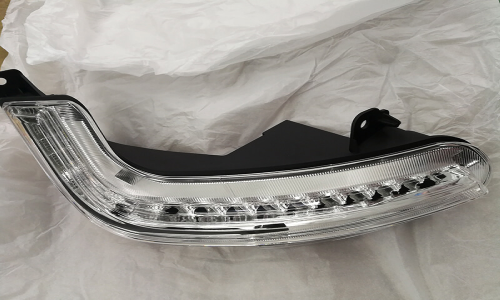
When it comes to speed in the early stages of product development, 3D printing often takes the lead—especially in prototyping. An automotive rapid prototyping manufacturing company can leverage 3D printing to produce a rapid prototype for front lamp in hours, not weeks. This additive process builds parts layer by layer from digital files, requiring no tooling or setup beyond a 3D model. For a front lamp prototype, designers can test fit, form, and even basic function using materials like PLA or resin, iterating designs quickly based on feedback.
Injection molding, by contrast, is a slower starter. Creating a mold—whether steel or aluminum—can take weeks or months, especially for complex parts like a front lamp housing with precise light diffusion features. This delay makes it impractical for rapid iteration. An automotive rapid prototyping manufacturing company might spend $5,000-$20,000 on a mold, only to discover design flaws that require costly revisions. For small runs or one-offs, this upfront investment rarely makes sense.
However, 3D printing's speed comes with trade-offs. While 3D printing rapid prototyping services excel at producing single units or small batches, they struggle to match injection molding's efficiency at scale. Printing a dozen front lamp prototypes might take a day each, whereas a mold, once made, can churn out thousands of identical parts in the same timeframe. For prototyping and flexibility, 3D printing wins—but it's a victory confined to the early stages of development.
Cost Considerations: Upfront vs. Long Term
Cost is a defining factor in the 3D printing versus injection molding debate, and the comparison hinges on production volume. 3D printing rapid prototyping services shine in low-volume scenarios. A rapid prototype for front lamp might cost $50-$200 to print, depending on material and printer type, with no tooling expense. This makes it ideal for an automotive rapid prototyping manufacturing company testing multiple design variations without breaking the bank. The pay-as-you-go nature of 3D printing—where costs scale linearly with units—keeps initial investments low.
Injection molding, however, demands a steep upfront payment. A mold for a front lamp could range from $1,000 for a simple aluminum tool to over $50,000 for a multi-cavity steel mold suited for mass production. Add in material and labor costs, and the break-even point might not arrive until thousands of parts are made. For a single prototype or small batch, this is overkill. Yet, once production ramps up, the per-unit cost plummets—often to mere cents per part—making injection molding unbeatable for high-volume runs.
The tipping point varies by project. An automotive rapid prototyping manufacturing company might use 3D printing rapid prototyping services for initial testing, then switch to injection molding for production. A front lamp needing 100 units favors 3D printing; 100,000 units scream for injection molding. Cost isn't about which is cheaper outright—it's about aligning the method with the project's scale and goals.
Material and Quality: Strength Under Scrutiny
Material options and part quality further differentiate these technologies. 3D printing has expanded its material palette—PLA, ABS, PETG, nylon, even metal filaments—but it still lags behind injection molding in variety and consistency. For a rapid prototype for front lamp, 3D printing rapid prototyping services might use polycarbonate filament to mimic clarity or strength, but the layered construction often results in weaker, anisotropic parts prone to delamination under stress. Surface finish can also be rough, requiring post-processing like sanding or vapor smoothing.
Injection molding, meanwhile, offers a vast array of resins—commodity plastics to engineering-grade polymers—poured into a mold under high pressure, yielding isotropic, durable parts with smooth finishes. A front lamp housing demands heat resistance, impact strength, and optical clarity (for lenses), qualities injection molding delivers reliably with materials like PMMA or ABS. An automotive rapid prototyping manufacturing company might prototype with 3D printing, but production-grade parts often require injection molding's superior mechanical properties and repeatability.
That said, 3D printing is catching up. Advances in resin-based printing (like SLA or DLP) and metal additive manufacturing offer higher strength and finer detail, narrowing the gap. For non-structural prototypes, this may suffice. But for load-bearing or safety-critical components—like a front lamp securing a vehicle's lighting system—injection molding's proven track record remains the gold standard.
Scalability and Production: The Volume Game
Scalability is where injection molding asserts its dominance. While 3D printing rapid prototyping services excel at one offs and small runs, their layer by layer approach doesn't scale efficiently. Printing 1,000 front lamp prototypes could take weeks or months, with costs rising linearly and risks of printer failure or variation creeping in. An automotive rapid prototyping manufacturing company relying solely on 3D printing for production would face bottlenecks, high labor costs for monitoring, and inconsistent output.
Injection molding flips this dynamic. Once the mold is ready, it's a production powerhouse. A single cycle might take 20-60 seconds, meaning a multi-cavity mold can produce dozens of front lamps per minute. For an automotive rapid prototyping manufacturing company transitioning to mass production, this speed and consistency are unmatched. The initial tooling cost becomes a footnote when amortized over millions of parts, a scenario where 3D printing can't compete.
Yet, scalability isn't always the goal. A custom rapid prototype for front lamp for a concept car or limited edition model might never need more than a handful of units, making 3D printing the smarter choice. The decision hinges on volume: low numbers favor 3D printing's agility; high numbers demand injection molding's efficiency.
Innovation and Customization: The Future Edge
3D printing's greatest strength may lie in its potential for innovation and customization, areas where injection molding struggles. Because it requires no tooling, 3D printing allows an automotive rapid prototyping manufacturing company to experiment with complex geometries—think lattice structures or integrated features—that would be impractical or impossible to mold. A rapid prototype for front lamp could incorporate unique venting patterns or lightweighting designs without the constraints of mold draft angles or parting lines.
This freedom fuels rapid iteration and personalization. 3D printing rapid prototyping services can tweak a front lamp design overnight, tailoring it for specific models or markets without retooling costs. Injection molding, bound by its fixed molds, lacks this agility—any change means new tooling, time, and expense. For niche applications or bespoke automotive parts, 3D printing's adaptability is a game changer.
However, injection molding holds its own in standardized, high volume production where consistency trumps customization. The automotive industry, reliant on uniform parts for assembly lines, leans on injection molding for its reliability. The future may see hybrid approaches—an automotive rapid prototyping manufacturing company using 3D printing for design and injection molding for rollout—blending the best of both worlds.
Better for What?
So, is 3D printing better than injection molding? It's not a yes-or-no question—it's a matter of purpose. For an automotive rapid prototyping manufacturing company, 3D printing's speed, low entry cost, and flexibility make it ideal for crafting a rapid prototype for front lamp or exploring new ideas via 3D printing rapid prototyping services. Injection molding, with its high initial cost but unmatched scalability and quality, reigns supreme for mass production of durable, precise parts.
The choice boils down to priorities: prototyping versus production, customization versus consistency, short-term savings versus long-term efficiency. Neither is universally “better”—they're tools for different jobs. As technology advances, 3D printing may encroach further into production territory, but for now, injection molding holds its ground where volume and reliability matter most. The real winner? The manufacturer who knows when to use each.
Younger Mould is a leading automotive rapid prototyping manufacturing company in China, widely recognized for its excellence and trusted reputation in the industry. With a strong commitment to quality and innovation, we have earned the trust and appreciation of numerous customers. If you are interested in our rapid prototype for front lamp, please leave your contact information. Our team will provide you with competitive quotes and outstanding 3d printing rapid prototyping services tailored to your requirements.
How Long Does Plastic Injection Molding Take?
Why Is Injection Molding So Expensive?
Related Article

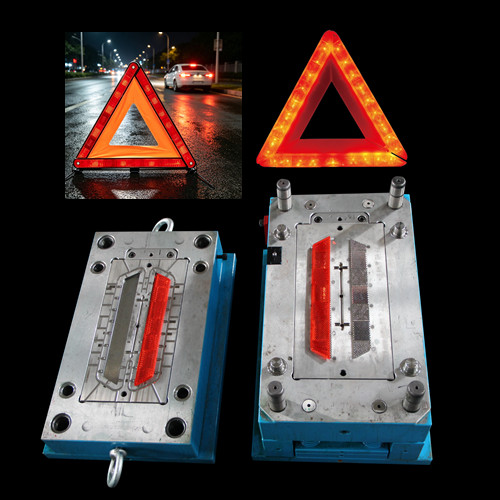
We are a professional mold manufacturer in Huangyan, China, specializing in high-precision injection molds for parking reflex reflectors and warning triangles. Our molds are made with durable steel for long service life, supporting custom designs and stable mass production to meet your automotive accessory manufacturing needs.
Parking reflex refletcor warning triangle mould