Is Die Casting Molds Reusable?
In the world of modern manufacturing, die casting molds are essential tools used for producing high precision metal components. Particularly in the automotive and industrial sectors, die casting is favored for its ability to rapidly generate complex metal parts with tight tolerances and excellent surface finishes. This raises a common question among engineers, manufacturers, and procurement specialists: ‘Is die casting molds reusable?’
The answer is yes — die casting molds are reusable, but with certain limitations and factors that affect their lifespan.
Understanding the Die Cast Molding Process
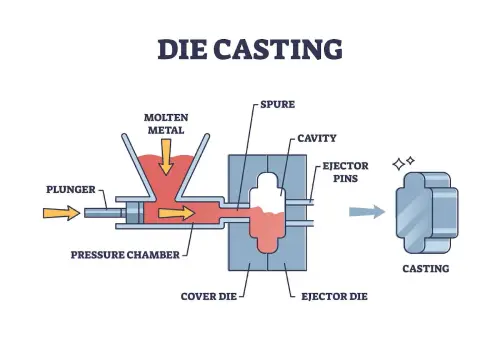
Before discussing reusability, it's essential to understand what the die cast molding process entails. Die casting involves injecting molten metal (such as aluminum, zinc, or magnesium) into a steel mold cavity under high pressure. Once cooled, the metal solidifies into the desired shape, and the mold opens to eject the component.
This process is ideal for:
High volume production
Dimensional consistency
Fine surface detailing
Because of its efficiency and repeatability, die casting is widely used in producing automotive parts, electronic enclosures, appliance housings, and structural components.
What Makes Die Casting Molds Reusable?
The core of die casting technology lies in the durability of the mold itself, often referred to as a die. These dies are made from high grade tool steel and engineered to withstand:
High injection pressures
Rapid temperature fluctuations
Repetitive mechanical stress
The reusability of die casting molds depends on several critical factors:
1. Mold Material Quality
Die casting molds are typically made from H13 tool steel or similar heat-resistant alloys. High grade steel ensures better resistance to wear, cracking, and thermal fatigue — all of which impact reusability.
2. Mold Design and Engineering
A properly designed auto die casting mold incorporates cooling channels, draft angles, venting systems, and thermal management to ensure consistent cycles and extend mold life.
Molds designed with modular inserts or interchangeable cavities also enhance reusability by allowing repairs or replacements of specific sections rather than the entire tool.
Mold Reusability in Automotive Applications
1. Car Die Casting Mold Reuse in High Volume Production
In the automotive industry, die casting is commonly used to manufacture:
Engine blocks
Transmission housings
Suspension brackets
Heat sinks and electronic casings
A typical car die casting mold used in mass production can endure 50,000 to 150,000 injection cycles depending on the material and component design. With proper maintenance, some molds have been reported to last beyond 200,000 shots, particularly for aluminum die cast parts.
2. Auto Die Casting Mold for Lightweight Components
As the industry transitions toward lightweight electric vehicles (EVs), magnesium and aluminum alloys are favored for weight reduction. The auto die casting mold used for these parts requires frequent quality checks but can still be reused across numerous cycles — often up to 100,000 shots for aluminum and even more for zinc due to its lower melting temperature.
The Role of Maintenance in Mold Reuse
A key determinant of die casting mold reusability is how well the mold is maintained. Regular inspection, cleaning, and repair routines are vital to prolonging the tool’s usable life.
Preventive Maintenance Involves:
Cleaning ejector pins and mold cavities
Checking for micro-cracks or thermal wear
Replacing worn components (sprues, runners, inserts)
Applying surface coatings (e.g., nitriding or PVD) to reduce wear
With disciplined mold maintenance schedules, die casting mold manufacturers can significantly increase the lifespan and ROI of a tooling investment.
Limitations to Die Casting Mold Reusability
Although die casting molds are inherently reusable, they are not infinite. Several factors may limit their reuse:
1. Thermal Fatigue and Cracking
Repeated exposure to hot molten metal causes thermal expansion and contraction, eventually leading to surface cracks and reduced precision in the mold cavity.
2. Erosion and Corrosion
Molten metals, especially at high pressures, cause erosion of the cavity surface over time. Corrosion may also occur with poor alloy selection or insufficient surface protection.
3. Dimensional Degradation
Even slight warping or wear in the mold can affect dimensional accuracy, leading to defective parts and the need for re-machining or retiring the mold.
When molds degrade to the point where they no longer produce quality parts or require constant adjustment, reusability ceases to be cost effective.
How Many Times Can a Die Casting Mold Be Reused?
There's no universal answer, as die casting mold life varies based on several conditions:
Zinc molds: Up to 1,000,000 cycles due to low melting point
Aluminum molds: 75,000–150,000 cycles (depending on part complexity)
Magnesium molds: Around 100,000 cycles, but with less tool wear
China die cast mold suppliers are known for offering high volume tooling solutions that balance cost efficiency with longevity, especially for export markets demanding repeatable quality.
Die Casting Mold Manufacture in China: A Global Supply Hub
In recent years, China die cast mold manufacturers have become globally competitive due to their investment in:
Advanced CNC and EDM tooling equipment
Skilled mold design teams
Fast lead times and cost effective tooling solutions
Export ready mold standardization
Chinese suppliers serve both OEM and aftermarket needs, producing automotive die cast molds for global automakers, consumer electronics brands, and industrial machinery companies.
Thanks to their scale and specialization, they can design molds that are not only reusable but also optimized for rapid maintenance and mold swap cycles.
Sustainability and Environmental Considerations
Reusability of die casting molds also contributes to sustainable manufacturing. By maximizing the lifespan of a mold, manufacturers can:
Reduce tooling waste
Minimize material consumption
Lower the environmental impact of retooling
Improve overall production efficiency
As the industry adopts green manufacturing principles, reusable die casting molds play a supporting role in reducing the carbon footprint of large-scale manufacturing operations.
Is Die Casting Molds Reusable?
To summarize, yes — die casting molds are reusable, and their reusability is one of the process's greatest advantages. However, longevity depends on several critical elements:
Mold design and engineering quality
Mold material selection
Die cast alloy used
Maintenance practices
Production environment
Whether you're working with a car die casting mold, auto die casting mold, or producing industrial components, proper planning and professional mold manufacture are key to ensuring long term, reusable die tooling.
With the advancement of die casting mold manufacture technologies and the support of experienced China die cast mold suppliers, manufacturers around the world are better equipped than ever to invest in high performance molds that deliver consistent quality and excellent reusability over their lifecycle.
Younger Mould is a trusted name in china die cast mold automotive injection molding, recognized worldwide for our commitment to quality, innovation, and dependability. We focus on delivering precision auto die casting mold and provide customized solutions at competitive rates. Share your contact details, and our team will be in touch to support your specific needs.
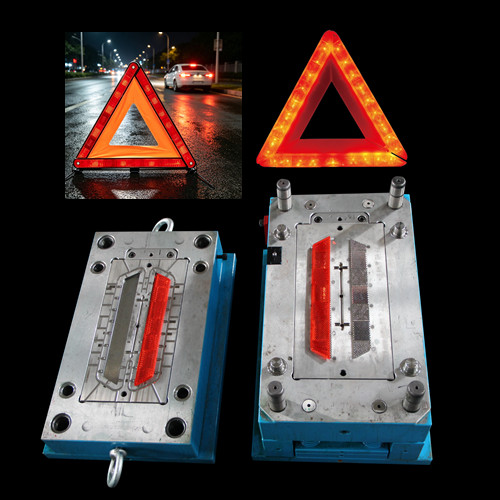
Electroform triangle warning reflector mold trial
Motorcycle head lamp mold trial today
Related Article