What's Motorcycle Grill Mould Development?
2026-02-26
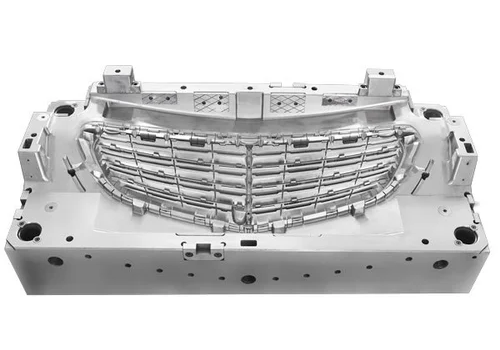
The motorcycle industry continues evolving toward sophisticated aerodynamic designs and distinctive brand identity elements, with front grilles serving as critical components combining functional airflow management with aesthetic differentiation. At the manufacturing core of these components lies the motorcycle grill mould—a specialized tooling solution demanding precision engineering, advanced material science, and rigorous quality control protocols.
Chapter 1: Functional Design Requirements
Motorcycle grill mould development requires balancing multiple engineering disciplines to achieve optimal performance characteristics while maintaining distinctive visual identity.
Aerodynamic efficiency considerations drive grille geometry design—computational fluid dynamics (CFD) analysis optimizes airflow patterns reducing drag coefficients while ensuring adequate engine cooling and component protection from debris ingress.
Structural integrity requirements demand precise wall thickness control—typically ranging from 2.0mm to 3.5mm depending on component location and impact resistance requirements, with uniform thickness distribution preventing sink marks and warpage during cooling cycles.
Impact resistance specifications ensure rider safety compliance—grille components must withstand specified impact loads without fragmentation, requiring careful material selection and reinforcement rib design to distribute stress concentrations effectively.
Brand identity integration influences surface texture and feature definition—precision mold cavities must replicate intricate logo details, geometric patterns, and surface finishes that distinguish manufacturer identity while maintaining functional performance.
Mounting interface precision ensures assembly compatibility—critical locating features typically maintained within ±0.05mm tolerances to ensure proper alignment with headlamp assemblies, fairing components, and structural mounting points.
Thermal management considerations influence material selection—components exposed to engine heat require materials with continuous service temperatures exceeding 120°C while maintaining dimensional stability under thermal cycling conditions.
Surface finish requirements balance aesthetic appeal with functional needs—Class A surface finishes below 0.025 microns Ra for visible areas while textured surfaces on non-critical areas reduce gloss variations and scratch visibility during normal use.
Environmental durability specifications ensure long-term performance—UV resistance, chemical resistance to fuels and cleaning agents, and moisture barrier properties prevent degradation during extended outdoor exposure.
Weight optimization strategies influence design decisions—hollow section designs with strategic rib placement reduce component weight without compromising structural integrity, contributing to overall vehicle weight reduction targets.
Specialized mold manufacturers like Younger Mould implement comprehensive design validation protocols for motorcycle grill mould development including flow analysis, structural simulation, and prototype testing before production tooling commitment.
Chapter 2: Material Selection Criteria
Motorcycle moulds manufacturing demands careful material selection balancing mechanical properties, processing characteristics, and cost-effectiveness for diverse component applications.
ABS (Acrylonitrile Butadiene Styrene) remains popular for non-structural grille components—offering excellent impact resistance, good surface finish capabilities, and cost-effective processing characteristics suitable for medium-volume production runs.
PC/ABS blends provide enhanced thermal resistance and impact strength—combining polycarbonate's heat resistance with ABS's processability creates materials suitable for components exposed to elevated temperatures near engine compartments.
Nylon-based materials with glass fiber reinforcement offer superior mechanical properties—30% glass-filled nylon provides exceptional strength-to-weight ratio and dimensional stability under thermal loads for structural grille applications.
TPO (Thermoplastic Olefin) materials deliver excellent weatherability and chemical resistance—low-temperature impact performance and UV stability make these materials ideal for exterior components requiring long-term outdoor durability.
Material flow characteristics influence mold design decisions—melt flow index (MFI) values between 10-25 g/10min typically provide optimal balance between cavity filling capability and dimensional stability for complex grille geometries.
Shrinkage rate considerations require precise mold compensation—thermoplastic materials exhibit shrinkage rates between 0.4-0.8% depending on material grade and processing conditions, requiring accurate mold cavity sizing to achieve final part dimensions.
Recycled content integration supports sustainability initiatives—many manufacturers now incorporate post-industrial recycled materials up to 30% content while maintaining mechanical properties through careful material blending and testing protocols.
Flame retardancy requirements vary by component location—materials requiring UL94 V-2 or V-0 ratings ensure compliance with vehicle fire safety standards while maintaining aesthetic surface finish quality.
Color consistency challenges require specialized material formulations—masterbatch integration and processing parameter control ensure uniform color distribution across production batches preventing visible variations in finished components.
Material certification documentation provides traceability—suppliers maintaining material safety data sheets, compliance certificates, and batch testing reports enable comprehensive quality assurance throughout production cycles.
Chapter 3: Precision Mold Manufacturing
Motorcycle grill mould manufacturing demands exceptional precision engineering capabilities extending far beyond standard injection molding tooling requirements.
Ejection system design requires careful consideration—multi-point ejector pin arrangements with polished surfaces prevent marking on critical aesthetic surfaces while ensuring reliable part release without deformation or stress cracking.
Venting systems must accommodate complex geometries—strategically placed vacuum vents and porous steel inserts remove trapped air during mold filling while preventing resin leakage that could create flash on precision surfaces.
Gate design influences flow patterns and weld line formation—submarine gates or edge gates positioned to minimize visible witness marks on critical surfaces while ensuring complete cavity filling without air entrapment or flow hesitation.
Mold steel selection balances wear resistance with thermal conductivity—typically utilizing P20 pre-hardened steel for standard applications or H13 tool steel for high-volume production requiring extended service life under thermal cycling conditions.
Hot runner systems optimize material utilization—precise temperature control in manifold systems prevents material degradation while reducing waste and improving part consistency across multiple cavities.
Mold maintenance protocols ensure long-term performance—preventive maintenance schedules including surface inspection, cooling system cleaning, and component replacement extend service life while maintaining consistent part quality.
Quality control protocols include comprehensive mold validation—first article inspection (FAI) procedures verify dimensional accuracy, surface finish quality, and functional performance before production approval ensuring compliance with automotive industry standards.
Chapter 4: Strategic Supplier Evaluation Frameworks for Motorcycle Moulds Procurement
Optimal motorcycle mold selection requires systematic evaluation extending beyond initial quotation comparisons to encompass technical capabilities, quality systems, and long-term partnership potential.
Technical capability assessment should include mold design expertise—suppliers maintaining dedicated automotive engineering teams with CAD/CAE software capabilities demonstrate deeper understanding of component performance requirements versus general mold manufacturers.
Manufacturing infrastructure verification proves essential—suppliers possessing CNC machining centers with 5-axis capabilities, precision grinding equipment, and coordinate measuring machines ensure dimensional accuracy required for aesthetic and functional components.
Quality management system certification requires verification beyond documentation—auditing actual implementation of IATF 16949 procedures on production floor reveals genuine quality culture versus certificate-only compliance.
Material expertise influences final part quality—suppliers with established relationships with major thermoplastic compound manufacturers demonstrate material processing knowledge essential for consistent results across production volumes.
Prototype development capabilities accelerate time-to-market—suppliers capable of delivering functional prototypes within 3-4 weeks demonstrate robust design validation processes versus those requiring multiple iterations extending beyond 8 weeks.
Production capacity scalability matters for volume programs—suppliers capable of 30+ mold deliveries annually with flexible scheduling accommodate motorcycle industry ramp-up requirements without compromising quality standards.
Technical documentation quality reflects engineering rigor—comprehensive mold design documentation including mold flow analysis reports, thermal simulation results, and tolerance stack-up analysis demonstrates supplier expertise and transparency.
After sales technical support infrastructure reduces program risk—suppliers providing mold maintenance services, spare parts inventory, and technical troubleshooting capabilities demonstrate long-term partnership commitment essential for production continuity.
Intellectual property protection considerations matter for proprietary designs—suppliers signing mutually enforceable non-disclosure agreements and design ownership contracts protect buyer investment in specialized component geometries and brand identity elements.
Industry specialization delivers application expertise—manufacturers focused exclusively on motorcycle moulds understand nuanced requirements including vibration resistance, weather durability, and aesthetic finish standards versus general industrial mold producers.
Frequently Asked Questions
What distinguishes premium motorcycle moulds from standard injection molding capabilities?
Premium motorcycle moulds feature specialized design expertise in aerodynamic components, precision surface finish capabilities for Class A aesthetics, advanced cooling systems for cycle time optimization, and comprehensive validation protocols ensuring dimensional accuracy and functional performance under real-world operating conditions.
How does gate location selection impact motorcycle grill component quality?
Gate placement influences weld line formation, surface finish quality, and dimensional stability—optimal gate locations minimize visible witness marks on critical aesthetic surfaces while ensuring complete cavity filling without air entrapment or flow hesitation that could compromise structural integrity.
What surface finish requirements ensure optimal aesthetic performance in motorcycle grill components?
Critical visible surfaces require mold cavity finishes below 0.025 microns Ra achieved through diamond polishing processes—this precision ensures uniform gloss levels, minimizes scratch visibility, and provides excellent replication of texture patterns and brand identity elements.
Why do specialized motorcycle mold manufacturers offer competitive advantages for component production?
Established motorcycle mold manufacturers combine industry-specific expertise with advanced manufacturing capabilities while maintaining quality standards required for automotive applications—suppliers with dedicated motorcycle divisions demonstrate specialized knowledge in vibration resistance, weather durability, and aesthetic finish requirements.
How frequently should motorcycle grill moulds undergo maintenance and refurbishment?
Preventive maintenance every 25,000 cycles including surface inspection, cooling system cleaning, and ejector system lubrication extends mold life significantly—major refurbishment including re-polishing and component replacement typically required after 200,000-300,000 cycles depending on production conditions and material abrasiveness.
How to Choose Automotive Tail Light Mold for OEM Engineers?
Motorcycle Plastic Mold in Two Wheeler Manufacturing
Related Article

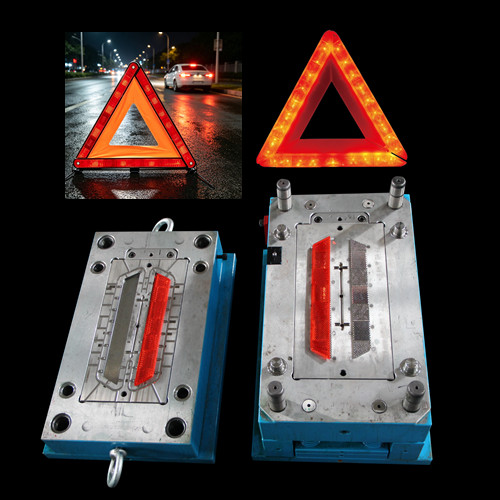
We are a professional mold manufacturer in Huangyan, China, specializing in high-precision injection molds for parking reflex reflectors and warning triangles. Our molds are made with durable steel for long service life, supporting custom designs and stable mass production to meet your automotive accessory manufacturing needs.
Parking reflex refletcor warning triangle mould