Motorcycle Plastic Mold in Two Wheeler Manufacturing
2026-02-25
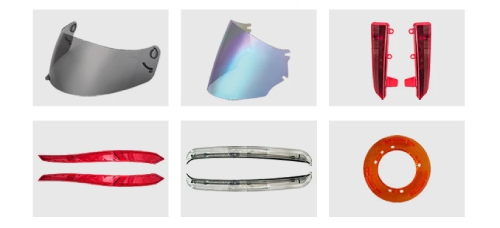
The motorcycle plastic mold stands at the core of producing functional in two-wheeler manufacturing landscape, aesthetic, and high-quality components. From fairings and instrument housings to inner panels and lighting bezels, plastic parts constitute a large proportion of the visible and structural elements of modern motorcycles. For OEMs, tier-one suppliers, and contract manufacturers, understanding how plastic molding fits into broader product development and production strategy is essential.
Chapter 1 — Technical Foundations of Motorcycle Plastic Mold Engineering
What Defines a Motorcycle Plastic Mold?
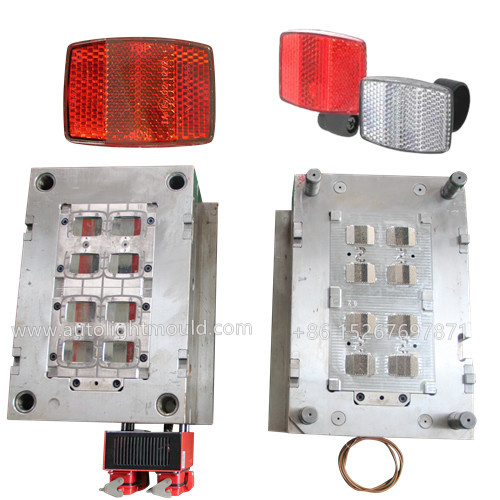
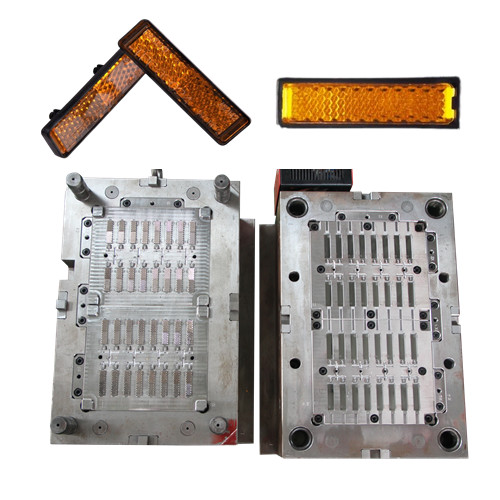
A motorcycle plastic mold refers to the precision tooling used to shape molten plastic resin into functional parts that meet dimensional, aesthetic, and performance criteria. These molds are engineered to withstand high pressure, thermal cycling, and repeated opening and closing, often producing tens of thousands to millions of parts over their service life.
Unlike simple prototyping tools, molds for motorcycles must account for:
Rapid cycle times required in mass production
Complex geometries with integrated features
Controlled shrinkage and material flow patterns
Surface finish requirements matching final part aesthetics
Mold motorcycles types commonly used in two-wheeler plastics include injection molds for structural and exterior body parts, blow molds for hollow components, and compression molds for specialized composite parts.
Material Considerations: From ABS to Advanced Engineering Resins
The selection of plastic materials for motorcycle components has shifted from commodity resins toward engineering polymers. Common materials include:
ABS (Acrylonitrile Butadiene Styrene): Good balance of strength and aesthetics, commonly used for fairings and covers.
PC (Polycarbonate): High impact resistance; ideal for light transparent or structural components.
PA (Nylon/Polyamide): Excellent mechanical performance for functional parts like brackets or bushings.
PP (Polypropylene): Enhanced chemical resistance and low density for internal panels and clips.
GF-Reinforced Thermoplastics: Glass fiber–reinforced variants improve stiffness for structural applications.
Each material behaves differently in molding — influencing factors such as melt flow, cooling rate, and final part shrinkage. These considerations are fundamental in mold motorcycles design and process optimization.
The Plastic Injection Molding Process for Motorcycle Components
For plastic parts on motorcycles, injection molding remains the dominant manufacturing process due to its precision, repeatability, and high throughput. The core stages include:
Melt Preparation: Plastic granules are heated and plasticized in an injection unit.
Injection: Molten plastic is forced into the mold motorcycles cavity under high pressure to fill the designed geometry.
Cooling: The part cools within the mold, solidifying into the desired shape.
Ejection: Once sufficiently rigid, the part is ejected and transferred for trimming or inspection.
Cycle times vary depending on part size, material grade, and mold complexity. Advanced mold features such as conformal cooling channels and balanced runner systems further improve cycle efficiency and part quality.
Chapter 2 — Design and Validation of Mold Motorcycles: Precision, Aesthetics, and Functionality
Designing Molds That Match Aesthetic and Functional Requirements
Motorcycle components often serve dual roles: structural functionality and visual appeal. This duality complicates mold design because the tooling must:
Ensure high fidelity cosmetic surfaces free of flow lines or blemishes
Control dimensional accuracy within tight tolerances for assembly fit
Support mechanical stresses encountered during operation
Integrate features such as snap-fits, ribs, or inserts without compromising moldability
For example, fairings — the exterior shell of sport bikes — demand both seamless surface finish and precise geometry to ensure aerodynamic performance and efficient assembly. Mold design must balance these requirements while achieving repeatable throughput targets.
Role of Mold Flow Analysis and Simulation
Before a physical mold is produced, advanced simulation tools (often referred to as mold flow analysis) help engineers predict:
Material flow paths
Fill balance in complex geometries
Potential areas of weld lines or air traps
Shrinkage and distortion patterns
Cooling efficiency and cycle time implications
These simulations save time and cost by reducing iterative physical tooling prototypes. They also help in selecting gate locations, runner sizes, and cooling layouts that minimize defects.
Gate Design and Runner Optimization in Motorcycle Plastic Molds
Gate design — the point at which molten plastic enters the mold cavity — is critically important. For large or complex motorcycle parts:
Multiple gates may be used to ensure balanced flow
Hot runner systems reduce material waste and stabilize temperature profiles
Runner layouts avoid sharp corners or dead zones that trap material
These design decisions directly influence the quality of the final part and the efficiency of production.
Surface Texture, Gloss, and Aesthetic Considerations
Aesthetic demands for motorcycle parts — especially those exposed on high-end or performance bikes — often call for specific surface textures or gloss levels. To achieve this:
Mold surfaces may be polished to mirror finish
Textures are engraved or prepared before mold CNC machining
Consistency across multiple cavities is enforced through precision machining and quality control
Achieving visual consistency across production runs is a hallmark of high-precision tooling — something that experienced mold makers like Younger Mould emphasize through rigorous surface engineering and process documentation.
Chapter 3 — Supply Chain and Global Strategy: Motorbike Moulds, Manufacturing, and Export
The Global Landscape of Motorbike Moulds Manufacturing
As OEMs expand production footprints globally, the sourcing of motorbike moulds often diverges across geographies. Key regional hubs for mold tooling include:
East Asia: Known for high tooling capacity, advanced CNC machining, and economies of scale
North America: Emphasis on rapid prototyping, engineering collaboration, and quality assurance
Europe: Focus on precision engineering and compliance with stringent industry standards
Each region offers distinct advantages. For example, East Asian partners often provide competitive lead times and cost efficiency, while Western tooling houses might offer closer engineering collaboration for customized design requirements.
Criteria for Selecting Motorcycle Plastic Mold Partners
B2B buyers — including OEMs and contract manufacturers — typically weigh the following criteria when selecting a mold partner:
Engineering Capabilities: Expertise in complex geometry, multi-cavity design, and simulation-led optimization
Manufacturing Precision: Tight tolerances, repeatability across large volumes
Supply Chain Reliability: On-time delivery, transparent communication, and logistics track record
After-Sales Support: Maintenance, spare parts, and revision management
Tooling is not merely a commodity; it is a strategic asset that affects product quality, assembly yield, and aftermarket serviceability.
The Role of Motorbike Moulds in Tiered Supply Chains
In two-wheeler manufacturing, mold tooling often cascades through tiers:
Tier 0 (OEM Engineering): Sets performance and design specifications
Tier 1 (Major Component Suppliers): Develop and validate molds aligned to OEM requirements
Tier 2/3 (Sub-suppliers): Produce tooling components, inserts, or sub-assemblies
Clear technical standards and collaborative development processes ensure that molds produced at any tier meet the overarching quality and integration requirements.
B2B Logistics and Timing Considerations
Lead times for high-precision motorcycle plastic mold tooling can span weeks to months, depending on complexity, validation cycles, and project management maturity. B2B stakeholders often align mold delivery milestones with broader product development timelines, including:
Prototype validation phases
Sample approval runs
Pilot production ramps
Mass production launches
Coordinated scheduling mitigates risks associated with tooling delays, allowing downstream assembly and quality assurance to proceed without costly bottlenecks.
Chapter 4 — Quality Assurance, Operational Excellence, and Future Trends
Quality Assurance and Process Validation
Quality in plastic molded motorcycle parts begins with tooling validation and continues throughout production. Common QA practices include:
First Article Inspection (FAI): Verifying that initial molded parts meet design specifications
In-Process Monitoring: Tracking cycle times, pressures, and temperatures to ensure consistency
Dimensional Control: Using CMM (coordinate measuring machines) and optical systems for precision verification
Surface Quality Checks: Ensuring aesthetic consistency and defect-free finishes
These practices bridge tooling design intent with real-world production outcomes.
Operational Excellence in Mold Lifecycle Management
Tooling wears over time due to thermal cycling, mechanical stress, and material abrasion. Effective lifecycle management includes:
Scheduled maintenance and resealing
Replacement of wear components (e.g., ejector pins)
Monitoring for dimensional drift
Documentation of revision history
Operational excellence in mold maintenance prolongs useful life, reduces unscheduled downtime, and enhances overall equipment effectiveness (OEE) on the molding floor.
Emerging Materials and High Performance Polymers
Motorcycle plastic components are increasingly made from advanced materials, such as:
High impact modified resins
Hybrid composites for structural elements
UV-resistant materials for outdoor exposure
These materials often require updated mold design strategies to manage flow characteristics, shrinkage, and cycle time impacts.
Digitalization, Simulation, and Smart Manufacturing
Leading manufacturers are integrating digital technologies into mold design and production, including:
Simulation-driven design to reduce physical iterations
Cloud-based collaboration platforms for engineering teams across regions
Predictive maintenance leveraging sensor data from molding assets
Adoption of these technologies enhances agility, improves quality, and shortens time to market.
Frequently Asked Questions — Motorcycle Plastic Mold Engineering
Q1: What industries commonly use motorcycle plastic molds?
Motorcycle plastic molds are essential in two-wheeler manufacturing, aftermarket parts production, scooter and e-bike industries, and performance accessories supply chains.
Q2: How does mold design impact quality in motorcycle plastics?
Mold design directly influences dimensional accuracy, surface finish, mechanical performance, and cycle efficiency — all critical quality attributes for plastic motorcycle parts.
Q3: What distinguishes motorbike moulds from other automotive plastic molds?
Motorbike molds often handle complex geometries, tight aesthetics, and lightweight structural demands unique to two-wheeler designs, requiring specialized engineering and precision tooling.
Q4: How should companies evaluate motorcycle plastic mold exporters?
Key criteria include engineering support, manufacturing precision, adherence to international quality standards, after-sales support, and transparent communication processes.
Q5: How long does it take to design and build a motorcycle plastic mold?
Lead times vary based on complexity, material, cavity count, and validation requirements — typically ranging from several weeks to months in professional tooling environments.
What's Motorcycle Grill Mould Development?
Head Lamp BMC Reflector Mould Manufacturing
Related Article

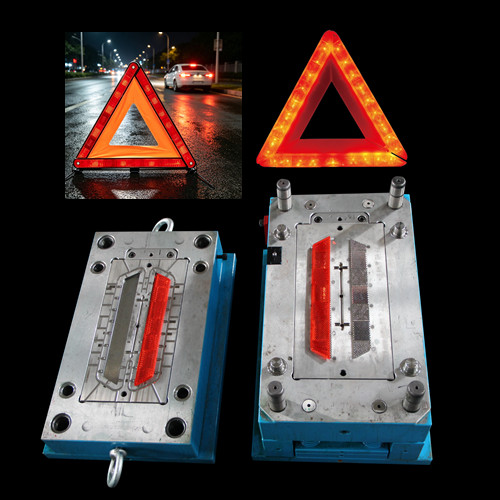
We are a professional mold manufacturer in Huangyan, China, specializing in high-precision injection molds for parking reflex reflectors and warning triangles. Our molds are made with durable steel for long service life, supporting custom designs and stable mass production to meet your automotive accessory manufacturing needs.
Parking reflex refletcor warning triangle mould