

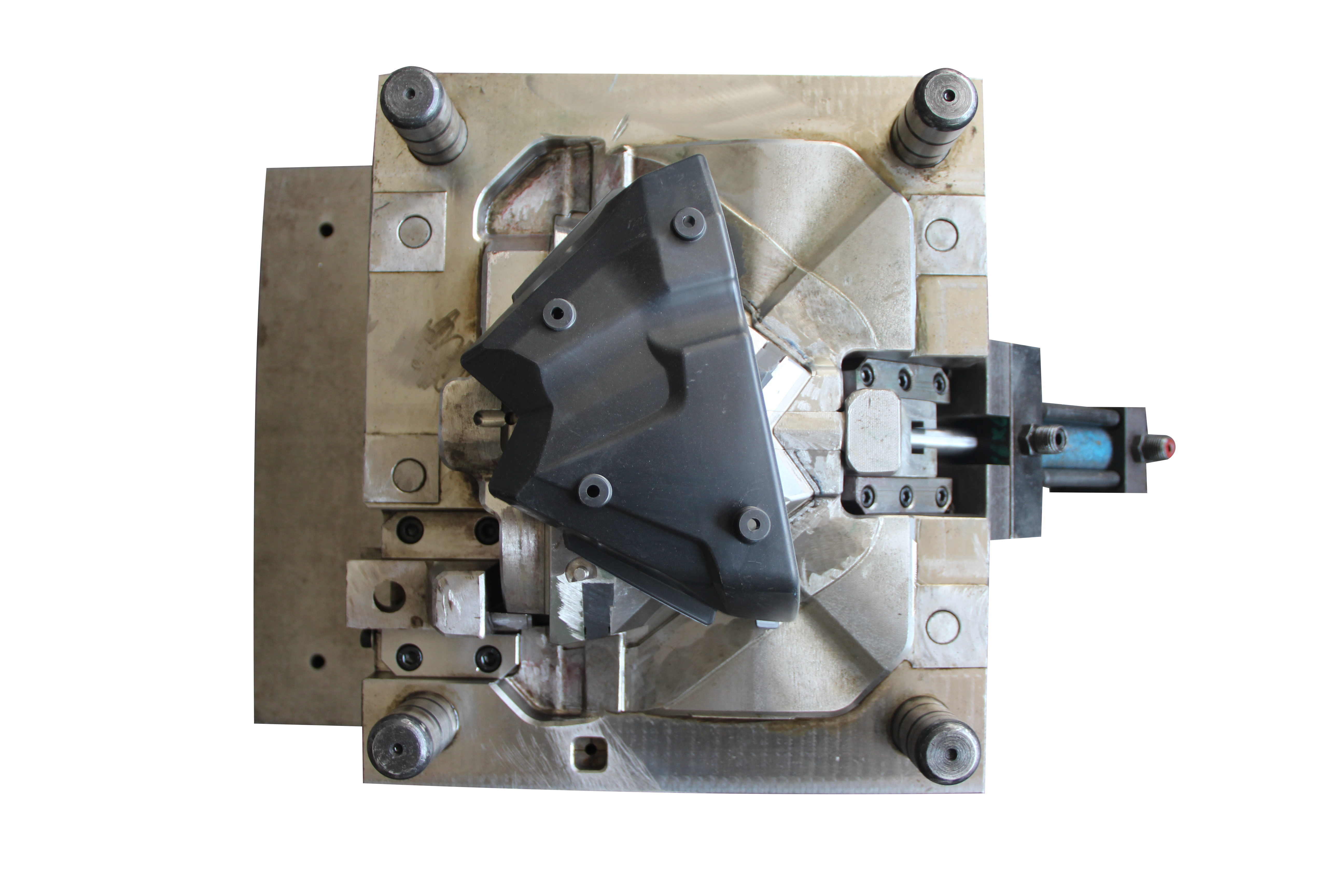
Motorcycle plastic spare parts mould
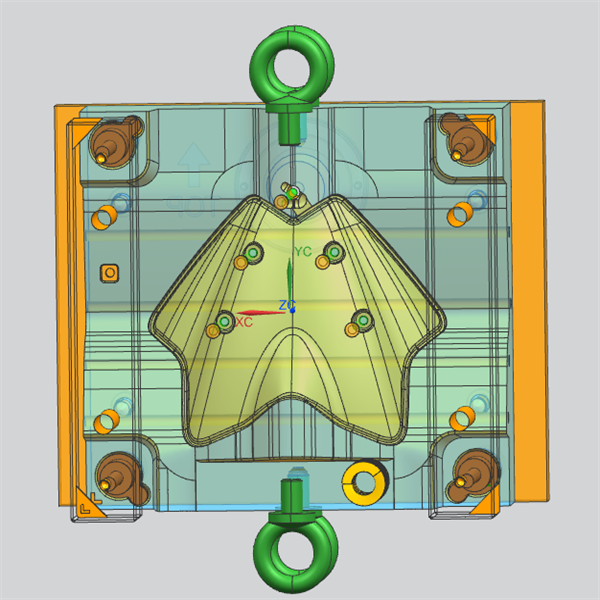
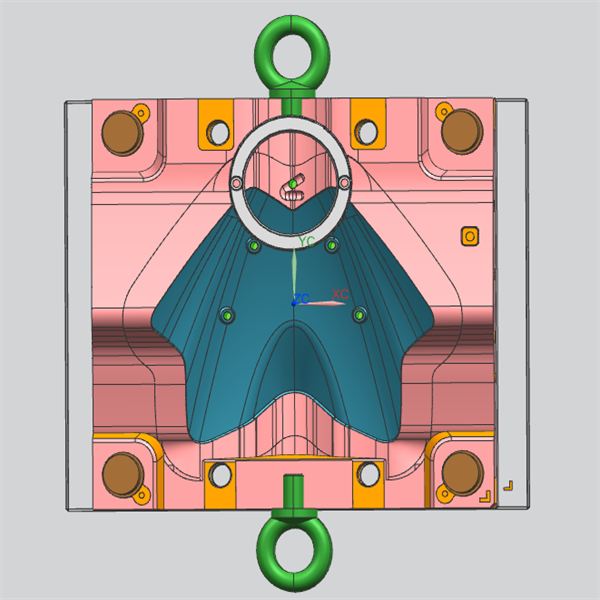
| Name | Material | Steel | Cavity | Runner | Machine |
| Motorcycle plastic mold | PC | 718H | 1 | Cold | 360T |
1. Mold Design
Product Analysis: Define parting lines, draft angles (1°–3°), wall thickness (2–3 mm) based on 3D models.
Structural Design: Includes gating system (cold/hot runner), ejection mechanism (ejector pins/lifters), cooling system (conformal channels).
Material Selection: Core/cavity often use P20, NAK80, or S136 steel; mold base uses standard #45 steel or alloy steel.
Key Tools:
Design Software: UG/NX, CATIA, AutoCAD
Flow Analysis: Moldflow (validates filling, warpage, air traps)
2. Mold Machining
(1) Mold Base Machining
CNC Milling: Processes guide pin holes, ejector pin holes, etc.
Precision Grinding: Ensures flatness ≤0.02 mm.
(2) Core & Cavity Machining
Rough Machining: High-speed milling (HSM) for bulk material removal.
Finish Machining:
EDM (Electrode Discharge Machining): For complex surfaces/deep grooves (e.g., textured areas).
5-Axis CNC: High-precision forming (±0.01 mm tolerance).
Polishing: Mirror polish (Ra≤0.05 μm) or texture etching (VDI3400 standard).
Key Equipment:
CNC machining centers, EDM machines, wire-cut (WEDM).
3. Mold Assembly
Component Integration: Install core/cavity, ejector pins, sliders, guide pillars into the mold base.
Fit Testing:
Verify smooth movement of sliders/lifters (clearance 0.02–0.05 mm).
Test cooling channel sealing (pressure test at 0.6 MPa).
Critical Checks:
Use Prussian blue to inspect parting surface alignment.
Simulate ejection system dynamics (avoid interference).
Welcome to contact us!



+86 15267697871

younger8@autolightmould.com
