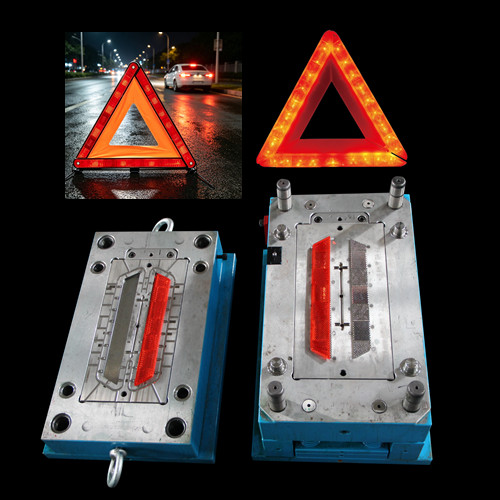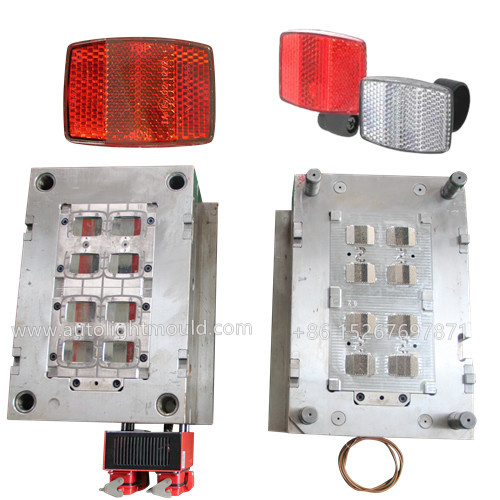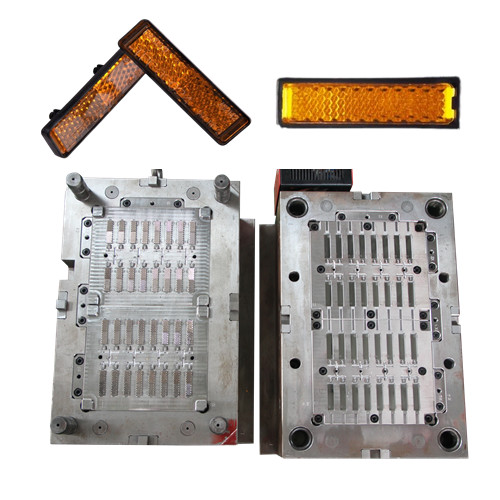
Optic Lens Mold Manufacturing for Automotive Industry
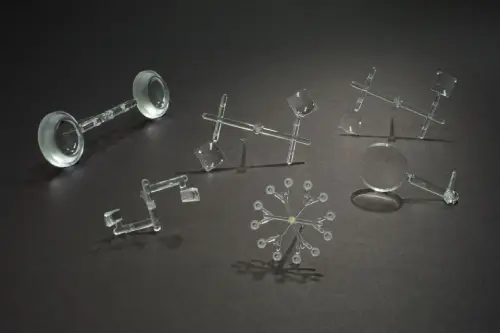
In the world of precision optics, optic lens molds play a critical role in the production of high performance lenses used in automotive lighting, consumer electronics, medical imaging, and industrial applications. The demand for accuracy, surface perfection, and reproducibility in lens fabrication requires a deep understanding of optical lens mold technologies and processes.
What Is an Optic Lens Mold?
An optic lens mold is a precision engineered tool used to shape optical-grade polymers or glass into lens components. These molds are designed with ultra-fine tolerances to replicate complex geometries and optical surfaces, including concave, convex, and aspherical designs.
Unlike traditional molds used in general plastic injection molding, optical lens molds must achieve nanometer-level surface finishes and sub-micron dimensional accuracy. These requirements ensure the lenses produced meet stringent standards for refraction, light transmission, and focus.
Types of Optical Lens Molds and Their Applications
1. Plastic Optical Lens Mold
Plastic lenses are increasingly used as lightweight, cost-effective alternatives to glass lenses. Optical lens molds for plastics must be designed with attention to thermal expansion, shrinkage, and optical clarity.
Applications:
Mobile phone camera lenses
Eyewear lenses
Industrial sensors
LED lighting systems
These molds typically use high-precision CNC machining and polishing, with mold materials like hardened stainless steel or optical-grade tool steel.
2. Bi Xenon Projector Lens Mold
Bi xenon projector lens molds are highly specialized for automotive applications. These molds produce dual beam lenses capable of switching between high and low beam in projector headlamp systems.
Key requirements:
High optical clarity
Aspherical geometry for beam shaping
Thermal stability under high temperatures
Resistance to wear during long production runs
In bi xenon systems, the precision of the mold directly affects beam pattern quality, light dispersion, and compliance with automotive lighting regulations.
3. Low Beam Lens Mold for Headlights
A low beam lens mold is optimized for producing lenses that focus light downward and to the side, avoiding glare to oncoming traffic. These molds require careful design of light cutoff lines and complex surface contours to comply with ECE and DOT lighting standards.
Manufacturing such molds involves:
CAD/CAM modeling of the beam pattern
Mold flow simulation to ensure clarity and minimize defects
Surface texturing or micro etching for diffusion control
Low beam lenses molded from these tools are used in halogen, xenon, and LED headlight systems.
4. Optical Optics Lens Mould for Instrumentation
In advanced optical systems — such as telescopes, microscopes, and sensors — optical optics lens moulds are used to manufacture miniature, ultra-precise lenses. These molds may create components with:
Diameter tolerances of ±1 μm
Surface roughness under 10 nm Ra
Geometrical accuracies for wavefront control
Such tooling often involves hybrid processes combining ultra-precision machining, diamond turning, and mirror polishing.
Key Steps in Optic Lens Mold Manufacturing
Producing an optic lens mold is a high-precision process that includes the following stages:
1. Design Based on Optical Simulation
Every optical lens mold starts with optical design and simulation. Using software like Zemax or CODE V, the optical engineer determines lens shape, thickness, curvature, and refractive properties. This information is converted into CAD files for mold tool design.
In the case of a bi xenon projector lens mold, simulations must evaluate beam angle, focus, and hotspot placement.
2. Mold Material Selection
The mold material affects both production performance and lens quality. Common choices include:
S136 stainless steel for corrosion resistance
Mirror finish tool steel for high polishability
Nickel phosphorus plating for optical-grade surface replication
Material hardness and thermal conductivity are balanced to reduce wear and maintain dimensional stability across molding cycles.
3. Ultra Precision Machining
Optic lens molds require the use of ultra-fine CNC machines and, in many cases, diamond turning lathes. The mold cavity must be machined to sub-micron accuracy, often requiring:
Nanometer-resolution CNC
Coordinate measuring machines (CMMs) for quality control
Optical interferometry for surface verification
A low beam lens mold, for example, may involve freeform surfaces that are difficult to machine with traditional equipment, requiring 5-axis capability.
4. Surface Polishing and Coating
After rough machining, molds undergo polishing to achieve the optical surface finish required for lens production. Processes include:
Manual lapping with diamond paste
Electropolishing for micro-surface smoothing
Chrome or nickel plating for surface protection
Surface perfection is essential to avoid distortion, haze, or scattering in the molded optical part.
5. Mold Assembly and Testing
After finishing, the mold components (core, cavity, inserts) are assembled with ejection systems and cooling channels. Mold trials are conducted with optical polymers like PMMA, PC, or Zeonex to validate:
Dimensional conformity
Optical clarity
Beam pattern accuracy (for automotive optics)
Fine tuning may be necessary, especially in bi xenon projector lens molds, where minor deviations can affect road illumination.
Challenges in Optical Lens Mold Manufacturing
Producing optic lens molds presents unique challenges that require engineering expertise and advanced equipment.
Surface Defects: Scratches, pits, or polish marks can degrade lens quality.
Shrinkage Control: Optical clarity depends on uniform cooling and shrinkage.
Geometric Precision: Tolerances in curved surfaces must be extremely tight.
Material Compatibility: Some high clarity polymers are sensitive to moisture or heat, requiring special processing conditions.
Mitigating these issues involves a combination of design foresight, precision tooling, and controlled molding environments.
Trends and Innovations in Optical Molding
As industries demand smaller, lighter, and more integrated optical components, the future of optical optics lens mould technology is rapidly advancing.
Freeform lens molding for non-symmetric optical surfaces in modern headlights
Hybrid molds combining optical elements with mechanical features (clips, mounts)
Micro lens arrays using micro injection molding technology
Smart mold monitoring with in cavity sensors for temperature and pressure feedback
These developments are pushing the boundaries of what is possible in optical lens mold design and production.
Application Industries for Optic Lens Molds
While automotive lighting remains one of the largest consumers of molded optics, optic lens molds are also vital in other sectors:
Medical diagnostics: lenses in imaging and scanning devices
Consumer electronics: camera lenses, sensors
Security and surveillance: optical systems in drones and CCTV
Industrial automation: lenses in vision-guided robotics
Every application places unique demands on mold accuracy, repeatability, and production efficiency.
From the sharp focus of a bi xenon headlight beam to the microscopic clarity of a medical imaging lens, optic lens molds are the unsung heroes of modern optics. Their ability to replicate complex shapes and maintain strict tolerances allows manufacturers to scale up production without compromising quality.
Whether you're developing a low beam lens mold for the next generation of automotive lighting, or crafting an optical optics lens mould for industrial sensors, success depends on mastery of precision tooling, surface control, and optical design principles.
The evolution of molding technology continues to reshape what’s possible in optical engineering — and it all starts with a perfectly crafted optical lens mold.
Younger Mould is a trusted name in bi xenon projector lens mold, recognized worldwide for our commitment to quality, innovation, and dependability. We focus on delivering precision low beam lens mold and provide customized solutions at competitive rates. Share your contact details, and our team will be in touch to support your specific needs.
Can a Light Guide Mold Enhance the Performance of Auto Lamps?
Two Colors Head Light Mold Technology
Related Article