Quick Prototyping Tools and Methods
2024-09-30
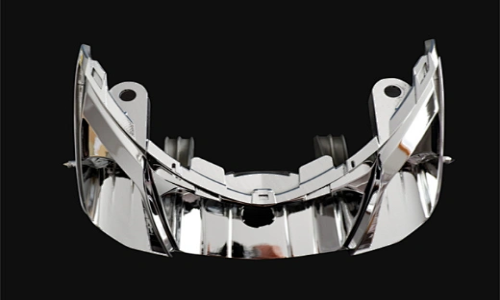
Quick prototyping leverages various tools and methods to quickly bring digital designs to life, facilitating faster iteration and refinement.
3D Printers of Quick Prototyping Tools
Rapid prototyping is closely associated with additive manufacturing and 3D printing. Various 3D printing technologies are used for rapid tooling injection molding, including Fused Deposition Modeling (FDM), Stereolithography (SLA), and Selective Laser Sintering (SLS).
Fused Deposition Modeling (FDM)
FDM, also known as Fused Filament Fabrication (FFF), is a 3D printing technique that constructs parts by melting and extruding thermoplastic filament through a nozzle, layer by layer. This rapid prototyping method is the most prevalent at the consumer level, largely due to the rise of hobbyist 3D printers. Professional FDM printers are also favored by designers and engineers.
Although FDM is widely used, it offers lower resolution and accuracy compared to other 3D printing methods and may not be ideal for complex or intricately detailed designs. For higher quality finishes, additional chemical and mechanical polishing may be required. Some advanced FDM printers utilize soluble supports to address these challenges.
FDM printers work with a variety of standard thermoplastics, including ABS and PLA, as well as more specialized engineering thermoplastics and composites. They are particularly effective for producing simple parts, such as those that might traditionally be machined.
Stereolithography (SLA)
SLA 3D printers utilize a laser to cure liquid resin into solid plastic through a process known as photopolymerization. SLA is favored by professionals for its high resolution, precision, and material versatility, making it a popular choice for detailed and accurate prototypes.
Stereolithography (SLA) stands out for its exceptional resolution and accuracy, delivering the clearest details and smoothest surface finishes among plastic 3D printing technologies. This makes SLA an excellent choice for creating high-fidelity looks-like prototypes as well as functional works-like prototypes that demand tight tolerances.
One of SLA’s key advantages is the diverse range of resin options available. Material manufacturers have developed advanced SLA photopolymer resins with various optical, mechanical, and thermal properties that closely resemble those of standard, engineering, and industrial thermoplastics.
Additionally, with the use of Draft Resin, SLA 3D printing can achieve speeds up to 10 times faster than FDM 3D printing, making it a highly efficient prototyping tool.
Selective Laser Sintering (SLS) is a leading additive manufacturing technology widely adopted in industrial applications. Valued by engineers and manufacturers, SLS is known for its ability to produce durable, functional parts.
SLS 3D printers utilize a high powered laser to fuse fine polymer powder particles. The un-fused powder acts as a support during the printing process, eliminating the need for dedicated support structures. This capability makes SLS particularly well suited for creating complex geometries, including intricate interior features, undercuts, thin walls, and negative spaces. Parts produced via SLS exhibit excellent mechanical properties, with strength comparable to injection-molded components.
In rapid prototyping, SLS is primarily employed for works-like and engineering prototypes, which are essential for rigorous functional testing of products such as ductwork and brackets, as well as gathering in field customer feedback.
CNC Tools of Quick Prototyping Tools
Computer Numerical Control (CNC) tools differ from additive manufacturing processes like FDM, SLA, and SLS in that they are subtractive. They work by starting with solid blocks, bars, or rods of materials—such as plastic, metal, or wood—and shaping them through cutting, drilling, boring, and grinding.
CNC Machining: This includes methods such as milling, where a spinning tool removes material from a stationary part, and turning (lathe), where a rotating part is shaped by a fixed tool. CNC machines can have multiple axes, allowing them to handle more intricate designs.
Laser Cutters: These use high precision lasers to cut or engrave various materials, offering excellent detail for flat parts.
Water Jet Cutters: These utilize a high pressure stream of water mixed with abrasives to cut through almost any material, making them versatile for a range of applications.
CNC tools are suitable for creating parts from a variety of materials, including plastics, metals (both soft and hard), wood, acrylic, stone, glass, and composites. While CNC tools can handle more complex and robust designs than some additive manufacturing methods, they often require more complex setup and operation. Additionally, they may involve special tooling, handling, and positioning, making them more costly for single, custom parts compared to additive processes.
In quick prototyping tool, CNC tools excel in producing simple designs, structural components, and metal parts that may not be feasible or cost-effective to create with additive manufacturing methods.
Quick Prototyping Tool Services vs. In-House Rapid Prototyping
Outsourcing Rapid Prototyping
Outsourcing quick prototyping tool to service bureaus is ideal when you need a few parts sporadically, or require large components or non-standard materials. Services like Hubs, Protolabs, Fictiv, or local quick prototyping tool service providers offer on demand prototyping and low volume production. They have access to a wide range of technologies, including both additive and subtractive processes, as well as rapid tooling. These providers can also offer guidance on materials and additional services such as design support or advanced finishing.
However, outsourcing can come with drawbacks. The main concerns are cost and lead time. Although rapid prototyping is designed for speed, the advantage is diminished if parts take weeks to arrive. Additionally, outsourcing can be expensive, especially when compared to the decreasing cost of 3D printers. For many businesses, investing in a 3D printer for in-house use can be more economical in the long run, often breaking even within a few weeks.
In-House Rapid Prototyping
With desktop and benchtop 3D printers, companies can tailor their prototyping capacity to their specific needs and expand as demand increases. Investing in 3D printers allows for immediate access to rapid prototyping, enabling the production of parts in-house without the delays associated with outsourcing. Multiple 3D printers can be used simultaneously to print parts in various materials, offering flexibility and efficiency.
While quick prototyping tool can still be useful for large parts or unconventional materials, having in-house 3D printing capabilities allows for a more responsive and cost effective approach to prototyping.
Younger Mould is one of the most popular China rapid prototyping companies, who has earned a good reputation and position in the industry, gaining the trust and praise of numerous customers. If you are interested in our rapid manufacturing products, please leave your contact information, and we will provide you with favorable quotations and meticulous best rapid prototyping tools.
Automotive Tail Lamp Light Guide Rapid Prototyping Manufacturer
Automotive Light Guide Mold Manufacture
Related Article

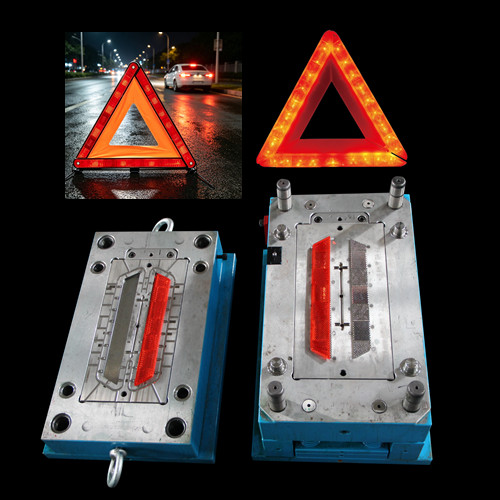
We are a professional mold manufacturer in Huangyan, China, specializing in high-precision injection molds for parking reflex reflectors and warning triangles. Our molds are made with durable steel for long service life, supporting custom designs and stable mass production to meet your automotive accessory manufacturing needs.
Parking reflex refletcor warning triangle mould