What are the Materials Used in Injection Plastic Moulds?
2024-07-31
Injection molding is widely regarded as one of the fastest and most efficient methods for producing large quantities of identical plastic components simultaneously. This technique is employed in the manufacture of nearly every consumer plastic product, making it the most prevalent plastic manufacturing process. Given the diverse range of applications and industries that utilize plastics, various chemical formulations are required to meet specific needs in the injection molding process.
At Younger Mould, we employ an extensive array of plastics to meet the specific requirements of our customers' molded products. Our team of skilled plastic part designers will collaborate with you on both new and existing design concepts to identify the optimal material for your application. Whether you need electronic enclosures made from ABS or pull-out drawer handles crafted from acetal (POM), our experts are dedicated to addressing your needs and ensuring the highest quality outcome using the most suitable materials available.
Here are some of the plastic materials our experts use in plastic injection molding:
Acrylic (PMMA)
Acrylic, commonly known as Plexiglas, is a rigid, transparent plastic often utilized in electronics and automotive components. Its natural transparency and ability to be colored make it a popular choice for a wide range of products, including eyewear lenses, acrylic paint, and even acrylic nails. Acrylic can also be dyed to achieve either translucent or opaque finishes.
In commercial applications, acrylic is categorized under #7 (OTHER) plastics, which encompasses a variety of materials such as polycarbonate, polylactic fibers, nylon, and fiberglass.
Advantages of Acrylic:
Transparency: Acrylic is among the clearest plastics available today.
Weather Resistance: It resists moisture and ultraviolet (UV) discoloration.
Chemical Resistance: Acrylic remains unaffected by water and weak acids and alkaline solutions.
Surface Hardness: It offers good impact strength and rigidity.
Dimensional Stability: Acrylic provides a consistent and predictable final product.
Acrylonitrile Butadiene Styrene (ABS)
ABS plastic is a widely used material in injection molding, valued for its broad temperature range, stability, and insulating properties. ABS is commonly found in plastic toys, such as Lego bricks, and is also frequently used in various electronics, tools, and home repair equipment.
Advantages of ABS:
Impact Resistance: Its rubber-like formulations make ABS highly resilient to impacts.
Surface Hardness: Certain formulations of ABS offer high rigidity.
Chemical Resistance: ABS is resistant to alkalis, water, and most inorganic acids.
Uniform Shrinkage: It provides good dimensional stability with consistent shrinkage.
Wide Temperature Range: ABS resists heat and remains intact in cold conditions.
Machinability: It is easy to shape and form after cooling.
High Density Polyethylene (HDPE)
For applications requiring rigid and heat-resistant plastic, HDPE (High Density Polyethylene) is an ideal choice. Being a food-grade plastic, HDPE is commonly used in manufacturing storage containers, kitchenware, and refrigerator shelving, as it is safe for use with food. Additionally, HDPE is suitable for holding chemical-based products, including cleaning agents, laundry detergents, bleach, and shampoos.
In commercial applications, HDPE is categorized under #2 (HDPE).
Advantages of HDPE:
Sustainable: Made from 100% recyclable material.
Chemical Resistance: Highly resistant to corrosion, rust, and various chemicals.
Heat Resistance: Remains stable and does not melt or degrade at high temperatures.
Food Grade: Safe for use in food packaging and equipment.
Inexpensive: Cost effective and suitable for mass production.
Nylon (PA)
Nylon is an exceptionally versatile material in plastic injection molding, often blended with various additives to enhance its properties. Its high melting temperature and low friction characteristics make it ideal for a wide array of applications, including nylon ropes, reinforced automotive components, and even textiles.
Advantages of Nylon:
Low Friction: It remains stable and does not heat up under high friction conditions.
Chemical Resistance: Resistant to corrosion from a range of chemicals.
Abrasion Resistance: Effective for applications requiring durability, such as in elastic materials and clothing.
Adaptable: Can be combined with numerous other plastics to improve performance.
Polycarbonate (PC)
Polycarbonate is a valuable plastic material known for its transparency and high impact resistance. This makes it ideal for a variety of applications, including eyewear, LED light pipes, clear windows, and sporting equipment.
In commercial settings, polycarbonate is categorized under #7 (OTHER), a classification that also encompasses other plastics such as acrylic, polylactic fibers, nylon, and fiberglass.
Advantages of Polycarbonate:
Impact Resistance: Resists scratching and denting under impact.
UV Resistance: Maintains its integrity and color under ultraviolet light.
Transparency: Suitable for use in windows and eyewear lenses.
Chemical Resistance: Resistant to corrosion from chemicals.
Rigidity: Provides durability for applications like eyewear and windows.
Polyetherimide (PEI)
Polyetherimide, commonly known as Ultem, is an amorphous plastic with exceptional heat resistance compared to other materials. Its rigidity and high thermal performance make it particularly well-suited for use in medical devices, electronics, and industrial components.
Advantages of Polyetherimide:
Rigidity: Provides hardness ideal for high-impact industrial applications.
Heat Resistance: Remains stable and does not melt or warp under elevated temperatures.
High Tensile Strength: Resists cracking and breaking in challenging environmental conditions.
Flame Resistance: Non-flammable and produces minimal smoke.
Polyoxymethylene (POM)
Also known as Acetal, polyoxymethylene is a semi-crystalline polymer characterized by its rigidity and naturally glossy surface. These properties make it a versatile material used across various industries, including automotive, household appliances, and electronics.
Advantages of Polyoxymethylene:
Rigidity: Maintains its strength and shape without bending.
Impact Resistance: Durable and stable, capable of withstanding significant impacts.
Solvent Resistance: Resists corrosion and rust from chemicals and solvents.
Glossy Surface: Features a smooth, reflective finish.
Polypropylene (PP)
Similar to Acetal, polypropylene is a plastic known for its naturally glossy surface when properly manufactured. Its chemical resistance and elastic properties make it ideal for a wide range of food-related applications, such as plastic kitchenware, dishwasher-safe plates, and storage containers. Polypropylene is also frequently used in the production of toys, hard luggage, and external car parts.
In commercial settings, polypropylene is classified under #5 (PP).
Advantages of Polypropylene:
Chemical Resistance: Remains unaffected by most bases and acids.
Fatigue Resistance: Maintains its shape despite repeated bending and flexing.
Electrical Resistance: Provides strong insulation properties.
Elasticity: Can bend, flex, and deform without breaking.
Polystyrene (PS)
Polystyrene is a versatile polymer employed in a broad range of plastic and foam applications across various industries. Its flexibility and bending properties make it suitable for hinged applications, such as disposable food containers and bottles. Additionally, polystyrene is commonly used to manufacture rigid foam insulation and sheeting for laminate flooring.
In commercial settings, polystyrene is classified under #6 (PS).
Advantages of Polystyrene:
Optical Clarity: The transparent resin is ideal for clear plastic products.
FDA Grade: Safe for use in food and consumable material packaging.
Stability: A rigid material well-suited for packaging applications.
Inexpensive: Cost-effective and suitable for large-scale production.
Younger Mould is one of the most popular china plastic molding manufacturers, who has earned a good reputation and position in the industry, gaining the trust and praise of numerous customers. If you are interested in our optical mould products, please leave your contact information, and we will provide you with favorable quotations and meticulous lamp mold services.
Why The Requirements For Appearance Of Car Light Mould Is High
How To Maximize Efficiency And Quality In Car Bumper Injection Moulding
Related Article

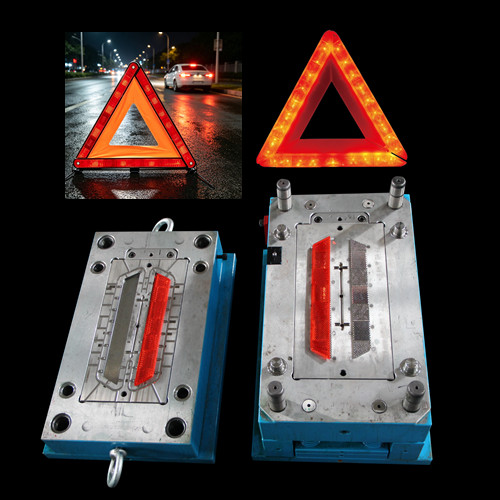
We are a professional mold manufacturer in Huangyan, China, specializing in high-precision injection molds for parking reflex reflectors and warning triangles. Our molds are made with durable steel for long service life, supporting custom designs and stable mass production to meet your automotive accessory manufacturing needs.
Parking reflex refletcor warning triangle mould