Do You Know Thick Wall Projector Lens Mold?
2026-03-05
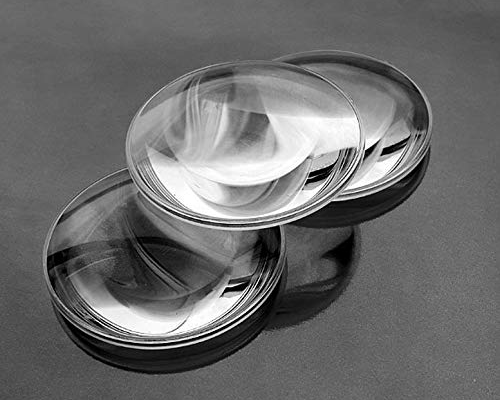
In advanced industries such as automotive lighting, projection systems, and industrial optics, the quality of molded optical components is inseparable from the quality of the tooling used. Among these, the thick wall projector lens mold represents one of the more technically demanding classes of precision tooling, tasked with producing optics that must meet stringent requirements for optical clarity, dimensional stability, and performance under stress.
Fundamentals of Lens Mold Technology and Optical Component Design
What Distinguishes a Thick Wall Projector Lens Mold from Other Optical Molds
Greater material thickness (often necessary for structural rigidity and thermal performance)
High geometric precision to support image projection without distortion
Controlled refractive indices across curved surfaces
Surface uniformity free of blemishes, flow lines, or micro defects
Reliable dimensional stability over long production runs
This is distinct from thinner, more conventional optics, where lightweight design may dominate. Thick wall lenses present unique challenges, such as increased stress gradients, more significant shrinkage potential, and the need for precise thermal management in molding.
The terminology optic lens mold broadly refers to any tooling that produces optical parts, but a thick wall projector lens mold demands additional engineering sophistication due to the interplay of geometry, optical performance, and manufacturing constraints.
Optical Principles: How Geometry Affects Light Transmission
Unlike structural parts, optical components must deliver precise control over how light passes through, refracts, or focuses. This demands that the mold:
Maintain extremely tight tolerances on curvature and surface profile
Produce surfaces with very low roughness values to prevent scattering
Eliminate flow marks, weld lines, and air entrapment that can disrupt light pathways
Even minimal deviations in optical geometry can result in aberrations in projected images, inconsistent focus, or reduced brightness uniformity — critical factors in automotive projector lamps, cinema projection, and high-end imaging systems.
Tooling must reflect an understanding of optical physics as well as manufacturing mechanics. For example, the mold surface becomes the final optical surface; therefore, its design and finish directly dictate the quality of the molded lens.
Thick Wall Designs: Balancing Structural and Optical Performance
Thick wall projectors often require molds that produce:
Significant wall sections, sometimes exceeding several millimeters in thickness
Sections that vary in thickness across the part to shape optical performance
Integrated features for mounting or secondary assembly
These thick wall geometries increase complexity in both tooling and process control:
Differential cooling rates across thick and thin sections can lead to warpage.
Higher injection pressures and slower flow fronts may trap air or create knit lines.
Thermal gradients during curing or solidification demand precise heat control within the mold.
Understanding these physical behavior nuances is key for engineers and buyers alike when evaluating tooling capabilities.
Material Science and Processing: Polymers for Optical Molding
Optical Polymer Selection and Its Impact on Mold Design
The choice of polymer for an optic lens has direct implications for performance and manufacturability. Common materials used in optical molding include:
Polycarbonate (PC): Excellent impact resistance and good optical clarity. Well-suited for rugged projector applications, but sensitive to thermal gradients.
Acrylic (PMMA): Superior clarity and low birefringence, often preferred for high-quality projection lenses.
COP/COC (cyclic olefin polymers): Advanced optical polymers with low moisture absorption and high dimensional stability.
Each material behaves differently during melting, flow, and cooling; these behaviors must be predicted and compensated for in both mold design and process parameters.
For example, PC's high melt viscosity and sensitivity to overheating necessitate mold designs that promote balanced filling and controlled cooling to prevent distortion or internal stress.
Process Parameters: Flow, Temperature, and Cooling
In thick wall projector lens molding, controlling process parameters is vital:
Injection Speed and Pressure: Must be optimized to fill thick sections without inducing shear stress.
Melt Temperature: Lower temperatures risk premature gel, while higher temperatures can degrade optical polymers or cause surface defects.
Cooling Uniformity: Imbalanced cooling across thick and thin areas results in residual stresses and warpage.
Optical Clarity and Surface Quality Challenges
Optical clarity is influenced by:
Surface Roughness: Mold surfaces must be finished to optical grade, often requiring mirror polishing and surface texturing in specific regions.
Flow Marks: Variations in flow velocity or temperature can cause faint lines that scatter light.
Knit Lines: Where two flow fronts meet, but not fully fuse — these can create micro discontinuities that affect optical performance.
Reducing these issues requires precision in both tooling and processing, making the interplay between material science and tooling design a core competency for high-performance optics.
Design and Validation of Precision Lens Molds
Mold Design for Thick Wall Projector Optics
Designing a thick wall projector lens mold involves both macro and micro considerations:
Macro geometry: Ensuring the overall part shape meets optical specifications and assembly requirements.
Micro surface features: Sculpting fine surface details that dictate light transmission quality.
Tailoring molds for thick wall designs often includes:
Multi-cavity configurations for higher throughput
Balanced runner systems to ensure uniform flow
Precision gate designs to minimize turbulence
Conformal cooling channels that manage thermal gradients
These elements must be validated through simulation and prototyping before committing to full production tooling.
Mold Flow Simulation and Digital Validation
Before cutting steel, engineers rely on simulation tools to predict how the polymer will behave in the cavity:
Filling patterns and potential air trap locations
Pressure distribution and potential weld lines
Cooling effects and shrinkage predictions
Simulation helps identify risk areas early, allowing designers to refine gate positions, runner diameters, and cooling channels to reduce cycle time and improve quality.
Case studies from advanced mold makers such as Younger Mould demonstrate how rigorous simulation correlates with improved part quality and reduced trial iterations.
Surface Finishing and Texture Control
Optic lens molds require extremely smooth surfaces to produce parts with high transparency. This typically involves:
Mirror polishing: Achieving low roughness values (often below Ra 0.05 μm) to minimize light scattering.
Surface texturing: Applied selectively where diffusion rather than reflection is desired.
Coating considerations: Anti-scratch or anti-fog coatings may be applied on the molded part after demolding.
Precision polishing and surface treatment are among the differentiators for high-end lens mold suppliers — not all mold makers can achieve the consistency required for thick wall optical components.
Tolerancing and Assembly Integration
Optical parts seldom function in isolation. They often form part of larger assemblies — such as projector housings, light engines, or sensor arrays — where dimensional tolerance stack-ups matter. Mold designers must:
Define nominal dimensions and tolerances that meet optical and mechanical integration needs
Ensure repeatable production within those tolerances
Validate fit and performance through prototype and pilot runs
Supply Chain Strategy and Choosing a Lens Mold Supplier
Key Criteria for Selecting a Lens Mold Supplier
When evaluating partners for high-precision optic tooling, B2B buyers typically assess:
Technical expertise and engineering support — Ability to understand optical performance requirements and translate them into mold design.
Surface finishing capabilities — Mirror polishing, texture control, and micro-feature fidelity.
Simulation and validation infrastructure — Usage of analysis tools to predict fill, shrinkage, and stress areas.
Quality management systems — Traceability, inspection protocols, and defect tracking.
Supplier evaluation in this segment extends beyond low cost; it emphasizes capability, reliability, and long term partnership potential.
Risk Mitigation and Quality Assurance in Supplier Engagement
Managing the supply relationship means:
Defining clear technical specifications and acceptance criteria
Holding design reviews and sign-off milestones
Conducting first article inspections (FAI) and pilot runs
Verifying process controls before full production
These practices reduce surprises in the production cycle and foster shared accountability.
Lifecycle Support and Continuous Improvement
A robust supplier partnership also includes:
Support for tooling maintenance and refurbishment
Spare parts provisioning
Process optimization recommendations
Feedback loops for future product iterations
This ongoing collaboration enhances long term manufacturing resilience and cost predictability.
Frequently Asked Questions
Q1: What differentiates a thick wall projector lens mold from standard lens molds?
Thick wall designs involve significant material mass, higher thermal gradients, and stringent optical performance requirements, demanding advanced tooling design, precise cooling control, and specialist surface finishes.
Q2: Why is material selection critical for optical molding?
Materials like PC, PMMA, and advanced optically clear polymers each have distinct flow, shrinkage, and optical properties. Selecting the right polymer impacts clarity, durability, and moldability.
Q3: How does mold flow simulation improve lens mold quality?
Simulation predicts material behavior, enabling designers to optimize gate placement, cooling channels, and cavity balance — which minimizes defects and improves optical consistency.
Q4: What capabilities should I look for in a lens mold supplier?
Look for expertise in surface polishing, optical geometry validation, simulation tools, quality management protocols, and responsiveness to feedback and iterative design changes.
Q5: Are thick wall projector lens molds suitable for high-volume production?
Yes, with proper mold design — including multi-cavity layouts and optimized cooling — thick wall lens molds can support scalable, high-volume manufacturing for automotive, projection, and consumer electronics applications.
Bicycle Pedal Reflector mould manufacture maker factory
Advanced Engineering Principles in Bi-Color Taillight Mold Manufacturing
Related Article

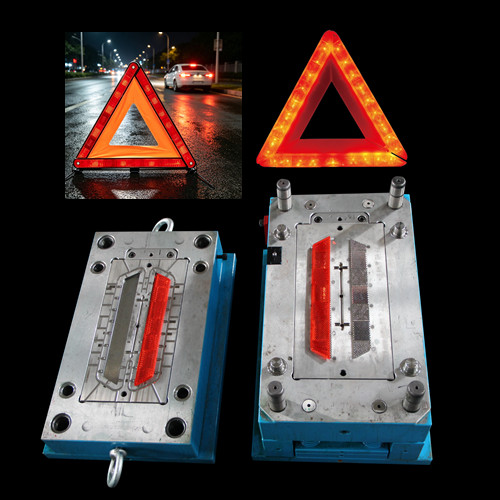
We are a professional mold manufacturer in Huangyan, China, specializing in high-precision injection molds for parking reflex reflectors and warning triangles. Our molds are made with durable steel for long service life, supporting custom designs and stable mass production to meet your automotive accessory manufacturing needs.
Parking reflex refletcor warning triangle mould