What Are The Three Types of Rapid Prototyping?
In today's fast evolving manufacturing landscape, the ability to quickly turn ideas into tangible models is more important than ever. This is where rapid prototyping technologies come into play — enabling engineers, designers, and product developers to test concepts, validate designs, and accelerate time-to-market. But what exactly are the three main types of rapid prototyping? And how do they differ in terms of application, materials, and precision?
Understanding Additive Manufacturing: The Most Recognized Form of Rapid Prototyping Technologies
When most people think of rapid prototyping, they immediately picture 3D printing. That's because additive manufacturing has become synonymous with modern prototyping. This process builds parts layer by layer using digital 3D models, typically from materials such as thermoplastics, resins, or metals.
Among the most widely used additive methods are Fused Deposition Modeling (FDM), Stereolithography (SLA), and Selective Laser Sintering (SLS). Each offers unique advantages: FDM is cost-effective for basic concept models, SLA delivers high surface finish for visual prototypes, and SLS produces durable, functional parts without the need for support structures.
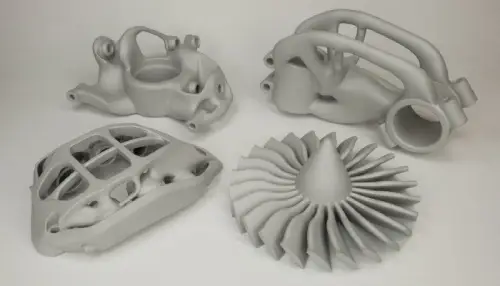
However, one of the most transformative developments in recent years has been metal 3D printing rapid prototyping. Techniques like Direct Metal Laser Sintering (DMLS) and Electron Beam Melting (EBM) allow manufacturers to create complex metal components — such as engine brackets, heat exchangers, or surgical implants — directly from powdered alloys. This capability is especially valuable for aerospace, defense, and medical sectors where traditional machining would be too time-consuming or material-wasteful.
While additive methods excel in design freedom and speed, they may not always achieve the tight tolerances or surface quality required for final production parts — which is where subtractive approaches step in.
Exploring Subtractive Rapid Prototyping: Precision Through CNC Machining
Not all rapid prototyping relies on building up material. In fact, rapid prototyping machining services based on CNC (Computer Numerical Control) milling and turning are among the most accurate and reliable methods for creating high fidelity prototypes.
Unlike 3D printing, which adds material layer by layer, CNC machining removes material from a solid block — a process known as subtractive manufacturing. This approach is ideal when you need prototypes made from engineering-grade thermoplastics, aluminum, brass, or even stainless steel, with tolerances as tight as ±0.005 mm.
One major advantage of rapid prototyping machining services is material authenticity. Since the prototype is made from the same stock as the final production part, it provides a true representation of mechanical properties, thermal behavior, and machinability. This makes CNC-machined prototypes particularly useful for functional testing, such as fit checks, stress analysis, or assembly validation.
Additionally, CNC is often faster than 3D printing for simple geometries and doesn't require post processing steps like curing or support removal. For companies developing enclosures, housings, or mechanical components, CNC-based prototyping remains a go-to solution — especially when surface finish and dimensional accuracy are critical.
Formative Methods: How Vacuum Casting and Soft Tooling Fit Into Rapid Prototyping Technologies
The third major category of rapid prototyping involves formative techniques, where parts are shaped using molds or dies. The most common method in this group is vacuum casting, which uses silicone molds to produce small batches of polyurethane parts that closely mimic injection molded plastics.
This process starts with a master pattern — usually made via 3D printing or CNC machining — which is then encased in liquid silicone to create a flexible mold. Once cured, the silicone mold can be used to cast up to 20–25 copies of the original part, making it ideal for low-volume prototyping or pre-production sampling.
Vacuum casting is particularly useful when designers need to evaluate color, texture, transparency, or ergonomics under real-world conditions. It's also a cost-effective way to produce marketing samples or conduct user testing before committing to expensive steel injection molds.
Though less automated than additive or subtractive methods, formative prototyping fills a crucial niche in the product development cycle — bridging the gap between single prototypes and mass production.
Comparing the Three: When to Use Each Rapid Prototyping Technology
Each of the three main types of rapid prototyping serves a distinct purpose:
Additive manufacturing (e.g., metal 3D printing rapid prototyping) is best for complex, organic shapes and early stage concept models.
Subtractive methods (like rapid prototyping machining services) offer superior precision and material performance for functional testing.
Formative techniques such as vacuum casting enable small-batch production with near production quality finishes.
Choosing the right method depends on several factors: the stage of development, required materials, desired quantity, budget, and timeline. Many product teams actually combine multiple rapid prototyping technologies throughout the design process — starting with 3D printed models, refining with CNC-machined versions, and validating with vacuum-cast batches.
The Role of Integrated Prototyping in Modern Product Development
As industries demand faster innovation cycles, the integration of different prototyping methods has become standard practice. Whether it's using metal 3D printing rapid prototyping to iterate on a turbine blade design or employing rapid prototyping machining services to verify a housing fit, these technologies collectively reduce risk and improve design outcomes.
Moreover, advancements in software — such as generative design, simulation tools, and AI-driven topology optimization — are making it easier to prepare models for any prototyping method. This synergy between digital engineering and physical fabrication is pushing the boundaries of what's possible in product development.
For manufacturers and design firms, especially those working with international partners, access to comprehensive prototyping capabilities — including CNC, 3D printing, and soft tooling — is a strategic advantage. This is particularly true in regions like China, where expertise in precision manufacturing continues to grow.
Rapid Prototyping as a Foundation for Innovation
The three types of rapid prototyping — additive, subtractive, and formative — each bring unique strengths to the table. Together, they form a robust ecosystem that supports everything from concept exploration to pre-production validation.
Understanding the nuances of rapid prototyping technologies, whether it's the intricacies of metal 3D printing rapid prototyping or the precision of rapid prototyping machining services, empowers engineers and designers to make informed decisions early in the development process. And as these methods continue to evolve, they will remain at the heart of innovation across industries — quietly shaping the products of tomorrow.
Younger Mould is a reputable leader in China's rapid prototyping machining services industry, known globally for our dedication to quality, innovation, and reliability. We specialize in precision engineered rapid prototyping technologies and offer tailored solutions to meet diverse project requirements—always at competitive prices. Share your contact information, and our team will promptly connect with you to discuss your specific needs.
Can Injection Molding Be Used For Metals?
Is Injection Molding Cheaper Than 3d Printing?
Related Article