What is Bad About Injection Moulding?
2025-03-31
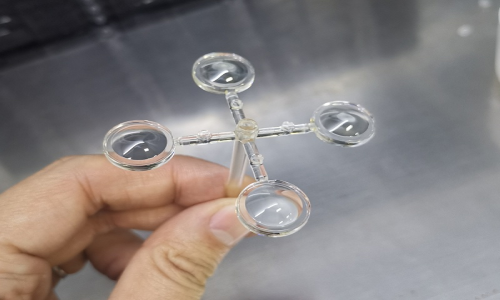
Injection moulding is one of the most widely used manufacturing processes for producing plastic parts, including high precision optical components like injection molded lenses. While it offers numerous benefits such as cost effectiveness, mass production capability, and design flexibility, injection moulding also has several drawbacks.
1. High Initial Tooling Costs
One of the biggest disadvantages of injection moulding is the high upfront cost associated with tooling. Creating a plastic optics lens mould requires precision engineered steel or aluminum molds, which can be expensive and time-consuming to manufacture. The cost of designing and producing molds can range from thousands to hundreds of thousands of dollars, depending on the complexity and size of the component.
For businesses that require injection molded lenses in small quantities, this high initial cost can be a major drawback. The investment is only justifiable when producing large volumes of parts, as the cost per unit decreases significantly with higher production runs. However, for startups or companies with low volume needs, the cost of mold creation can be prohibitive.
Additionally, mold maintenance and repair add to long-term costs. Over time, molds wear out due to repeated use, leading to defects in the produced parts. Companies must budget for mold refurbishment or replacement, further increasing overall production expenses.
2. Design Limitations and Modifications
Injection molding is excellent for producing highly detailed and complex parts, but once a mold is created, making design changes becomes difficult and costly. If an issue arises in the design of an injection molding optical lens, modifying the mold can require extensive rework or even complete remanufacturing.
Designers must ensure that the initial mold design is optimized to avoid defects such as warping, sink marks, or surface imperfections. Unlike other manufacturing methods like CNC machining, which allows for easy modifications, injection moulding offers less flexibility once production has begun.
Another limitation is the need for uniform wall thickness in molded parts. Variations in thickness can lead to uneven cooling and structural weaknesses, affecting the optical clarity of lenses. This constraint often forces engineers to compromise on certain design aspects, limiting innovation in optical component manufacturing.
3. Material Restrictions and Quality Concerns
Not all plastics are suitable for injection molding, especially when it comes to high precision optical applications. While some thermoplastics work well for plastic optics lens mould production, others may exhibit undesirable characteristics such as shrinkage, poor heat resistance, or inconsistent optical clarity.
For instance, producing high quality injection molded lenses requires materials with excellent optical properties, such as PMMA (Acrylic) or polycarbonate. However, even with these materials, achieving flawless transparency and refractive precision can be challenging. Factors such as internal stresses, air bubbles, and contamination during the molding process can negatively affect the final product's quality.
Moreover, optical lenses require extreme precision in terms of surface smoothness and curvature. Any minor deviation in the molding process can result in distorted or blurred vision when the lens is used in applications like cameras, medical devices, or lighting systems. This makes achieving consistency in large-scale production a challenge.
4. Production Defects and Waste Generation
Despite the precision of injection molding, defects are still a common issue. Some of the most prevalent defects encountered in injection molding optical lenses include:
Flow Lines: Visible streaks or patterns on the surface of the lens due to uneven material flow.
Warping: Deformation of the lens due to uneven cooling and internal stresses.
Bubbles or Voids: Trapped air or gas pockets within the lens that affect optical performance.
Sink Marks: Indentations on the surface caused by improper cooling or insufficient material flow.
Burn Marks: Dark patches caused by overheating of the plastic material during injection.
While process optimization and careful mold design can minimize these defects, achieving consistent quality remains a challenge, especially for complex optical components.
Another issue is the significant waste generated during production. Material waste results from defective parts, excess sprues, and runners. Although some plastic waste can be recycled, the energy intensive process of regrinding and reprocessing materials can reduce their quality and optical performance. This can be a concern for companies aiming for sustainable manufacturing practices.
5. Environmental Impact and Recycling Challenges
Although plastics used in injection molding can often be recycled, the process itself is not always environmentally friendly. The energy consumption involved in heating and injecting molten plastic is significant, and waste generation from defective parts and sprues can contribute to plastic pollution.
In the case of plastic optics lens mould manufacturing, reusing rejected lenses is not always possible due to their strict quality requirements. Optical grade plastics often require additional surface treatments or coatings that make recycling even more challenging. As sustainability concerns grow, manufacturers must explore alternative methods to reduce waste and improve energy efficiency.
Another environmental concern is the use of non-biodegradable materials. Many high performance optical plastics do not decompose naturally, leading to long-term waste management issues. Companies are now exploring bio-based plastics and alternative eco-friendly materials, but these are still in the early stages of development and often come with performance trade offs.
6. Long Lead Times for New Products
For companies looking to bring new optical products to market, injection molding can present challenges in terms of production timelines. The process of designing, prototyping, and finalizing a mold can take weeks or even months. Any modifications further extend this timeline, delaying product launches.
In contrast, other manufacturing techniques such as 3D printing allow for faster prototyping and iteration, making them more suitable for rapid product development. This is particularly relevant for industries where technological advancements occur frequently, such as consumer electronics and medical devices.
While injection molding remains a dominant manufacturing technique for optical lenses and plastic optics lens mould production, it does have its drawbacks. High tooling costs, design limitations, material restrictions, production defects, environmental concerns, and long lead times are all factors that manufacturers must consider when choosing this process.
For companies requiring high volume production of injection molded lenses, the benefits of injection molding often outweigh the negatives. However, for smaller production runs or applications requiring frequent design changes, alternative manufacturing methods like CNC machining or 3D printing may be more suitable. By understanding the limitations of injection molding, businesses can make informed decisions on the best manufacturing approach for their optical components.
Younger Mould is a leading injection molded lenses manufacturer in China, widely recognized for its excellence and trusted reputation in the industry. With a strong commitment to quality and innovation, we have earned the trust and appreciation of numerous customers. If you are interested in our injection molding optical lenses, please leave your contact information. Our team will provide you with competitive quotes and outstanding plastic optics lens mould service tailored to your requirements.
Why Is Injection Molding So Expensive?
Automotive rearview mirror seal cover stay mould trial today
Related Article

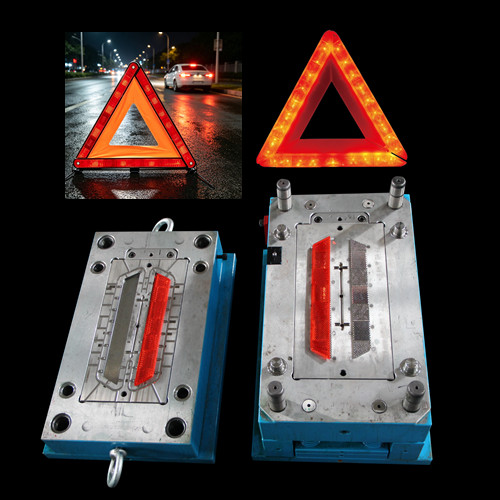
We are a professional mold manufacturer in Huangyan, China, specializing in high-precision injection molds for parking reflex reflectors and warning triangles. Our molds are made with durable steel for long service life, supporting custom designs and stable mass production to meet your automotive accessory manufacturing needs.
Parking reflex refletcor warning triangle mould