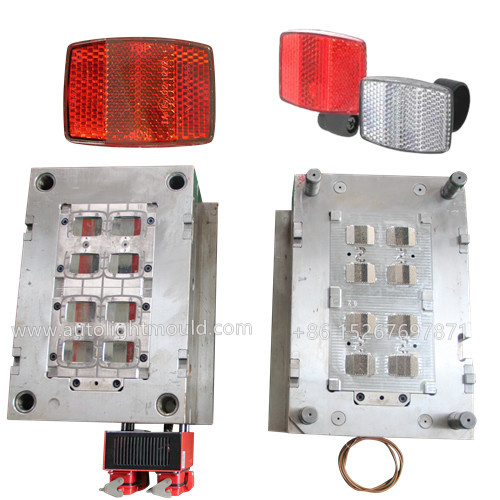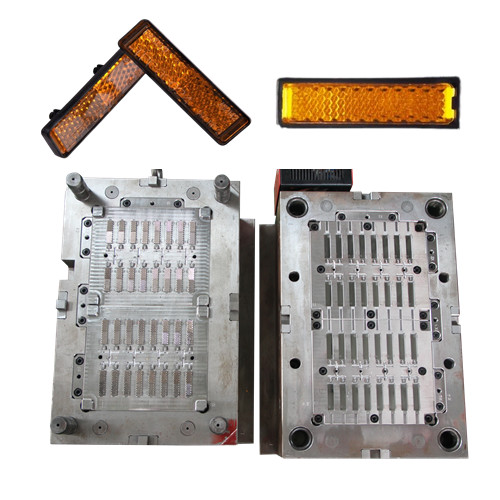
What Is Front Reflector Mold?
2024-11-19
In the automotive industry, safety and functionality are paramount. Among the critical components ensuring visibility and safety on the road are reflectors, particularly front reflectors. These essential parts rely on precise and innovative manufacturing processes, which involve reflector molds. A front reflector mold is specifically designed to produce high quality reflectors for the front end of vehicles, ensuring both aesthetics and regulatory compliance.
This article delves into the definition, functionality, and importance of reflector molds, with a special focus on reflex moulds for front reflectors in the automotive sector.
What Is a Reflector Mold?
A reflector mold is a precision tool used in the injection molding process to create reflectors for vehicles. Reflectors are crucial optical components designed to reflect light, increasing the visibility of vehicles, especially in low light or nighttime conditions.
Reflector molds are engineered to produce reflectors with high optical clarity, intricate patterns, and durability. These molds are typically crafted from hardened steel or other durable materials to withstand repeated production cycles while maintaining dimensional accuracy.
The Role of Reflex Mould in Reflectors
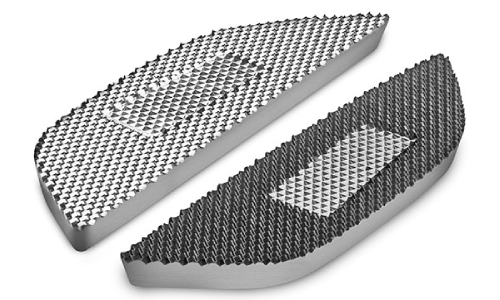
Reflex moulds are a specific type of reflector mold designed to create the prismatic patterns that give reflectors their optical functionality. These prismatic surfaces are vital for redirecting light back toward its source, regardless of the light's angle of incidence.
The manufacturing of reflex patterns requires a high degree of precision, as even minor imperfections can significantly impact the reflector's effectiveness. Advanced technologies, such as CNC machining and laser etching, are employed to ensure the molds meet the exact specifications required for optical performance.
What Is a Front Reflector Mold?
A front reflector mold is a specialized type of reflector mold designed to produce reflectors specifically for the front end of vehicles. Front reflectors are integrated into a vehicle's headlight assembly or bumper to enhance its visibility to other drivers and pedestrians.
These reflectors serve several purposes:
Safety: They reflect light from oncoming vehicles, ensuring the car remains visible even when its headlights are off.
Compliance: Automotive reflectors must meet strict regulatory standards, such as ECE, SAE, or FMVSS requirements, depending on the region.
Design Integration: Front reflectors contribute to the overall aesthetic appeal of the vehicle, requiring molds that produce components with precision and flawless finishes.
Compliance: Automotive reflectors must meet strict regulatory standards, such as ECE, SAE, or FMVSS requirements, depending on the region.
Design Integration: Front reflectors contribute to the overall aesthetic appeal of the vehicle, requiring molds that produce components with precision and flawless finishes.
Materials Used in Front Reflector Molds
Reflectors are typically made from high performance plastics like polycarbonate or acrylic, which offer excellent optical properties, impact resistance, and durability. The front reflector mold must accommodate these materials while ensuring smooth production processes.
Reflectors are typically made from high performance plastics like polycarbonate or acrylic, which offer excellent optical properties, impact resistance, and durability. The front reflector mold must accommodate these materials while ensuring smooth production processes.
For the mold itself, high grade tool steel is often used to provide the necessary strength, corrosion resistance, and heat tolerance for long-term use in injection molding.
Features of High Quality Front Reflector Molds
Precision Engineering: Reflector molds require exact specifications to create the prismatic patterns that enable effective light reflection.
Durable Materials: High quality molds are made from durable materials to withstand repeated use and ensure consistent performance.
Advanced Surface Finishes: Reflectors must have flawless surfaces for optimal optical performance, necessitating molds with advanced finishes.
Customizability: Molds can be customized to produce reflectors in various shapes, sizes, and designs, meeting the unique requirements of different automotive brands.
Thermal Stability: The mold must maintain its shape and precision during high-temperature injection molding processes.
Precision Engineering: Reflector molds require exact specifications to create the prismatic patterns that enable effective light reflection.
Durable Materials: High quality molds are made from durable materials to withstand repeated use and ensure consistent performance.
Advanced Surface Finishes: Reflectors must have flawless surfaces for optimal optical performance, necessitating molds with advanced finishes.
Customizability: Molds can be customized to produce reflectors in various shapes, sizes, and designs, meeting the unique requirements of different automotive brands.
Thermal Stability: The mold must maintain its shape and precision during high-temperature injection molding processes.
Manufacturing Process Using Reflector Molds
The production of automotive reflectors using reflector molds involves several steps:
The production of automotive reflectors using reflector molds involves several steps:
Design: The reflector design is developed using CAD software, ensuring compliance with optical and regulatory requirements.
Mold Fabrication: The mold is crafted using advanced machining techniques, such as CNC milling and EDM, to achieve the required precision.
Injection Molding: Molten plastic is injected into the mold cavity under high pressure. The material takes the shape of the mold, forming the reflector.
Cooling: The molded part is cooled to solidify its shape.
Inspection: Each reflector is inspected for defects to ensure it meets quality and performance standards.
Mold Fabrication: The mold is crafted using advanced machining techniques, such as CNC milling and EDM, to achieve the required precision.
Injection Molding: Molten plastic is injected into the mold cavity under high pressure. The material takes the shape of the mold, forming the reflector.
Cooling: The molded part is cooled to solidify its shape.
Inspection: Each reflector is inspected for defects to ensure it meets quality and performance standards.
Applications of Front Reflector Molds
Passenger Vehicles: Front reflectors are a standard feature in cars, trucks, and SUVs, contributing to safety and aesthetics.
Commercial Vehicles: Reflectors in commercial vehicles help ensure visibility for larger vehicles operating in diverse conditions.
Motorcycles and Scooters: Front reflectors are also essential for two wheelers, enhancing their visibility on roads.
Challenges in Reflector Mold Design
High Precision Requirements: Creating prismatic patterns with exact dimensions is a complex process.
Material Compatibility: The mold must be compatible with various plastics used for reflectors.
Durability: Molds must withstand high-pressure and high-temperature cycles without degrading.
Regulatory Compliance: Reflectors produced must meet international standards, placing strict requirements on mold design and production.
High Precision Requirements: Creating prismatic patterns with exact dimensions is a complex process.
Material Compatibility: The mold must be compatible with various plastics used for reflectors.
Durability: Molds must withstand high-pressure and high-temperature cycles without degrading.
Regulatory Compliance: Reflectors produced must meet international standards, placing strict requirements on mold design and production.
Advantages of Using Front Reflector Molds
Consistency: Reflector molds produce uniform parts in large quantities, ensuring consistent quality.
Cost Efficiency: Injection molding with high quality molds reduces production costs per unit.
Scalability: Reflector molds enable mass production to meet the demands of the automotive industry.
Customization: Molds can be tailored to produce reflectors that align with specific design and branding requirements.
Consistency: Reflector molds produce uniform parts in large quantities, ensuring consistent quality.
Cost Efficiency: Injection molding with high quality molds reduces production costs per unit.
Scalability: Reflector molds enable mass production to meet the demands of the automotive industry.
Customization: Molds can be tailored to produce reflectors that align with specific design and branding requirements.
Choosing the Right Front Reflector Mold
When selecting a front reflector mold, it’s crucial to consider:
When selecting a front reflector mold, it’s crucial to consider:
The manufacturer’s expertise in reflex mould design.
The durability and precision of the mold material.
The ability to meet regulatory and optical standards.
Cost-effectiveness and lead time for mold fabrication.
The durability and precision of the mold material.
The ability to meet regulatory and optical standards.
Cost-effectiveness and lead time for mold fabrication.
Future Trends in Reflector Mold Technology
Advanced Materials: The use of new materials for molds and reflectors to improve performance and sustainability.
Automation: Increased automation in mold fabrication and injection molding processes for faster production.
3D Printing: Integration of 3D printing technologies to create complex mold designs.
Sustainable Manufacturing: Developing eco friendly materials and processes for reflector production.
Front reflector molds play a critical role in the production of automotive reflectors, ensuring vehicles meet safety, regulatory, and aesthetic standards. These molds, designed with advanced reflex mould technology, allow for the mass production of high quality reflectors that enhance visibility and safety on the road.
For the automotive industry, investing in high quality reflector molds is essential for achieving efficiency, compliance, and customer satisfaction. As technology continues to evolve, the capabilities of front reflector molds will expand, further solidifying their importance in modern vehicle manufacturing.
Younger Mould is one of the most popular Chinese front reflector mold suppliers, who has earned a good reputation and position in the industry, gaining the trust and praise of numerous customers. If you are interested in our reflex mould for automotive, please leave your contact information, and we will provide you with favorable quotations and services.
How Is Rapid Prototyping Used In The Automotive Industry?
Is There A Light Guide Mold?
Related Article

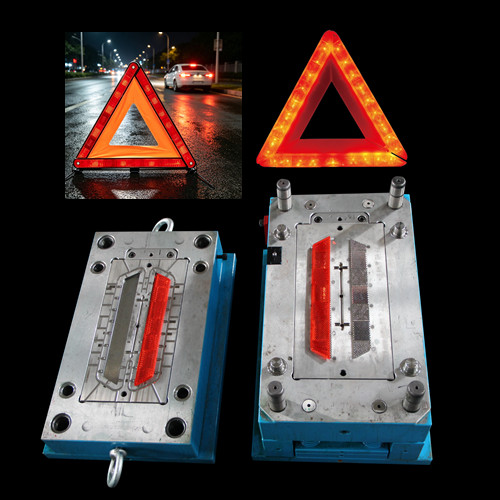
We are a professional mold manufacturer in Huangyan, China, specializing in high-precision injection molds for parking reflex reflectors and warning triangles. Our molds are made with durable steel for long service life, supporting custom designs and stable mass production to meet your automotive accessory manufacturing needs.
Parking reflex refletcor warning triangle mould