What Is Rapid Prototyping In Manufacturing?
In today's fast paced industrial landscape, companies across all sectors—from automotive to consumer electronics—are under immense pressure to shorten development cycles and bring products to market faster than ever. To meet this demand, manufacturers are increasingly turning to rapid prototyping and rapid manufacturing as a solution for accelerating innovation while minimizing risk.
But what is rapid prototyping in manufacturing, exactly? How does it differ from traditional production? And how do technologies like rapid tooling integrate into this ecosystem?
Understanding the Basics: What Is Rapid Prototyping in Manufacturing?
Rapid prototyping is a group of techniques used to quickly fabricate a physical part or assembly using 3D computer-aided design (CAD) data. These methods typically employ additive manufacturing (3D printing), CNC machining, or vacuum casting to create accurate prototypes within a short time frame.
Unlike traditional manufacturing, which often requires long lead times for tooling and setup, rapid prototyping enables engineers and designers to iterate designs rapidly, test concepts, and make real time improvements before full-scale production begins.
The Relationship Between Rapid Prototyping, Rapid Tooling, and Rapid Manufacturing
To fully grasp the role of rapid prototyping, it's essential to understand how it connects with rapid tooling and rapid manufacturing:
Rapid Prototyping: Focuses on creating physical models quickly to evaluate form, fit, and function.
Rapid Tooling: Uses prototype parts or soft tooling methods (e.g., aluminum molds) to create limited run tools for testing or bridge production.
Rapid Manufacturing: Refers to the direct production of functional end-use parts using flexible, fast, and often digital processes.
These three stages are interdependent and form a continuum—starting with concept validation and ending in real-world production. At Younger Mould, this integrated approach supports automotive clients in shortening development timelines without compromising quality.
Common Rapid Prototyping Techniques in Manufacturing
1. Additive Manufacturing (3D Printing)
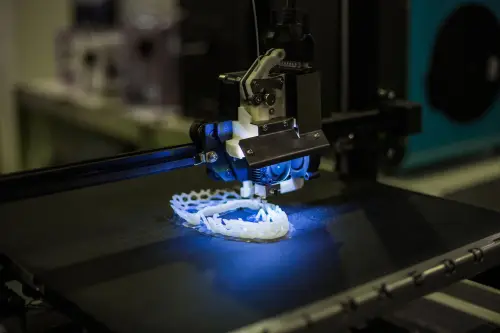
3D printing is the most well-known rapid prototyping method. It builds parts layer by layer from a digital model.
Processes: FDM, SLA, SLS, DMLS
Materials: Plastics (ABS, nylon, resin), metals (stainless steel, aluminum)
Advantages: No tooling required, highly flexible, ideal for complex geometries
2. CNC Machining
Subtractive in nature, CNC machining removes material from a solid block to produce precise parts.
Materials: Metal, plastic, composites
Use cases: Functional prototypes that need to simulate production-grade performance
Speed: Parts can often be produced in 1–3 days
3. Vacuum Casting
This method involves casting polyurethane or silicone resin into a soft mold (usually silicone), based on a master model.
Best for: Low volume testing and pre production parts
Surface quality: High finish, close to final production aesthetics
Economical: Cheaper than full tooling for small batches
At Younger Mould, these techniques are often used in combination to provide clients with complete professional rapid prototyping services.
Benefits of Rapid Prototyping and Rapid Manufacturing
Faster Design Iteration
One of the core benefits of rapid prototyping rapid tooling rapid manufacturing is the ability to iterate on designs quickly. Instead of waiting weeks or months for tooling, engineers can make real time adjustments and test new designs within days.
Cost Savings
Although the per-unit cost may be higher for prototypes, the overall cost of development is significantly reduced by avoiding expensive errors, tooling rework, or failed market launches.
Improved Product Testing
Physical prototypes allow for:
Ergonomic testing
Mechanical fit and function checks
Thermal and environmental simulations
This hands on validation builds confidence before committing to full-scale production.
Enhanced Communication
Prototypes serve as a visual and tactile reference for teams across engineering, design, and marketing. This alignment is critical in complex industries like automotive, where multiple departments are involved in product development.
Applications of Rapid Prototyping in the Automotive Industry
Concept Development and Design Evaluation
During the early phases of automotive development, rapid prototyping allows designers to test new styling concepts and verify human-machine interface (HMI) components.
Functional Testing
Engineers use rapid prototyping and rapid manufacturing to build parts for mechanical, thermal, and vibration testing—especially critical for safety-related components like brackets, housings, and air duct systems.
Bridge Production with Rapid Tooling
Before committing to hard steel production tools, manufacturers often use rapid tooling (e.g., aluminum injection molds) to create hundreds to thousands of parts for testing or early product release. Younger Mould provides such tooling for low volume, fast turn production, often for Tier 1 automotive suppliers.
Challenges and Considerations
While rapid prototyping offers many advantages, it's not without limitations:
Material Differences: Some prototype materials may not perfectly match the final production grade.
Surface Finish: Depending on the method, additional post-processing may be required.
Scalability: Not all rapid prototyping techniques are viable for high-volume runs.
That said, advanced solutions—such as the integration of rapid tooling and digital mold development—are helping bridge these gaps, enabling smoother transitions from prototype to production.
How Younger Mould Integrates Rapid Prototyping into Precision Molding
As a professional mold manufacturer in China, Younger Mould leverages rapid prototyping to enhance every phase of its product development process:
Digital mold simulations for early verification
Prototype tooling for bumper, lighting, and interior auto parts
3D printed sample components for client reviews
Bridge tooling using aluminum or soft steel for small batch production
By combining rapid prototyping, rapid tooling, and precision injection molding, Younger Mould helps clients reduce development time, validate concepts, and transition smoothly into mass production.
Trends Shaping the Future of Rapid Prototyping and Rapid Manufacturing
Hybrid Manufacturing Workflows
More companies are blending additive and traditional manufacturing—for example, using 3D printing to make mold inserts or jigs to assist in tooling fabrication.
Cloud-Based Design Collaboration
Remote teams can now collaborate in real time on CAD files, significantly speeding up design validation and handoff to prototype production.
Automation and Smart Prototyping
AI-driven simulation tools and automated machining setups are reducing both the time and cost of prototyping complex parts.
Manufacturers like Younger Mould continue to adopt such technologies to stay competitive in high-precision automotive mold development.
Why Rapid Prototyping Matters More Than Ever
So, what is rapid prototyping in manufacturing? At its core, it's a transformative approach that enables companies to validate designs, reduce risks, and bring better products to market—faster.
Whether you're testing a new automotive lighting design, evaluating an interior panel geometry, or producing bridge volumes through rapid tooling, rapid prototyping has become a critical pillar of modern manufacturing.
With companies like Younger Mould providing professional rapid prototyping services alongside mass production mold development, the boundary between prototyping and production continues to shrink—paving the way for faster innovation, higher quality, and smarter manufacturing.
Younger Mould is a reputable leader in China's rapid prototyping and rapid manufacturing industry, known globally for our dedication to quality, innovation, and reliability. We specialize in precision engineered professional rapid prototyping services and offer tailored solutions to meet diverse project requirements—always at competitive prices. Share your contact information, and our team will promptly connect with you to discuss your specific needs.
Aumotive tail lamp mold trial
Bicycle pedal reflector mold trial
Related Article