What Is The Molding Process In Automotive?
2024-08-22
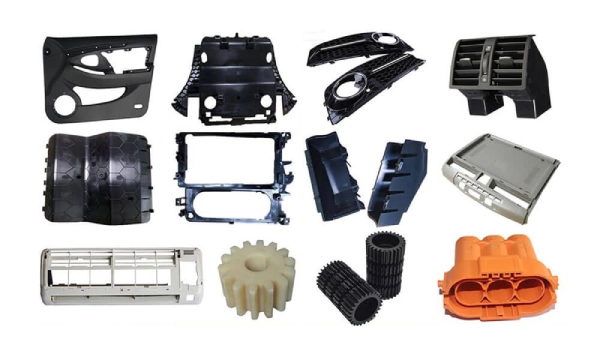
Automotive injection molding plays a crucial role in today's vehicle manufacturing, delivering exceptional precision and efficiency in producing a wide range of components. This guide outlines the importance of automotive injection molding, highlighting the materials used and the essential processes involved.
Understanding Injection Molding
Automotive injection molding covers a wide array of components vital to vehicle construction, such as:
Interior Components: Dashboard panels, door handles, and trim pieces.
Structural Elements: Engine covers, air intake manifolds, and battery housings.
This process is crucial for producing lightweight, durable parts that meet the rigorous standards of the automotive industry.
Importance of Injection Molding in Automotive Industry
Injection molding is essential in the automotive industry for creating lightweight parts that boost fuel efficiency and vehicle performance.
The process also supports rapid prototyping and mass production, which shortens time-to-market and improves overall efficiency.
Additionally, injection molding's ability to achieve precise tolerances and complex designs ensures that automotive parts adhere to strict quality and safety standards, highlighting its critical role in the automotive sector.
Materials Used in Automotive Injection Molding
A wide range of polymers is used in automotive injection molding to satisfy the varied demands of different components. Common materials include:
Polypropylene (PP): Lightweight with excellent chemical resistance, PP is frequently used for interior components and under-the-hood parts.
Polyethylene (PE): Known for its high impact strength and flexibility, PE is ideal for applications like fuel tanks and reservoirs.
Acrylonitrile Butadiene Styrene (ABS): Valued for its toughness and heat resistance, ABS is commonly used in exterior trim and interior panels.
Nylon: With its exceptional strength and durability, nylon is often used in high-performance components like gears and bearings.
Polycarbonate (PC): PC is celebrated for its optical clarity and impact resistance, making it a preferred choice for headlamp lenses and instrument panels.
By selecting materials based on their mechanical properties, chemical resistance, and aesthetic qualities, automotive manufacturers can ensure that car parts mould meets the rigorous demands of vehicle design and performance.
Processes of Automotive Injection Molding
Step 1: Material Selection
The process begins by carefully selecting materials based on the desired properties and performance requirements of the final part. Strength, durability, chemical resistance, and aesthetic appearance are key factors considered during this phase.
Step 2: Material Preparation
The selected materials are then prepared for injection molding by melting and homogenizing them to achieve uniformity. This involves feeding the raw material into a hopper, where it is heated to the appropriate temperature for injection.
Step 3: Injection
Once the material is ready, it is injected into the mold cavity under high pressure using an injection molding machine. The material fills the mold, taking on its exact shape and configuration.
Step 4: Cooling
After injection, the molten material is cooled to solidify within the mold cavity. Controlled cooling is crucial to ensure that the part maintains its desired shape and structural integrity.
Step 5: Ejection
When the material has cooled and solidified, the finished part is ejected from the mold using ejector pins or other mechanisms. Careful ejection is essential to prevent any damage to the part or the mold.
Step 6: Trimming and Finishing
After ejection, any excess material, known as flash, is trimmed away using precision cutting tools. Additional finishing processes, such as surface polishing or painting, may be applied to achieve the desired appearance and functionality.
Step 7: Quality Control
Rigorous quality control measures are implemented throughout the injection molding process to ensure that parts meet specified requirements. This includes inspecting dimensions, surface finish, and mechanical properties to identify any defects or deviations from standards.
Step 8: Regrinding and Recycling
Scrap material generated during the process is collected and reprocessed by grinding it into small pellets. These pellets can be reused in subsequent injection molding cycles, reducing waste and enhancing sustainability.
By meticulously following each of these steps, automotive manufacturers can consistently produce high-quality injection-molded parts that are essential for vehicle construction and performance.
Quality Control in Automotive Injection Molding
Design Review
Before production begins, a comprehensive design review ensures the design's feasibility for injection molding.
Feasibility Analysis: The design is evaluated to confirm it can be efficiently manufactured using injection molding techniques.
Optimization: Necessary adjustments are made to minimize potential manufacturing challenges and enhance manufacturability.
Risk Reduction: Risks that could lead to defects are identified and mitigated, improving the overall quality of the final product.
Production Preparation
During production setup, careful attention is given to configuring equipment and processes correctly.
Material Selection: Appropriate mold materials are selected based on the specific requirements of the automotive part.
Machine Configuration: Injection molding machines are set up with the correct parameters to ensure consistent production.
Parameter Calibration: Temperature, pressure, and other critical parameters are calibrated to minimize variability and ensure adherence to quality standards.
In Process Control
Continuous monitoring of key parameters during injection molding is crucial for maintaining process stability.
Key Parameters: Variables such as pressure, temperature, cycle time, and part weight are tracked.
Real-Time Monitoring: Sensors and software monitor the process in real-time, allowing for immediate adjustments.
Defect Prevention: Issues are promptly identified and addressed to prevent defects, ensuring parts consistently meet specifications.
Final Inspection
Every automotive injection-molded part undergoes a thorough final inspection after production.
Dimensional Accuracy: Parts are measured to ensure they meet precise dimensional specifications.
Surface Finish: The surface quality is inspected to ensure it meets aesthetic and functional requirements.
Structural Integrity: Functional tests are performed to verify the part’s strength and durability.
Defect Identification: Rigorous inspections identify and eliminate defects, ensuring that only high-quality parts are shipped to customers.
By implementing strong quality control measures throughout the automotive injection molding process, manufacturers can uphold the highest standards, delivering reliable, defect-free parts that meet the stringent demands of the automotive industry.
Advantages of Injection Molding Automotive Parts
Design Flexibility and Complexity
Injection molding allows for the creation of intricate designs and complex geometries that are challenging to achieve with other methods.
This versatility enhances both performance and aesthetics, driving innovation in vehicle design and setting products apart in the market.
Rapid Prototyping and Production
Automotive manufacturers can swiftly prototype and produce parts using injection molding, shortening time-to-market.
Advanced CAD/CAM software and molding techniques streamline the process, increasing efficiency throughout development cycles.
Consistency and Precision
Injection molding guarantees exceptional consistency and precision in part production, ensuring uniform dimensions, surface finishes, and mechanical properties across large-scale runs.
Strict quality control measures ensure that each part meets exact specifications, providing reliable performance.
Cost Effectiveness and Material Efficiency
Injection molding offers cost-effective manufacturing by reducing material waste, labor costs, and production time compared to traditional methods.
Precise material control and optimized part geometry enhance material efficiency, lowering overall production costs.
Integration of Multiple Components into Single Parts
Injection molding enables the integration of multiple components into single parts, simplifying manufacturing processes and reducing assembly time and part count.
Consolidating functions into a single molded part improves efficiency, cuts costs, and enhances product reliability and performance.
Younger Mould is one of the most popular China automotive injection molding suppliers, who has earned a good reputation and position in the industry, gaining the trust and praise of numerous customers. If you are interested in our auto parts mould products, please leave your contact information, and we will provide you with favorable quotations and meticulous light guide solutions.
Differences between Injection Molding vs CNC Machining
Why The Requirements For Appearance Of Car Light Mould Is High
Related Article

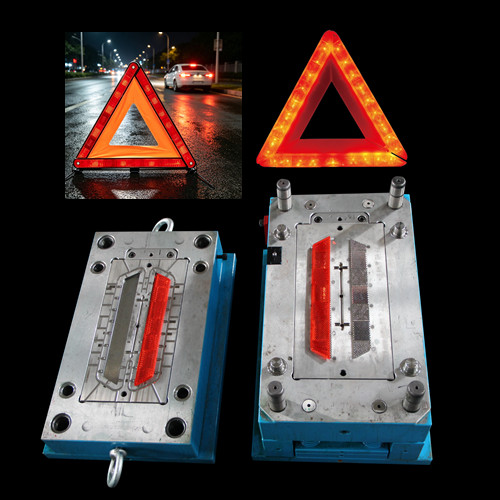
We are a professional mold manufacturer in Huangyan, China, specializing in high-precision injection molds for parking reflex reflectors and warning triangles. Our molds are made with durable steel for long service life, supporting custom designs and stable mass production to meet your automotive accessory manufacturing needs.
Parking reflex refletcor warning triangle mould