What Metal Is Best For Die Casting?
2025-12-29
Die casting remains one of the most productive and economical manufacturing processes for producing precision metal components in large volumes. Whether for automotive, industrial machinery, consumer electronics, or aerospace applications, the question “What metal is best for die casting?” is both practical and strategic. Metal selection directly influences casting quality, mechanical performance, production cost, tool longevity, and end-use performance.
Chapter 1: Die Casting and Metal Selection Fundamentals
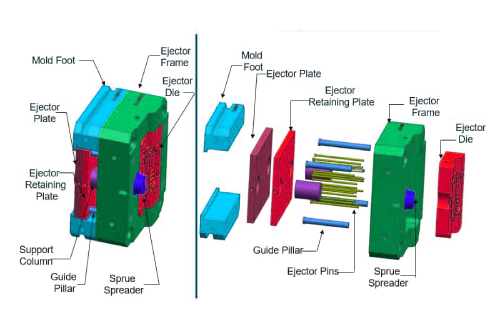
Die casting is a high-pressure metal casting process in which molten metal is forced into a precision-engineered steel mold (or “die”) under high velocity and pressure. Once solidified, the casting is ejected and undergoes finishing operations. The die casting process enables complex geometries, tight tolerances, and repeatable quality — far beyond what traditional sand casting or forging can deliver at high volumes.
However, unlike other processes, die casting demands specific material behavior:
The molten metal must exhibit adequate fluidity to fill thin, intricate sections within the die.
It must solidify predictably, limiting shrinkage and porosity.
The final casting must deliver required mechanical and physical properties for its application.
This makes metal choice foundational to casting success.
Core Criteria for Metal Selection in Die Casting
When evaluating which metal is “best,” engineers consider the following factors:
Strength-to-Weight Ratio: Critical for automotive and aerospace applications.
Fluidity and Castability: Determines how well the metal fills complex die cavities.
Melting Point and Process Compatibility: Influences whether hot-chamber or cold-chamber machines are appropriate.
Dimensional Stability and Tolerance: Essential for precision parts where secondary machining is expensive.
Corrosion and Heat Resistance: Important for parts exposed to harsh environments.
Cost and Supply Chain Considerations: Includes raw material cost, energy requirements, and global sourcing options such as china die casting mould factory advantages.
Chapter 2: Review of Die Casting Metals and Alloys
Aluminum alloys are the most widely used die casting materials worldwide. Their popularity stems from an optimal balance of mechanical performance, lightweight properties, and cost effective production.
Key Characteristics of Die Casting Aluminum:
Lightweight: With a density around 2.7 g/cm³, aluminum castings deliver excellent strength-to-weight ratios, especially compared to ferrous metals.
Corrosion resistance: Aluminum naturally forms an oxide layer, which enhances resistance to environmental degradation.
Thermal and electrical conductivity: Useful in components like heat sinks and electrical housings.
Good dimensional stability: Allows precise casting of complex shapes with thin walls.
Application Highlights:
Aluminum die cast parts are dominant in automotive die casting mold applications such as engine components, transmission housings, heat sinks, brackets, and lightweight structural elements. Their broad adoption is also supported by international die casting mold suppliers including china die casting mould factories, which produce molds optimized for aluminum's thermal and flow characteristics.
Process Considerations:
Aluminum is typically cast using a cold-chamber die casting machine, which accommodates its higher melting point (~660°C). While this adds complexity compared to hot-chamber processes, the benefits in part performance justify the choice in high-volume production.
Zinc Die Casting Alloys: Precision, Surface Finish, and High Productivity
Zinc alloys represent another core category of die casting metals. With a much lower melting point (typically 380–420°C), zinc die casting allows faster production cycles, lower energy consumption, and extended mold life when compared to higher-temperature metals.
Key Characteristics of Zinc Die Casting:
Excellent fluidity: Zinc alloys fill fine features and thin walls with ease, making them ideal for highly detailed components.
Low melting point: Reduces die wear and prolongs tooling life, which can be a cost advantage in long runs.
High dimensional accuracy and surface finish: Often allows castings to meet tolerances without or with minimal secondary machining.
Good strength and corrosion resistance: Particularly when plated or coated.
Application Highlights:
Zinc die casting excels in consumer hardware, connectors, housings, small automotive components, and precision fixtures. For products requiring fine detail and high throughput, zinc often outperforms heavier alloys.
Process Advantages:
The hot-chamber die casting process is well suited to zinc due to its low molten metal temperature, enabling rapid cycling. This improves productivity and makes zinc a staple for high volume, low complexity parts.
Magnesium Alloys: The Lightest Structural Die Casting Option
Key Characteristics of Magnesium Die Casting:
Unequalled strength-to-weight ratio: Ideal for applications where every gram counts.
Good fluidity and castability: Offers excellent mold filling for many shapes.
Good EMI/RFI shielding: Makes magnesium suitable for housings in electronic systems.
Ease of machining: Magnesium alloys are often easier to machine than aluminum, saving time during finishing.
Frequently used alloys like AZ91D and AM60B balance strength, ductility, and corrosion resistance. Higher elongation variants exist for components requiring greater impact tolerance.
Application Highlights:
Magnesium castings are increasingly used in automotive interior structures, electronics housings, and aerospace applications where weight reduction offers fuel economy or functional benefits.
Process Considerations:
Magnesium can be cast using hot-chamber processes as well. However, due to its reactivity and combustion risk, specialized procedures and safety protocols are essential. This makes mold design and production — such as those provided by leading china die casting mould factory suppliers — critical to operational safety and performance.
Copper and Specialty Alloys: High Strength and Thermal Performance
Although less common than aluminum, zinc, or magnesium, copper alloys and certain specialty materials are used where high mechanical strength, wear resistance, or thermal conductivity is required. Alloys such as aluminum bronze or beryllium copper can deliver exceptional hardness and fatigue resistance.
These materials, however, present higher melting points and costs, making them more common in niche industrial components, tooling, or wear-critical elements rather than mass production die casting.
Emerging and Specialized Alloys in Die Casting
Research and industrial practice continue to expand metal options for die casting. For example, high silicon aluminum alloys deliver wear resistance for sliding parts, while hybrid materials are explored to combine structural performance with lightweight benefits. However, these metals currently serve specialized applications and require carefully tailored casting conditions.
Chapter 3: How Metal Choice Drives Automotive Die Casting Mold Design and Production
Metals do not exist in isolation from tooling and process engineering. In die casting, mold design is intrinsically linked to the material selected. For example:
Aluminum alloys demand molds with accurate thermal distribution and cooling channels to manage solidification and minimize shrinkage and warpage.
Zinc alloys allow more aggressive venting and thinner cavities due to low melt temperatures and good flow.
Magnesium molds must accommodate safety and oxidation considerations as well as maintain high precision.
Role of China Die Casting Mould Factories in Global Supply
China has emerged as a leading source of die casting molds and components due to its extensive manufacturing infrastructure, advanced tooling expertise, and competitive cost structures. China die casting mould factories offer a range of capabilities:
Precision CNC machining centers and EDM for complex cavity shapes
Mold steel heat treating and surface finishing for extended tool life
Integration of simulation and CAE tools for optimized gating, venting, and cooling
Factories located in key manufacturing hubs provide full mold services — from CAD design and prototyping to mold trial and production validation. Suppliers like Younger Mould work with global OEMs and Tier-1 integrators on projects ranging from consumer products to automotive die casting mold development.
China's position enables global manufacturers to access molds tailored for specific alloys — whether complex aluminum housings or detailed zinc components — and to manage cost, quality, and delivery within competitive industrial ecosystems.
Material Driven Mold Lifecycle Considerations
Metal selection also influences mold durability and maintenance:
Low melting point metals like zinc typically extend mold life due to reduced thermal shock and wear.
High temperature aluminum casting subjects molds to greater thermal cycling, requiring periodic maintenance.
In high-volume automotive applications, effective mold lifecycle planning directly impacts cost per part and production uptime.
Chapter 4: Practical Guidelines for Choosing the Best Die Casting Metal
Align Metal Choice with Application Priority
Performance Priority Matrix:
Weight Critical: Magnesium or aluminum alloys
High Dimensional Precision: Zinc alloys
High Strength & Wear Resistance: Specialty copper alloys
Balanced Performance & Cost: Aluminum family alloys
Matching Die Casting Process with Alloy
Hot chamber die casting: Most appropriate for low melting point metals such as zinc and magnesium.
Cold chamber die casting: Required for higher melting point metals like aluminum and specialized copper alloys.
Matching metal choice with the right casting process minimizes defects, improves repeatability, and enhances part integrity.
Cost and Supply Chain Considerations
Metal cost trends, availability, and regional supply dynamics affect manufacturing strategy. Aluminum and zinc alloys benefit from global supply stability and recycling infrastructure. China-based die casting mold manufacturing — including mold expertise, material sourcing, and integrated supply networks — also contributes to competitive production economics.
Frequently Asked Questions (FAQ)
Q: Which metal alloy is most commonly used in automotive die casting?
Aluminum alloys are most prevalent due to their lightweight strength and versatility, though zinc and magnesium also find application in specific components depending on performance needs.
Q: How does choosing the right die casting metal affect mold design?
Each metal's melting point, fluidity, and solidification behavior demand tailored mold features such as gating design, cooling channels, and venting strategies. This is especially critical in automotive die casting mold design.
Q: Are China die casting mould factories good sources for high-precision molds?
Yes. China die casting mould factories balance precision tooling capabilities, advanced manufacturing technologies, and competitive delivery schedules, making them strong partners for global OEMs and mold buyers.
Q: Why is aluminum considered the “default” die casting metal?
Because it combines low weight, good mechanical properties, corrosion resistance, and broad alloy availability suited for many industrial applications.
Q: What role does metal choice play in long-term casting performance?
Metal selection determines part durability, susceptibility to corrosion, fatigue life, and maintenance needs. Choosing the right alloy aligns product performance with lifecycle expectations.
Die Cast Moulding Process
Why Add Salt And Soda To Molten Aluminum?
Related Article

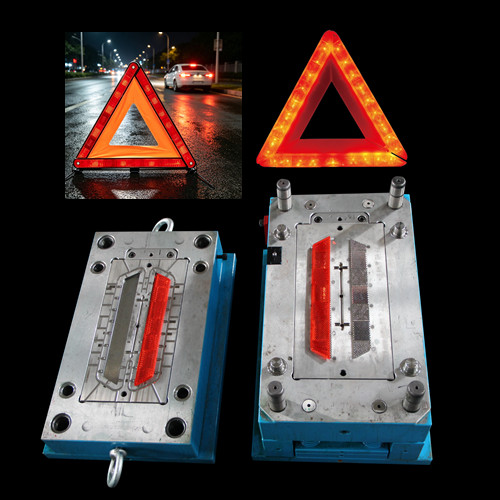
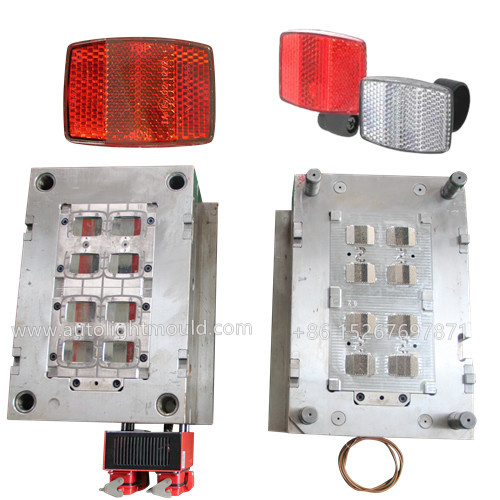
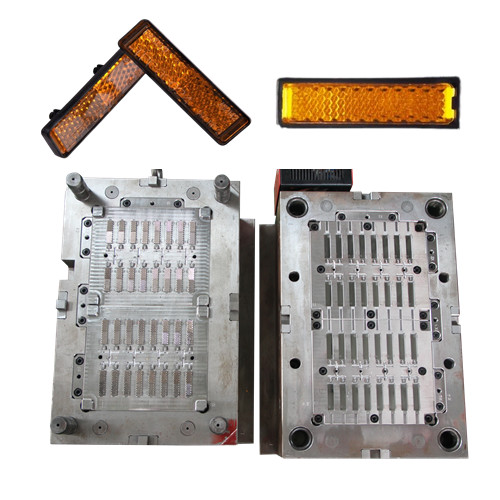
We are a professional mold manufacturer in Huangyan, China, specializing in high-precision injection molds for parking reflex reflectors and warning triangles. Our molds are made with durable steel for long service life, supporting custom designs and stable mass production to meet your automotive accessory manufacturing needs.
Parking reflex refletcor warning triangle mould