What You Need to Know About Automotive Parts Rapid Prototyping
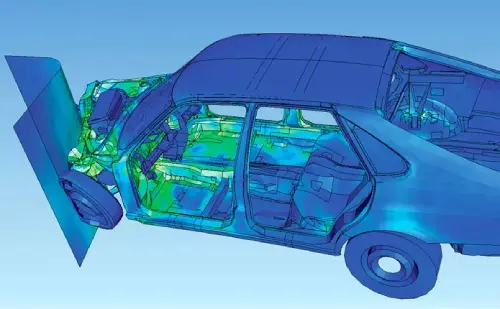
In today's highly competitive automotive market, manufacturers are under pressure to develop, test, and launch new vehicle models faster than ever. To keep up, automotive parts rapid prototyping has emerged as an essential strategy. It allows OEMs, Tier 1 suppliers, and engineering teams to validate designs, test functions, and visualize aesthetics—long before investing in final tooling.
1. What Is Automotive Parts Rapid Prototyping?
A Definition Rooted in Speed, Precision, and Iteration
Automotive parts rapid prototyping refers to the process of quickly fabricating physical models of automotive components using digital CAD data. These prototypes are used for:
Design validation
Functional testing
Assembly verification
Visual presentation
Unlike traditional methods that require long lead times and steel tooling, rapid prototyping relies on additive manufacturing, soft tooling, or CNC machining to produce parts in days instead of weeks.
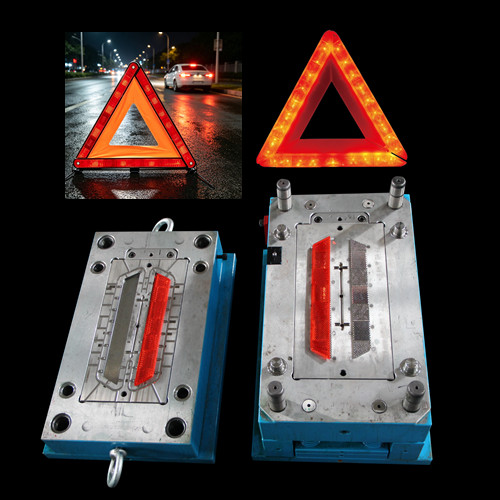
Companies like Younger Mould, while best known for precision production tooling, also support rapid prototype for tail light by offering hybrid solutions such as quick aluminum molds or 3D printed mold inserts that closely simulate the final product.
2. Key Applications: Rapid Prototypes for Tail Light Development
Creating a rapid prototype for a tail light requires balancing appearance with functionality. These prototypes help teams assess:
Light transmission and beam angle
Aesthetic fit within vehicle rear panels
Color diffusion and lens optics
Thermal performance under LED loading
For rapid prototype for rear light, methods like vacuum casting, transparent SLA (stereolithography), and CNC-polished acrylic are commonly used. Younger Mould often provides optical grade surface finishing to simulate final lens clarity, ensuring that early iterations look and function like production parts.
3. Rapid Prototype for Rear Light: Engineering Validation Essentials
A rapid prototype for rear light assemblies not only showcases visual design but also supports functional validation of:
Mounting structures
Sealing interfaces
Integrated reflector geometry
PCB and LED module housing
Materials used often include transparent resins for lenses and nylon or ABS equivalents for housings. In cases requiring short-run testing, low-pressure injection molding using aluminum tools can produce dozens of parts quickly and with high repeatability—one of the services offered through Younger Mould's prototyping partnerships.
4. Popular Rapid Prototyping Techniques for Automotive Applications
Each rapid prototype for rear light method has its advantages depending on the application. Here's an overview:
| Technique | Best for | Material Type | Lead Time | Notes |
| SLA (Stereolithography) | Lenses, housings | Clear/opaque resin | 2–5 days | High detail, polishable |
| SLS (Selective Laser Sintering) | Functional parts | Nylon, composites | 3–7 days | Durable, no support needed |
| Vacuum Casting | Functional & visual prototypes | Polyurethane | 5–10 days | Mimics ABS, PC, etc. |
| CNC Machining | High precision parts | ABS, PMMA, aluminum | 2–7 days | Tight tolerance, good finish |
| 3D Printed Tooling | Short run injection | Standard thermoplastics | 10–15 days | Cost effective, reusable |
Younger Mould frequently collaborates with prototype labs to offer rapid-cut aluminum tools or hybrid molds that simulate actual production environments using real materials (e.g., PC, PMMA, PA6).
5. Benefits of Automotive Parts Rapid Prototyping
The advantages of rapid prototyping in automotive development are significant:
Faster time to market: Designs can be tested and revised quickly
Reduced costs: Avoids expensive rework on steel tools
Improved collaboration: Teams can review physical models early
Risk mitigation: Validates ergonomics, aesthetics, and fit before production
In early stage programs, rapid prototype for tail light allows engineering, styling, and manufacturing teams to collaborate more effectively—often reducing program risk by identifying design flaws early.
6. How Younger Mould Supports Prototype to Production Transition
While Younger Mould is renowned for its mass production molds for lighting and automotive plastics, the team frequently supports prototyping in these ways:
Prototype insert compatibility in steel mold frames
Quick turn aluminum molds for 50–500 parts
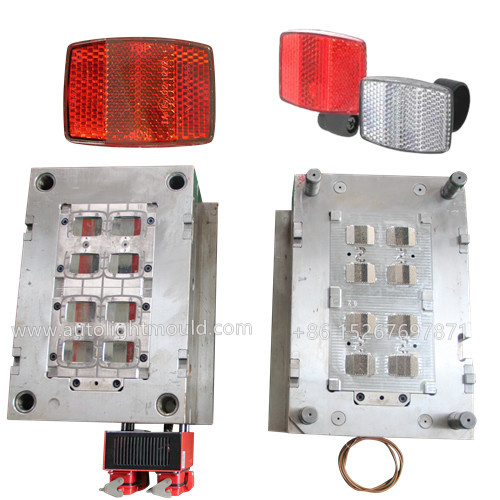
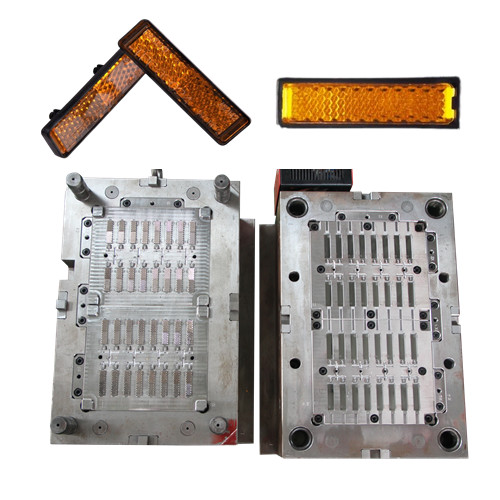
Soft tooling for rear light reflectors and housings
Simulation based design validation for mold flow and optics
This end to end integration means customers can quickly iterate early designs—then seamlessly move into durable tooling without starting over.
7. Optical Accuracy in Rear Lamp and Tail Light Prototypes
For rear light and tail light systems, optics are critical. Whether you're developing a brake light diffuser or an LED light guide, accurate surface geometry and clarity are essential.
Prototyping clear components involves:
Polishable materials, such as PMMA or SLA-clear resin
Diamond polished CNC tooling for vacuum cast parts
Simulated optical coatings, like vapor-deposited chrome on reflectors
Younger Mould's experience in BMC reflector molds translates into superior understanding of surface finish and light diffusion control in prototype parts as well.
8. Prototyping Considerations for Structural Automotive Parts
While lighting garners much attention, automotive parts rapid prototyping also supports:
HVAC ducts and vents
Mounting brackets and supports
Battery trays for EVs
Interior trim prototypes
Here, durability, fit, and thermal performance are often more important than optical clarity. Materials like PA-GF (glass filled nylon equivalents) or high-impact ABS are commonly selected. Younger Mould supports early structural validation through soft tooling and overmolding trials.
9. Common Pitfalls in Rapid Automotive Prototyping—and How to Avoid Them
While rapid prototype for tail light saves time and money, mistakes can still occur. Watch out for:
Material mismatch: Prototypes that don't simulate real thermoplastics
Over polishing SLA parts, which can distort geometry
Ignoring draft angles, leading to part sticking in tooling
Underestimating lead time for complex clear or chrome parts
To avoid these, Younger Mould recommends involving toolmakers early in the design phase—even for prototypes—ensuring the design can smoothly transition into mass production.
10. The Future of Rapid Prototyping in Automotive Manufacturing
The next decade will bring deeper integration between digital twin simulations, smart material testing, and rapid prototyping:
Digital to physical convergence: Direct link between CAD/FEA and 3D-printed prototypes
Overmolded sensor components: Requiring complex multi-material trials
Sustainable prototyping: Use of bio-resins and recycled fillers
OLED and smart rear light integration, requiring electrical testing in prototype stages
Younger Mould is adapting by collaborating with electronics design houses, optical simulation teams, and low volume molding suppliers to offer a complete development ecosystem.
If you're developing new vehicle platforms or lighting systems, integrating automotive parts rapid prototyping into your product development roadmap is no longer optional—it's a competitive necessity. Whether you're focused on rapid prototypes for tail lights, rear light assemblies, or structural parts, the key lies in selecting the right technique, material, and tooling approach.
Companies like Younger Mould, while traditionally focused on high-precision mass production molds, play a crucial advisory role in ensuring that what's prototyped today can be scaled tomorrow. With the right strategy, prototyping becomes a bridge—not a bottleneck—between innovation and production.
Younger Mould ranks among the world's automotive parts rapid prototyping manufacturers, widely acknowledged for our exceptional quality, innovative solutions, and trusted reputation in the industry. Committed to excellence, we have built long standing relationships with clients across the globe. If you're seeking high quality rapid prototype for tail / rear light, please feel free to leave your contact details. Our dedicated team will provide you with competitive pricing and customized service to meet your specific needs.
How automotive connector mold manufacturing
Automobile head lamp mold supplier in China
Related Article