Why BMC Injection Molding Process Is Critical?
2026-02-12
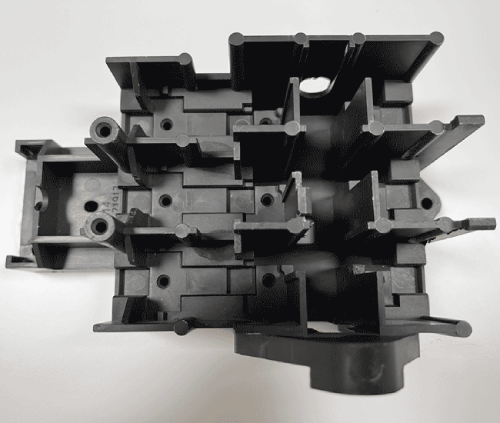
In advanced industrial manufacturing, the BMC injection molding process (Bulk Molding Compound injection molding) has emerged as a cornerstone technology for high performance composite parts. Across automotive, electrical, consumer electronics, and motorcycle applications, BMC offers a compelling blend of mechanical strength, thermal stability, and cost effectiveness. For procurement leaders, design engineers, and supply chain strategists, understanding the nuances of BMC processing — beyond generic definitions — is essential to making informed decisions that impact product performance, manufacturability, and producer selection.
Chapter 1 — Understanding the BMC Injection Molding Process ( From Younger Mould's View)
BMC Composite Material Fundamentals: What Is Bulk Molding Compound?
Bulk Molding Compound (BMC) is a thermoset composite consisting principally of:
Short glass fibers
Thermoset resin (typically polyester, vinyl ester, or epoxy)
Mineral fillers
Catalysts and additives that promote cross-linking
Once mixed, the BMC resin exists as a putty-like material ready for injection into molds. Upon heating and pressurization, the resin cures — forming a rigid, high-strength part with reinforced structural integrity.
The BMC injection molding process distinguishes itself from thermoplastics in that the material undergoes an irreversible chemical cross-linking during curing, which confers superior heat resistance and mechanical properties relative to many thermoplastics.
The BMC Injection Molding Workflow: From Compound to Component
Step 1: Compound Preparation and Homogenization
The BMC material is blended under controlled conditions to ensure uniform distribution of glass fibers and fillers. Consistency in compound quality is essential, as any variation can lead to performance discrepancies in the final part.
Step 2: Injection and Material Flow Control
Unlike conventional thermoplastic injection molding, BMC processing requires careful control of material flow and cure timing. The compound must be heated just enough to become fluid without prematurely advancing the thermoset cure reaction.
In this process:
The BMC is delivered to the injection unit where it is plastified by controlled heat and shearing.
The compound is then injected under high pressure into a closed mold cavity.
Uniform distribution of material — especially in areas with thick and thin sections — demands precision injection profiles.
Step 3: Thermoset Cure and Solidification
Once inside the mold, heat initiates the chemical cross-linking reaction. This cure transforms the compound from a viscous state into a stiff, dimensionally stable part. Temperatures and cycle times are tuned to balance throughput with material properties.
Step 4: Demolding and Secondary Operations
As the part cures, it solidifies and becomes ready for ejection once the required cure level is achieved. Demolding must be timed to ensure that the part has sufficient structural integrity to withstand handling stresses. Secondary operations such as trimming, machining, or surface finishing often follow.
Understanding each phase of the BMC injection molding process — especially how thermal and pressure parameters influence cure kinetics — is vital to optimizing quality and cycle efficiency.
Material Performance Attributes of BMC Parts
BMC molded components bring several engineering advantages:
High thermal stability: Ideal for under-hood automotive parts, electrical insulators, and high temperature enclosures.
Superior dimensional stability: Low shrinkage relative to many thermoplastics.
Excellent dielectric properties: Making BMC ideal for motors, switches, and transformers.
High impact resistance: Reinforced by short glass fibers that improve toughness.
Mechanical performance is directly tied to process consistency — variations in fiber orientation, cure profile, or mold design can lead to uneven properties.
Chapter 2 — Tooling Considerations and Motorcycle BMC Mold Design
The Critical Role of Mold Design in BMC Processing
The behavior of BMC material during injection and cure is heavily shaped by the tooling. A well designed mold ensures:
Controlled material flow
Reduced knit lines and voids
Uniform fiber distribution
Minimized cycle time without compromising cure completeness
This is why tooling strategy is often the decisive factor in BMC part quality.
Gate Location and Runner System
Proper gate placement ensures the compound flows in a controlled manner, preventing cold spots and promoting balanced fill patterns. Multiple gates may be used for larger parts to maintain uniform flow front progression.
Venting and Decompression Control
Because BMC is a thermoset with significant gas evolution during cure, mold venting is critical to prevent surface defects or blistering. Controlled decompression helps release trapped air and volatiles.
Motorcycle BMC Mold Challenges and Requirements
In motorcycle applications, BMC components are often used in parts such as:
Headlamp reflectors and housings
Structural panels requiring heat resistance
Electrical insulation components within lighting assembly
These parts demand a high degree of surface quality, dimensional accuracy, and mechanical reliability. A motorcycle BMC mold must account for:
Tight tolerances for optical component interfaces
Controlled surface finish for aesthetic panels
Efficient heat transfer within the mold to balance cure profile
Robust tool steel or alloy construction to withstand repeated thermal cycles
Tooling for motorcycle BMC parts often prioritizes both precision and repeatability, especially as OEMs demand consistent batch quality.
Younger Mould and Quality Tooling Practices
In the broader context of BMC tooling expertise, companies like Younger Mould exemplify quality practices in precision mold manufacturing. Critical tooling considerations that leading BMC mold makers emphasize include:
Advanced mold flow simulation to predict fill patterns and cure behavior
Finite element analysis (FEA) to design durable mold structures
Surface engineering techniques to optimize part release and minimize cycle disruptions
Modular cooling and heating control to fine-tune cure profiles
These practices contribute to reducing cycle variability and enhancing part performance — considerations that matter deeply to B2B buyers evaluating tooling partners or contract manufacturers.
Chapter 3 — Supply Chain Dynamics: BMC Mold Exporters and Global Manufacturing
Global Sourcing and the Role of BMC Mold Exporters
As advanced manufacturers seek global supply strategies, BMC mold exporters play a pivotal role in connecting design intent with production capability. BMC molding — while specialized — benefits from economies of scale when supplemented by a global supplier ecosystem.
Exporters of BMC molds are typically evaluated on:
Technical expertise and engineering support
Lead time and project management maturity
Compliance with international tooling standards
After-sales support, maintenance, and spare part availability
For organizations procuring molds internationally, issues such as language barriers, IP protection, and tooling lifecycle support are as consequential as upfront cost.
Manufacturing Localization vs. Offshore Tooling Strategies
B2B buyers often confront a strategic decision between:
Localized tooling and molding: Close to end‐product assembly, reducing logistics complexity and accelerating responsiveness.
Offshore tooling and production: Access to specialized exporters and reduced unit tooling costs, balanced against longer lead times and supply chain risk.
Many semiconductor, automotive, and electronics OEMs adopt hybrid strategies — tooling may be produced offshore by specialized exporters, while molding occurs closer to final assembly.
Quality Assurance and Compliance in BMC Molding Supply Chains
Quality management extends beyond mold fabrication into molded part production. Organizations often require:
First article inspection (FAI) of molds
Process validation runs before mass production
Statistical process control (SPC) during molding
Material traceability, especially for regulated industries
The goal is to ensure that molds supplied by exporters converge with downstream process control to produce parts that meet strict specifications over millions of cycles.
Chapter 4 — Optimization, Sustainability, and Future Trends in BMC Injection Molding
Process Optimization for Cycle Efficiency and Cost Control
Cycle time in BMC injection molding is governed by both fill and cure times. Unlike thermoplastics — where cooling is often the rate-limiting step — BMC parts are dictated by cure kinetics. Process engineers optimize:
Temperature profiles in barrel, sprue, runner, and mold
Injection pressure and timing to balance fiber orientation
Cure catalysts and resin formulation to match part size and performance needs
Shorter cycle times reduce per-unit cost but require careful balancing to avoid incomplete cures or residual stresses.
Sustainability Considerations in BMC Manufacturing
While thermoset composites like BMC are not traditionally recyclable in the same way as thermoplastics, the industry is exploring:
Bio-based resin systems to reduce carbon footprint
Reclaimed glass fiber and filler options
Downstream recycling processes that repurpose cured parts in industrial applications
For environmentally conscious B2B buyers, sustainability assessments increasingly influence supplier selection and material specifications.
Digital Twins and Simulation in Molding Process Design
Advanced manufacturers are leveraging digital tools:
Moldflow simulation to model material behavior
Digital twins of molding systems to analyze process deviations
Machine learning-assisted process optimization to reduce defects
These digital capabilities reduce trial-and-error cycles, lower tooling risk, and accelerate time-to-market — critical competitive differentiators.
Future Prospects: High Performance Composites Beyond BMC
As materials science advances, BMC injection molding interfaces with emerging technologies:
Continuous fiber composites in injection molding for even higher mechanical performance
Hybrid molding processes combining thermosets and thermoplastics
Smart composites with embedded sensing or functional additives
Organizations that understand BMC as part of a broader composite strategy position themselves to adopt next-generation materials without losing the benefits of established processes.
Frequently Asked Questions — BMC Injection Molding and Industrial Composites
Q1: What makes the BMC injection molding process different from thermoplastic injection molding?
BMC molding uses a thermoset compound that cures irreversibly, yielding high thermal and dimensional stability. Thermoplastic molding involves melting and cooling processes that are reversible and generally have different mechanical behavior.
Q2: Why are motorcycle BMC mold designs more challenging than other molds?
Motorcycle BMC molds often require tight dimensional control, surface finish precision (e.g., for headlamp reflectors), and robust thermal management due to complex geometries and performance requirements.
Q3: How do BMC mold exporters support global manufacturing?
Exporters provide engineering expertise, tooling production, project management, and after-sales support. They bridge design intent with manufacturing capability, enabling OEMs to scale production globally.
Q4: Can BMC parts be recycled?
Traditional BMC thermosets are not easily recyclable like thermoplastics. However, industry research focuses on bio-based resins, recycled reinforcement materials, and reuse pathways for post-consumer parts.
Q5: What are key criteria for evaluating a BMC molding partner?
Considerations include process expertise, mold design support, quality assurance protocols, scalability, lead times, and lifecycle support — all aligned with performance and cost objectives.
Head Lamp BMC Reflector Mould Manufacturing
BMC Compression Molding for Automotive
Related Article

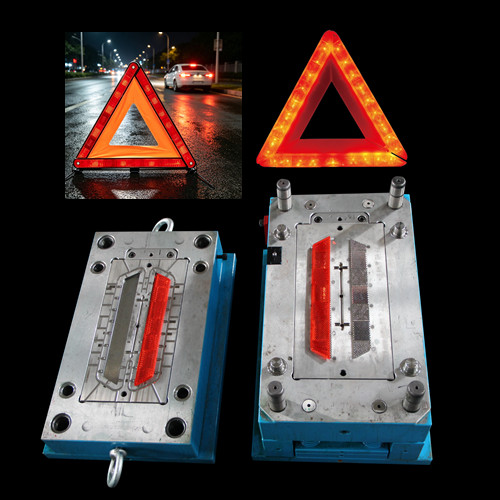
We are a professional mold manufacturer in Huangyan, China, specializing in high-precision injection molds for parking reflex reflectors and warning triangles. Our molds are made with durable steel for long service life, supporting custom designs and stable mass production to meet your automotive accessory manufacturing needs.
Parking reflex refletcor warning triangle mould