

Optical Lens Mold
optical projector lens mold,Plastic Optics Lens mold,Dual beam lens mold,single light mold,double light lens mold.
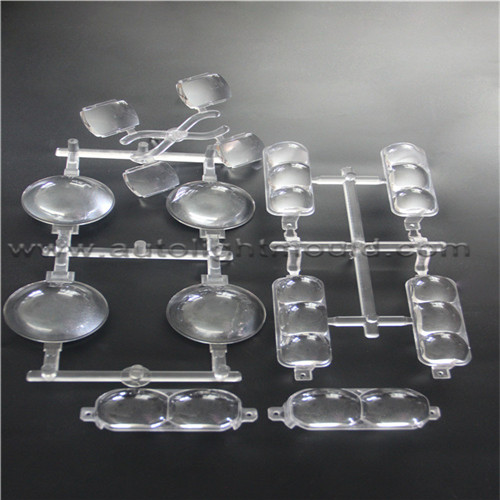
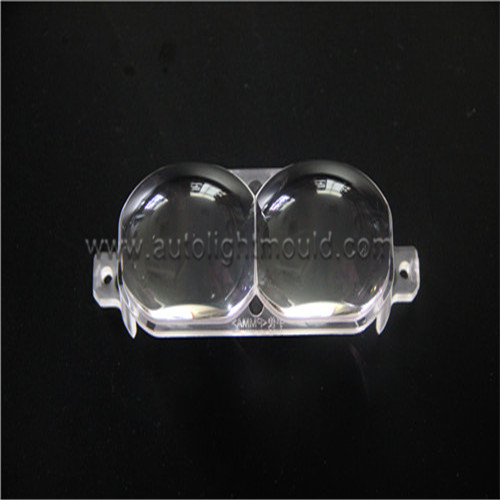
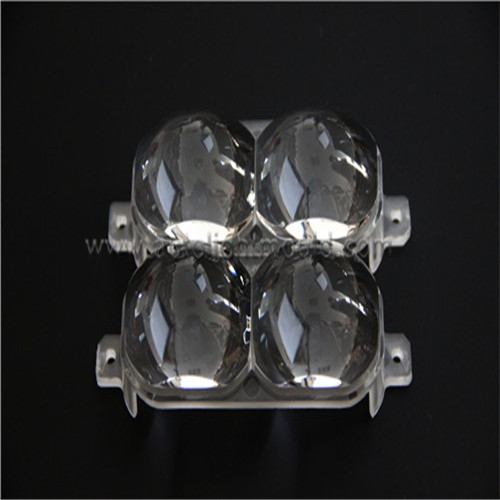
Automotive Motorcycle Lighting Mould Manufacturer
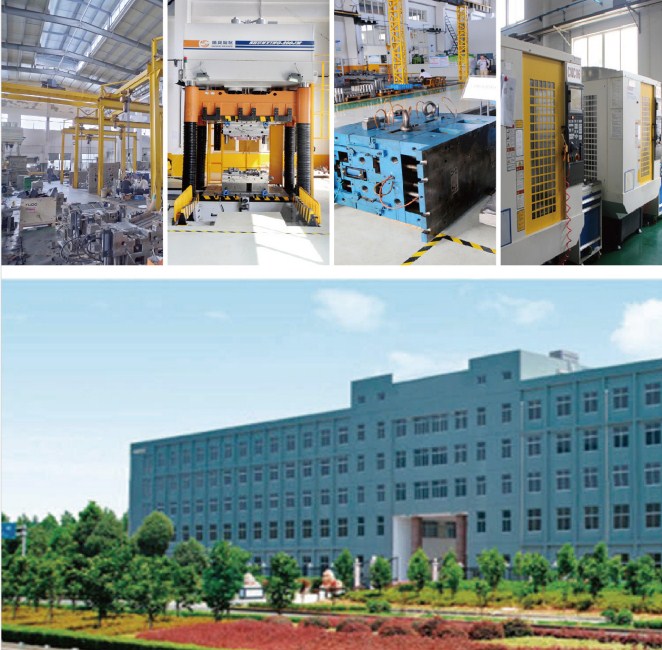
ZheJiang HuangYan Younger Mould Factory is located in China mold town -Huangyan Taizhou.It is a professional plastic mould .Our factory has been established for twenty years ,founded in 1990s .We design and produce Automotive lighting mould and optical lens mould. Our products are widely used in Automotive and motorcycle Industry,Such as : headlamp mould ,taillamp mould,BMC mould ,reflector reflex mould ,light guide mould ,thick wall optics mould ect. Plastic molding company Younger Mould Factory provides moulding services with advanced CNC machining centers; EDM machines; wiring, machining, and grinding machines, drilling, and molding machines,and some imported equipment. experienced and professional design teams, rich management experience and a strict quality assurance system, we provide customers with comprehensive and high-quality services. People in our company with integrity and responsibility.
Injection Molding Service for Light Guide Break off sth/Optics Lens Mould /Transparent Parts
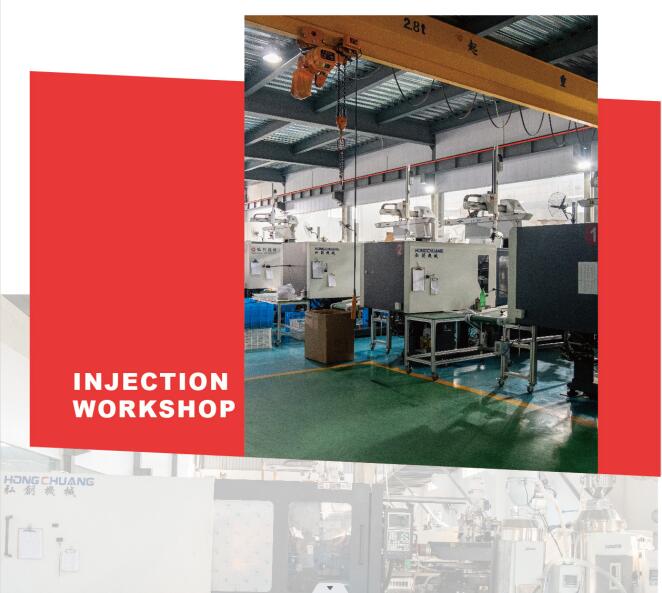
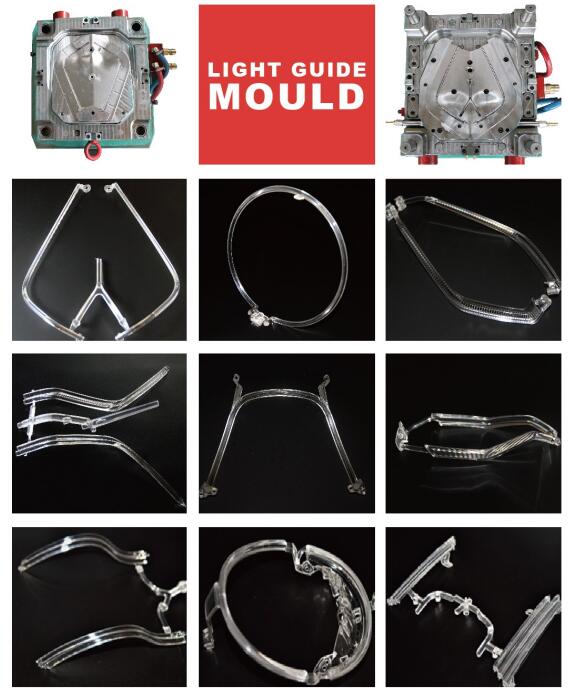
Our injection molding machine production service mainly produces car light lenses and light guide strips. We have advanced injection molding machine equipment and a professional technical team, and the quality of the products produced has been highly praised by customers.
Our car light lenses and light guide strips are made of high-quality raw materials, such as optical grade PC, PMMA and high-quality aluminum. The product has good optical properties and physical properties, ensuring the stability and durability of the product, and also has excellent light transmission and high temperature resistance, which can meet customers with different needs.
If you have any production needs about headlight lenses and light guide strips, please feel free to contact us, we will provide you with professional and high-quality services.
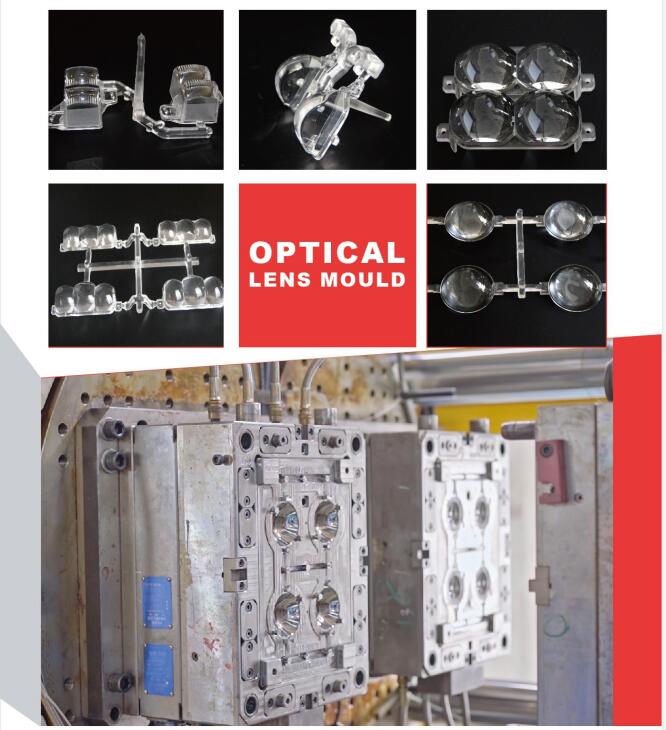
Key points for attention in the design of injection molds for headlight optical lens:
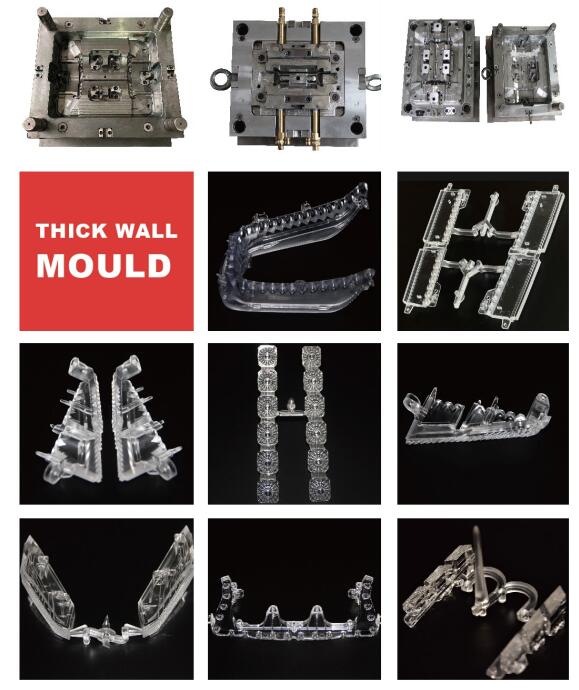
Auto light optical thick-wall lens is a kind of lens with special optical properties.
In the field of car lights, thick-walled lenses are mainly used to manufacture high beams, low beams, turn signals and other parts. Compared with ordinary lenses, thick-walled lenses perform better in terms of protecting headlight light sources, reducing glare, and improving clarity and hit rate. In the field of LED lighting, thick-walled lenses are often used in external lighting facilities such as street lights. The selection of materials and the design of optical characteristics can achieve different lighting effects and energy-saving goals.
In addition, in the field of furniture and indoor lighting, thick-walled lenses can be used as the shell of decorative lamps to achieve different lighting effects and atmosphere adjustments through different shapes and colors, improving user comfort and visual experience.
Therefore, as a special optical element, thick-wall lens has important application value in different fields, and its application will continue to expand and deepen with the continuous development of science and technology.
The influence of the material: the low temperature of the melt prevents the fusion of the flow front, and the poor fluidity of the molten liquid makes the flow front confluence
Weld marks will be generated if the joint angle is smaller than the material fusion angle.
The product design should try to avoid structures that are prone to material flow divergence, and appropriately increase the wall thickness at the position where weld lines may occur
It is conducive to melt fusion and improves the welding strength; add exhaust grooves at appropriate parts to avoid melting due to poor mold exhaust.The filling of the body is not smooth; the number of gates and the position of the gates should be reasonably designed to avoid excessive temperature drop of the forward material flow caused by the process being too long.Avoid welding lines in important places
(1) Selection of injection molding raw materials for optical optics Lens
Optical optics Lens is an optical-grade product. In principle, we choose optical-grade raw materials, such as PMMA from Japan's Mitsubishi, and usually choose VH001. Optical-grade PC, such as Teijin 1250. Of course, there are many raw material brands on the market now, domestic and imported ones, choose according to your own needs. Therefore, first of all, we must master the technological characteristics of its raw materials:
The fluidity of PMMA (acrylic) is worse than that of PS and ABS, and the melt viscosity is more sensitive to temperature changes. During the molding process, the melt viscosity is mainly changed from the injection temperature. Drying temperature: 80-90°C, the time is about 2-4 hours. Melt temperature: ranging from 210°C to 270°C, depending on the information provided by the supplier. The mold temperature is 70-100°C, depending on the actual situation.
PC has excellent performance, high transparency, good impact toughness, creep resistance, and wide temperature range. Melt temperature: between 270 and 320°C. If the material temperature is too high, such as exceeding 340°C, PC will decompose. The poor fluidity of PC is very sensitive to temperature, and the melt viscosity will decrease significantly with the increase of temperature. Properly increasing the temperature of the barrel is beneficial to the plasticization of PC. It is extremely sensitive to water, so it must be fully dried before injection molding to reduce its water content to less than 0.02%. The general drying conditions of PC: 100~120℃, for more than 2-4 hours. Mold temperature control: 85~125°C, generally controlled at 80-125°C, for products with complex shapes, thinner, and higher requirements, it can also be increased to 100-125°C, but it should not exceed the heat deformation temperature of the mold. High mold temperature can reduce the difference between mold temperature and PC material temperature, and can reduce the internal stress of the part.
No bubbles, no dents, no sink marks, no flow lines, weld lines within acceptable range (does not affect packaging and use function), warping and deformation. Size is within controllable range (does not affect assembly or secondary injection molding), sun-patterned products have lines, no shiny surface (does not affect optical effect)
(3) Common optical optics Lens injection molding quality defects and process solutions and Plastic Optics Lens mold requirements
The qualified products obtained by injection molding of lens products also follow the five elements of injection molding: pressure, speed, time, temperature, position, and also follow some injection molding rules. It's just that optical lenses have stricter requirements than ordinary injection molding products. The following is an analysis of the problems that are more likely to occur in the lens injection molding process.
①Plastic Optics Lens mold shrinks
The carefully designed optical optics lens product has its specific shape, and shrinkage will affect its light shape, as shown in Figure 1: The root cause of shrinkage is uneven wall thickness, and plastic condensation cannot be fed. We need to analyze what causes it, such as insufficient material temperature and mold temperature? Or not enough pressure? Cool enough? If you find out the reason, you can adjust the parameters appropriately, such as increasing the holding pressure to prolong the holding or cooling time, increasing the mold temperature, and the material temperature for better filling. If the mold inlet is too small and the sprue is too long to fill, it is necessary to change the mold and finally solve the problem. So in summary:
a: The water inlet of the mold is small, the sprue is long, and the plastic is difficult to glue in. Increase the water inlet or improve the glue feeding method.
B: The material temperature is too low, increase the material temperature, such as thicker products should increase the material temperature to increase fluidity and reduce shrinkage.
C: Increase the holding pressure and prolong the holding time due to early switch to holding pressure or insufficient holding pressure.
D: The cooling time is not enough, increase the cooling time. For example, for thick-walled lenses with a mirror surface, proper cooling time is beneficial to improve shrinkage.
②optical projector lens mold flow pattern
Generally, flow lines appear at the glue inlet and wall thickness. Generally, flow lines are mostly caused by plastic melt injection. When the melts enter the mold cavity successively, the temperature difference between the two leads to flow lines, as shown in Figure 2:
Flow lines in lens products, especially at the position of the light-emitting hole, will affect the light effect. At this time, we must inject in sections, identify the position where the flow pattern occurs, and reduce the injection speed a little in advance to solve the problem. Of course, sometimes the mold temperature is too high, and the fast flow of plastic is also one of the reasons. The mold temperature can be lowered appropriately. So in summary:
1. Reasons for Optics Optical Lens Moldprocess:
A: The mold temperature is high and the material temperature is low.
B: The injection pressure is too high and the speed is too fast to cause injection. You can find the position and reduce the injection pressure and speed.
③optics lens mold water ripple
The water ripple is easier to understand, its shape is like a wave, as shown in the figure. Usually, due to the low mold temperature, the plastic condenses in advance, and the melt enters later to promote the formation, which can properly increase the mold temperature, material temperature, and injection rate, or improve the mold water inlet.
④optics lens mold air pattern
Air mark is the appearance of aerosol on the surface of the product, as shown in Figure 4.
Airmarks on the surface of the lens affect the appearance and light effect, which can be solved from the mold and adjustment process:
A: If the mold exhaust is not good, turn on the exhaust. If the product allows, you can add an exhaust needle or add an exhaust groove on the mold. 80% of the poor injection molding is caused by the mold. This is a once-and-for-all method, and the requirements for machine adjustment are low.
B: Adjusting the machine to solve the problem, relatively requires the ability to adjust the machine, control the rate of injection in sections, and switch to low-speed injection at the position where air marks are generated.
⑤Optics lens mold joint line
Lens products, especially the bonding line at the position of the light-emitting hole, must be improved, otherwise it will affect the light effect and cause water seepage in the finished package, which will affect the service life of the product. Figure 5.
. There are two situations for the joint line, one is that two or more melts cannot be well combined at the end of the cavity when the temperature drops, and the other is that the melts flow rapidly and merge in the cavity due to air trapping. The first improvement countermeasure is: increase the material temperature, increase the mold temperature, and appropriately increase the firing rate. The second is to open the exhaust on the mold to improve the exhaust, change the position of the glue inlet or increase the glue inlet to change the bonding position. Or it can be improved by adjusting the position and speed conversion of process parameters.
⑥Plastic Optics Lens mold black spots, yellowing, color mixing
Black dots, yellowing and color mixing are absolutely unacceptable defects of lens products. this circumstance occurs:
A: Check whether the temperature of the material is too high, causing the material to burn black and carbonize in the barrel, check whether there is a gap in the nozzle flange, and there is accumulated material carbonization inside.
B: Color mixing check whether the gun barrel is cleaned when changing the material and changing the color, and whether there is any miscellaneous material in the material.
⑦The surface of the pattern is shiny or the pattern cannot be printed
Some lenses are patterned on the surface of the lens or a certain part to obtain the corresponding optical effect. If the pattern is shiny, it cannot be printed. As shown in Figure 6
a: Check if there is any grain loss on the part of the Plastic Optics Lens mold tanned
b: Is the product filled?
c: Is the cooling cycle enough?
So the improvement method is: under the premise that the mold is in good condition, appropriately increase the amount of glue, increase the holding pressure, and allow enough cooling time.
⑧Dimensional difference and warpage
Product design is designed for use from the beginning, with its fixed size. Size difference? The main factors affecting the size of injection molded products are the processing size of the mold and the parameters of the injection molding process. Generally speaking, qualified molds must take into account the errors caused by mold manufacturing errors and unbalanced shrinkage rates of molded parts. The other is the injection molding process.
Warping deformation is common in long square lens products, such as module lenses such as industrial and mining street lamps, as shown in Figure 7
In terms of molds, the main factors that affect the deformation of plastic parts are filling, cooling and ejection. The position, quantity, form of the mold gate, single gate or multiple gates will affect the flow of the melt in the cavity and the orientation of the internal stress. Due to uneven mold temperature, uneven cooling and shrinkage of the product, unbalanced ejection, and uneven force on the product will also cause warping and deformation. In terms of technology, if the injection pressure is too high, the holding time is too long, and the temperature of the melt is too low and the speed is too fast, the internal stress will increase and warpage will occur. If the mold temperature is too high and the cooling time is too short, the parts will be overheated and deformed during demoulding. Reduce the screw speed and back pressure to reduce the melt density while maintaining the minimum filling amount to limit the generation of internal stress. To sum up, solve the optics lens size difference and warping deformation of optical thick wall lens mold:
A: The size is large (small), reduce (increase) the holding pressure, increase (decrease) the mold temperature. Extend the holding pressure cooling time to maintain dimensional stability.
B: Reasonable gate, ejection design can reduce deformation.
C: Increase the water delivery of the mold to make the mold temperature uniform and the product to cool evenly to reduce deformation.
D: Reasonable holding pressure, time, and cooling time can reduce deformation.
E: When adjusting the machine, reduce the mold temperature, reduce the injection pressure, melt speed and back pressure, and do not make the product full to death.
F: Using dual-mode temperature, since the warpage is caused by uneven mold temperature and uneven cooling, you can use the two mold temperature controllers to control the front and rear mold temperatures separately, forming a temperature difference between the front and back, so as to achieve the purpose of controlling warpage and deformation. This is also a way.
G: If necessary, the product can be annealed after being fixed with a jig or demolded.
⑨Preservation printing
Packing marks on lens products often appear on sunscreen products, which are usually caused by overfilling. Therefore, under the premise of ensuring the quality and not shining, reduce the packing pressure appropriately, and the time will improve.
⑩Bubbles and Vacuum Bubbles
First of all, it is necessary to analyze whether it is a general bubble or a vacuum bubble. As the name implies, the vacuum bubble is a vacuum without air. Generally, the uneven thickness of the product causes uneven cooling and shrinkage to form (shrinkage pits), and the bubbles are generally located at the end of the product melt because the gas cannot be discharged. There are often multiple, while the vacuum bubble exists in a single form. Therefore, in our common thick-walled parts of lens products, most of them are vacuum bubbles. Of course, sometimes because the end of the glue is in the middle thick-walled position, it may also be a bubble. It needs to be analyzed clearly:
A: To improve the mold, the gate of the mold is too small, the position arrangement is unreasonable, the runner is too small, the water transportation is unreasonable and the cooling is uneven, which is easy to generate air bubbles.
B: If the air bubbles are formed due to poor exhaust of the mold, the exhaust of the mold can be improved, and an exhaust needle or an exhaust groove can be added. In terms of process, the raw materials are fully dried, the melt temperature is lowered to prevent gas from thermal degradation due to excessive material temperature, proper back pressure reduces thermal degradation, segmental injection, and injection pressure and speed are reduced to allow gas to escape. It is also possible to properly reduce the clamping force, which can obviously improve the bubbles formed by trapped air, but it is also easy to cause other problems such as burrs.
C:: If it is a vacuum bubble caused by uneven cooling and shrinkage of the thick book, you can properly increase the mold temperature, increase the back pressure, increase the holding pressure and cooling time to make it fuller and solve the vacuum shrinkage.
(4) Processing and packaging of optics lens products
The development of science and technology is changing with each passing day, and the competition in the manufacturing industry is fierce. How to manufacture products at a lower cost and higher efficiency, mechanical automation reduces or even replaces labor is inevitable. The same is true for injection molding. With the application of automation equipment such as manipulators, labor is effectively reduced and production efficiency is improved. Lens products require a fairly clean and dust-free environment, with the application of manipulators, laser cutting machines, and automated packaging. For parts that require labor, employees must wear finger gloves to prevent fingerprints on the surface of the lens, and use PE bags or protective films for packaging, which are tightly dustproof and waterproof.
FAQ
Q: Are you mould factory?
Answer: Yes, Younger mould factory is established in 1999 which specialized in making injection mould.
Q: What kind of mould you can make?
Answer:Head lamp mould ,Tail lamp mould, Thick wall mould ,Light guide mould , optics optical mould ,Fog lamp mould ,reflex reflector mould ,license plate lamp mould ,front turn signal lamp mould ,daytime running lamp mould ,high mount stop lamp mould ,transparent parts production lines ect.
Q: What about your payment terms?
Answer: 50% prepayment in advance, and the balance should be paid before shipment.
Q:Mould T0 trial date ?
Answer:We need calulate the date after customer confirm all drawing . mould making date is not including the drawing design date .
Q: How's annual output of your company?
Answer: We can make 200 sets each year.
Q: How about mould machining report ?
Answer:Our engineer team will send the machining report PPT to client on every Friday .
Q: How long of the mould warranty period?
Answer: The mould warranty period for 1 year(Damage caused by human factors or accident are not within the the scope of warranty), 50% spare parts will send to customer for free.


+86 15267697871

younger8@autolightmould.com
